


What Is an SEO Audit Checklist in 2026?
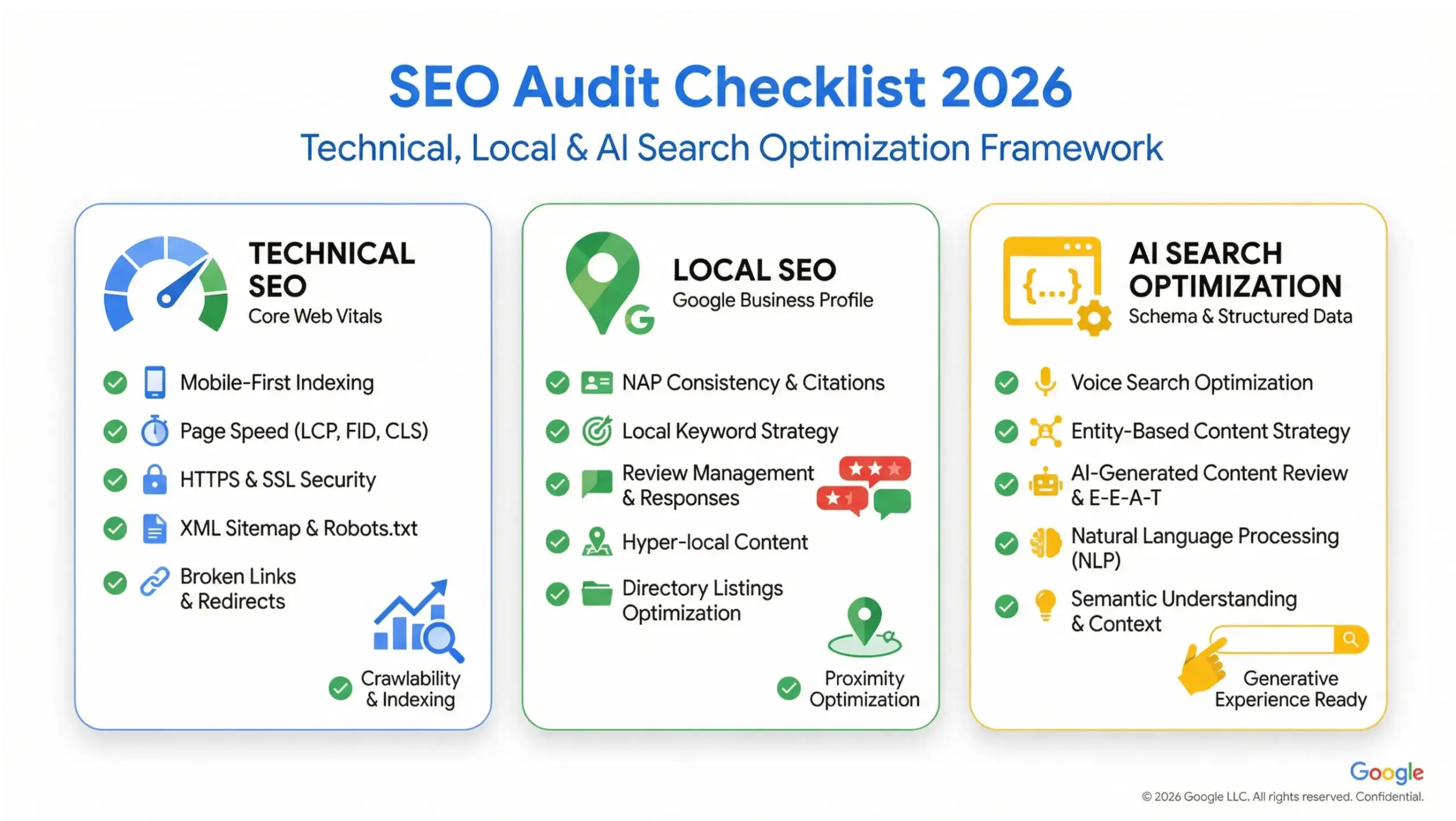
An SEO audit checklist is a structured framework used to evaluate a website’s visibility, technical health, content quality, local authority, and AI-search readiness. In 2026, a proper SEO audit goes beyond rankings – it ensures your website is optimized for Google Search, Google Maps, and AI-driven platforms like Google AI Overviews, Chat GPT Search, Gemini, and Perplexity.
In simple terms:
An SEO audit checklist identifies what is preventing your website from ranking, converting, and being cited by AI search engines – and fixes it systematically.
For local businesses, this process determines whether you dominate your zip code or disappear from search visibility.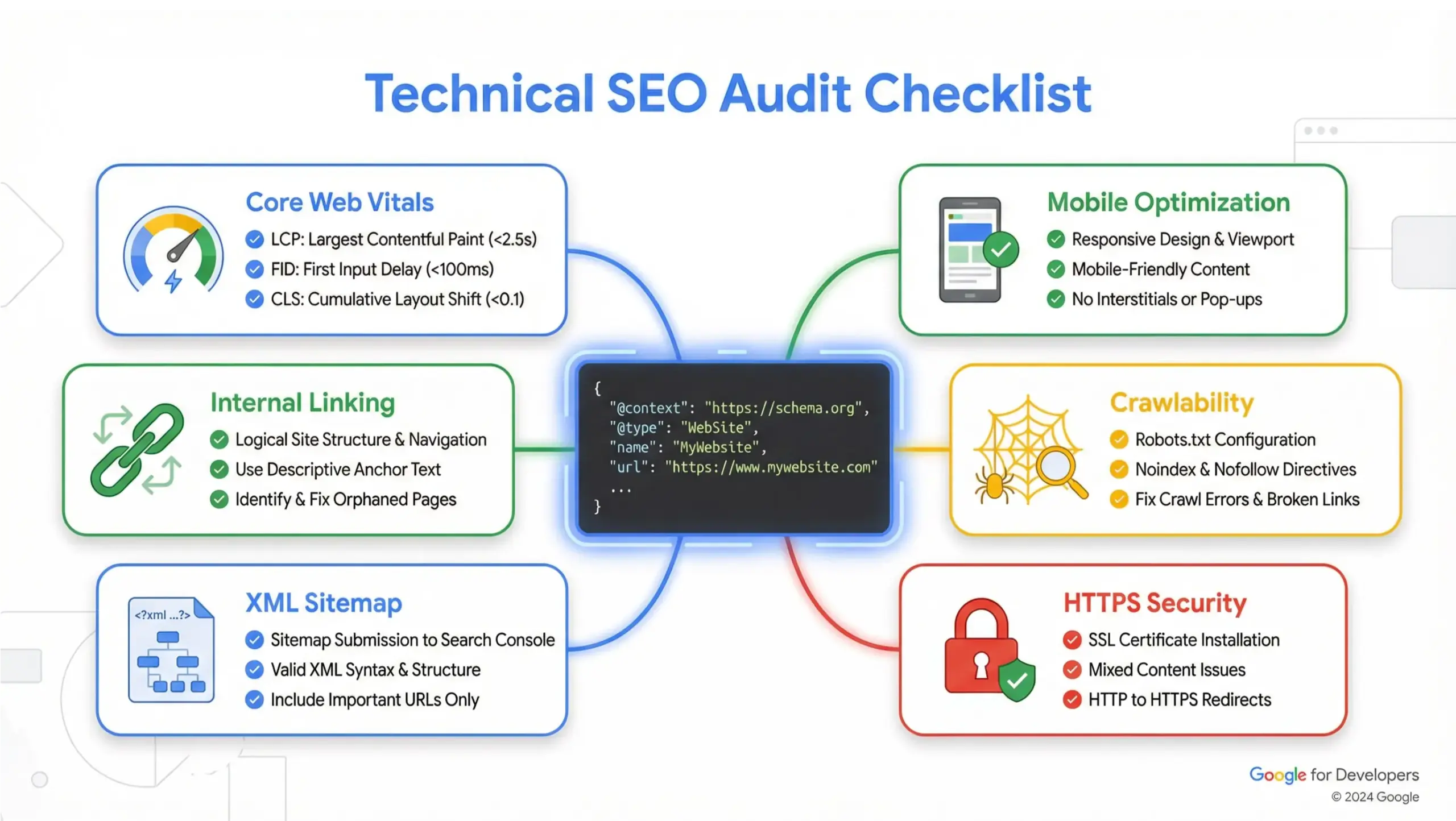
Why Is an SEO Audit Critical for Local Businesses in 2026?
Local competition is no longer just about who ranks #1.
Today, you must:
- Rank in Google organic results
- Appear in the Google Map Pack
- Be featured in AI-generated summaries
- Maintain strong brand entity signals
- Deliver a fast, mobile-first user experience
AI search engines prioritize websites that demonstrate:
- Clear structure
- Strong E-E-A-T (Experience, Expertise, Authority, Trust)
- Schema markup clarity
- Local relevance
- Consistent entity alignment
“In 2026, visibility belongs to businesses that are technically sound, structurally organized, locally authoritative, and AI-ready.”
An SEO audit ensures all of those foundations are in place.
The Complete SEO Audit Checklist for 2026
Below is the step-by-step, professional-grade SEO audit checklist designed for local businesses, service providers, and growth-focused brands.
1. Technical SEO Audit Checklist (Foundation Layer)
Why Is Technical SEO the First Step?
Technical SEO ensures search engines can crawl, index, and understand your website correctly. Without this layer, content quality becomes irrelevant.
“If search engines can’t crawl your site efficiently, you don’t have an SEO problem – you have a visibility problem.”
Technical SEO Audit Tasks:
Crawlability & Indexing
- Review robots.txt file
- Check XML sitemap accuracy
- Ensure important pages are indexed
- Identify orphan pages
- Fix crawl errors in Google Search Console
Site Speed & Core Web Vitals
- Largest Contentful Paint (LCP)
- First Input Delay (FID)
- Cumulative Layout Shift (CLS)
- Optimize image compression
- Minify CSS/JavaScript
- Implement CDN if needed
Mobile-First Optimization
- Responsive design check
- Mobile usability report
- Button spacing & readability
- Mobile loading speed
HTTPS & Security
- SSL certificate active
- No mixed content issues
- Secure forms
- Updated CMS and plugins
| Element | Why It Matters | Audit Action |
|---|---|---|
| XML Sitemap | Helps search engines discover pages | Submit and validate in GSC |
| Core Web Vitals | Ranking factor + UX signal | Improve load speed |
| Mobile Usability | Google mobile-first indexing | Test across devices |
| Crawl Errors | Block visibility | Fix 404/redirect loops |
2. On-Page SEO Audit Checklist
What Does On-Page SEO Audit Evaluate?
On-page SEO focuses on content structure, keyword usage, and semantic optimization.
“On-page SEO is where strategy meets structure – and structure determines AI comprehension.”
Audit the Following:
Title Tags & Meta Descriptions
- Include primary keyword
- Keep under character limits
- Make them compelling for CTR
Heading Structure (H1-H6)
- One H1 per page
- Logical hierarchy
- Question-based H2s for AI search
Keyword & Semantic Usage
- Natural primary keyword inclusion
- Related semantic keywords
- No keyword stuffing
Internal Linking
- Link to service pages
- Use descriptive anchor text
- Build topic clusters
Content Depth
- Minimum 1,500-2,500 words for pillar pages
- Include tables, lists, FAQs
- Add real-world examples
3. Local SEO Audit Checklist (Google Maps Domination)
Why Is Local SEO Different From General SEO?
Local SEO determines your visibility in Google Maps and geographic search results.
“Owning your zip code starts with a fully optimized Google Business Profile.”
Local SEO Audit Tasks:
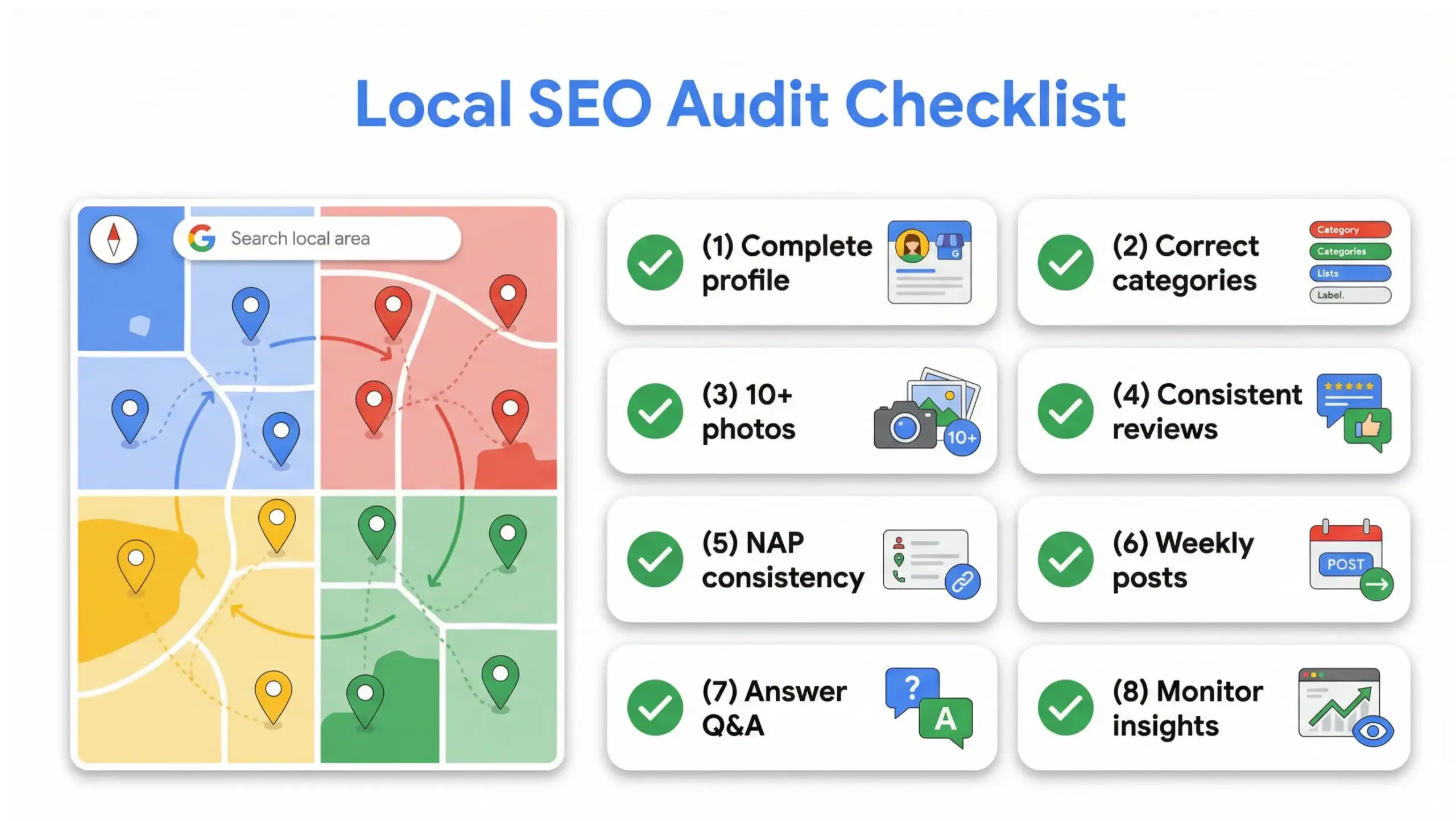
Google Business Profile (GBP)
- Correct business name
- Primary + secondary categories
- Updated services
- Weekly posts
- FAQ section filled
- Q&A monitored
NAP Consistency
- Name, Address, Phone consistent everywhere
- Check local directories
- Update Yelp, Bing, Apple Maps
Reviews & Reputation
- Minimum 4.5 rating goal
- Reply to all reviews
- Encourage keyword-rich reviews
Local Landing Pages
- City-specific service pages
- Location schema
- Embedded Google Map
| Local Factor | Optimization Goal |
|---|---|
| GBP Category | High-intent targeting |
| Reviews | Social proof + ranking |
| Local Citations | Trust & consistency |
| City Pages | Geographic authority |
4. Content & E-E-A-T Audit Checklist
How Does Content Impact AI Search?
AI engines prefer structured, authoritative, and transparent content.
“AI search does not reward fluff – it rewards clarity, expertise, and structured value.”
Audit Content for:
Experience
- Case studies
- Before/after examples
- Real business data
Expertise
- Author bio
- Credentials
- Industry specialization
Authoritativeness
- Backlinks from relevant sites
- Industry mentions
- Press coverage
Trustworthiness
- Cite statistics
- Link to original sources
- Add contact information
5. Schema Markup Audit Checklist
Why Is Schema Markup Mandatory in 2026?
Schema provides explicit context to AI systems. Without schema, AI must guess.
“Schema markup eliminates ambiguity and increases AI confidence in your content.”
Required Schema Types:
- Article
- Organization
- Person
- FAQ Page
- Local Business
- Service
- Review (if applicable)
Audit Checklist:
- Validate using Schema Validator
- No errors in Google Rich Results Tool
- Consistent entity names
- Properly nested structured data
6. Off-Page SEO & Backlink Audit
What Role Do Backlinks Play in AI Search?
Backlinks remain a trust signal.
AI search engines still evaluate authority through link equity and brand mentions.
Audit Checklist:
- Domain Authority check
- Toxic backlink removal
- Anchor text diversity
- Local backlink building
- Industry partnerships
7. Conversion & UX Audit (SEO Without Conversions Is Wasted Traffic)
Why Must SEO Be Conversion-Optimized?
Ranking without converting means revenue loss.
“Traffic without conversion is vanity. Conversion is sustainability.”
Audit:
- Clear call-to-actions
- Contact forms functional
- Click-to-call buttons
- Booking systems tested
- Heatmap review (optional)
- User journey clarity
8. AI Search Optimization (Generative Engine Optimization – GEO)
How Do You Optimize for AI Search Engines?
In 2026, you must structure content for machine readability.
GEO Audit Checklist:
Answer-First Formatting
Each section begins with 40-60 word direct answer.
Quote-Ready Sentences
Clear, standalone insights.
Conversational Headings
“How do I perform an SEO audit?”
Data-Rich Content
Statistics + structured tables.
Topic Clusters
Interlinked related blog posts.
SEO Audit Tools for 2026
| Tool | Purpose |
|---|---|
| Google Search Console | Indexing & performance |
| Screaming Frog | Crawl analysis |
| Ahrefs / SEMrush | Backlink & keyword audit |
| Page Speed Insights | Speed testing |
| Schema Validator | Structured data validation |
How Often Should You Perform an SEO Audit?
- Quarterly for growing businesses
- Bi-annually for stable sites
- Immediately after redesign
- Immediately after ranking drops
“SEO audits are not one-time events – they are ongoing growth systems.”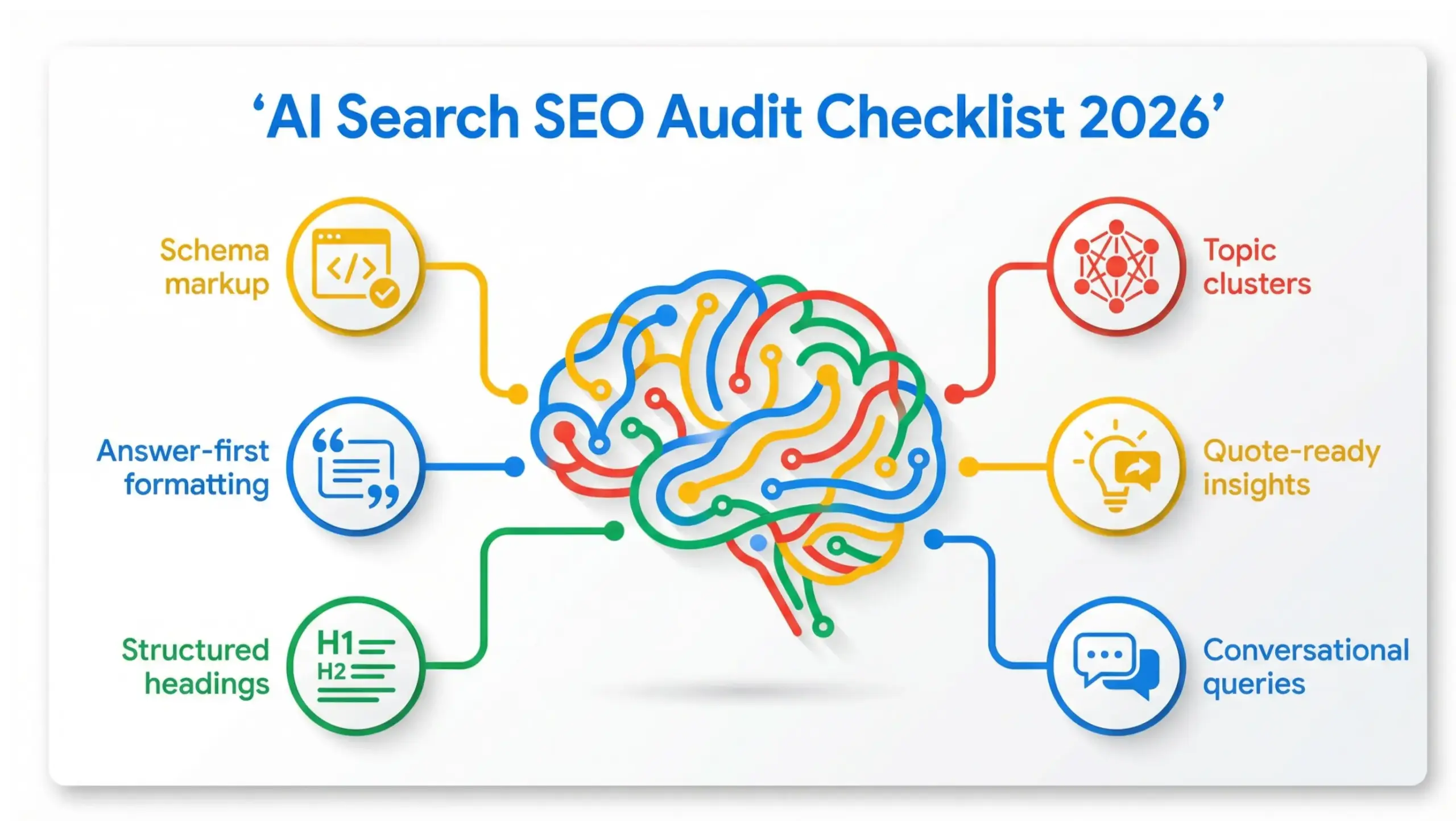
Common SEO Audit Mistakes to Avoid
- Only checking keywords
- Ignoring technical errors
- Skipping Google Business Profile
- Not implementing schema
- Focusing only on traffic
- Ignoring AI search structure
- Not tracking conversions
- Inconsistent NAP data
- Weak internal linking
- No performance tracking
10 Frequently Asked Questions
1. How long does a complete SEO audit take?
A full professional SEO audit typically takes 2-4 weeks depending on site size, complexity, and technical depth.
2. Can I perform an SEO audit myself?
Yes, basic audits can be self-performed using tools like Google Search Console, but advanced technical and local audits require expertise.
3. What is the most important part of an SEO audit?
Technical SEO and structured data are foundational. Without crawlability and clarity, content cannot rank effectively.
4. How often should small businesses run SEO audits?
At minimum every 6 months, but quarterly is ideal for competitive industries.
5. Does SEO audit improve Google Maps rankings?
Yes – optimizing Google Business Profile, reviews, and local citations directly improves Map Pack performance.
6. Is schema markup necessary?
In 2026, schema markup is essential for AI search visibility and rich result eligibility.
7. What tools are best for SEO audits?
Google Search Console, Ahrefs, SEMrush, Screaming Frog, PageSpeed Insights, and Schema Validator.
8. What is the difference between SEO audit and SEO strategy?
An audit diagnoses issues; strategy implements long-term growth improvements.
9. Can SEO audits increase conversions?
Yes – when combined with UX optimization and clear CTAs.
10. Why is AI search optimization important?
AI engines summarize content. If your structure isn’t clear, your brand won’t be cited or featured.
Final Thoughts: SEO Audit Checklist Is Your Growth Blueprint
A modern SEO audit checklist is not just about rankings.
It is about:
- Visibility
- Authority
- Local dominance
- AI discoverability
- Conversion growth
“Businesses that audit strategically grow predictably.”
If your website has not been audited in the past 6 months, you are operating on outdated assumptions.
And in 2026, outdated visibility equals lost revenue.


