


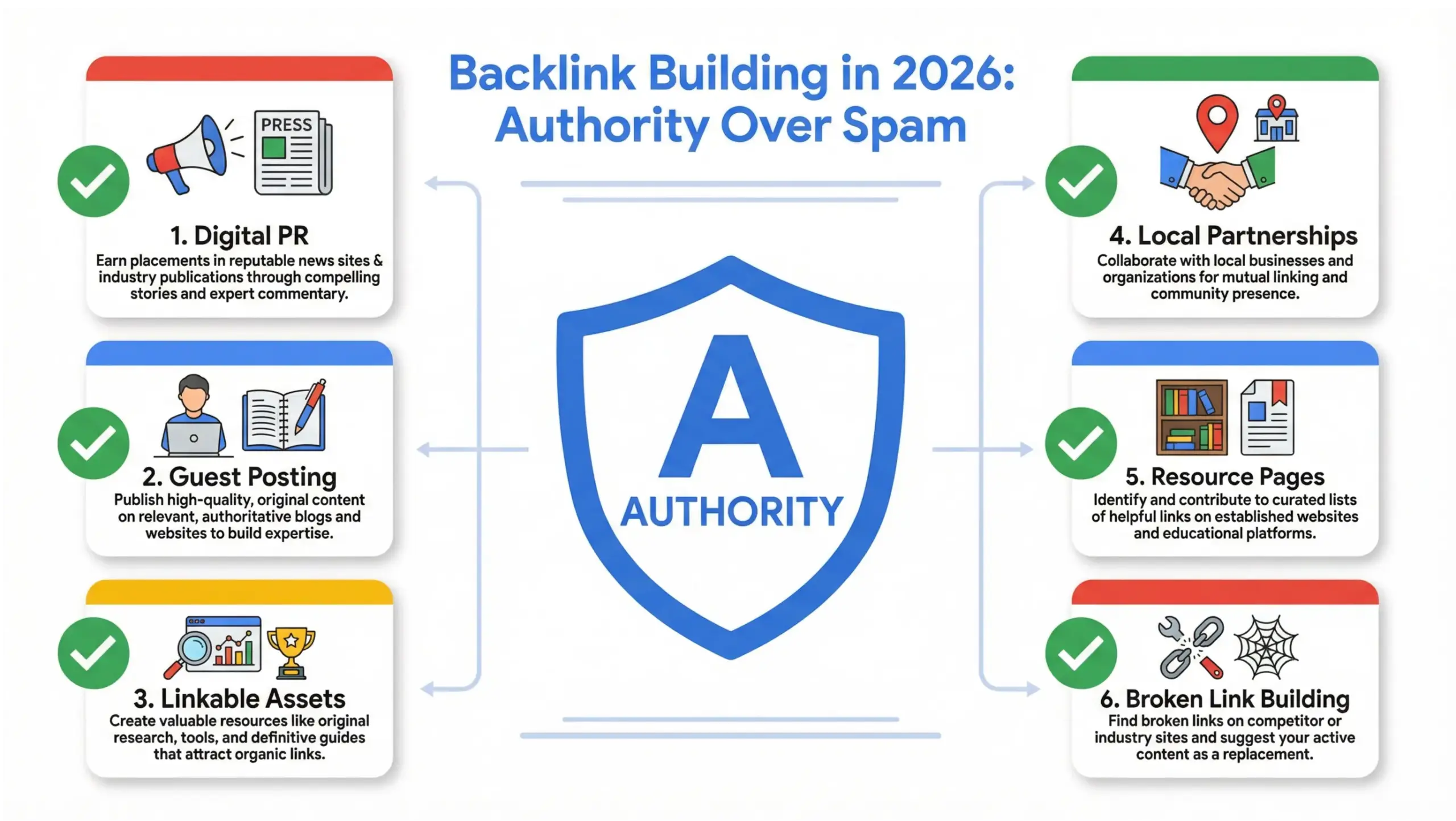
Backlink building is the strategic process of earning high-quality, relevant links from authoritative websites to improve search visibility, domain authority, and AI search citation trust. In 2026, backlinks still matter, but only when they are earned through value, authority, and strategic positioning. Spam tactics no longer work. Authority does.
If you want backlinks that improve rankings, increase trust, and get cited in AI search results, you need a system, not shortcuts.
This guide will show you exactly how.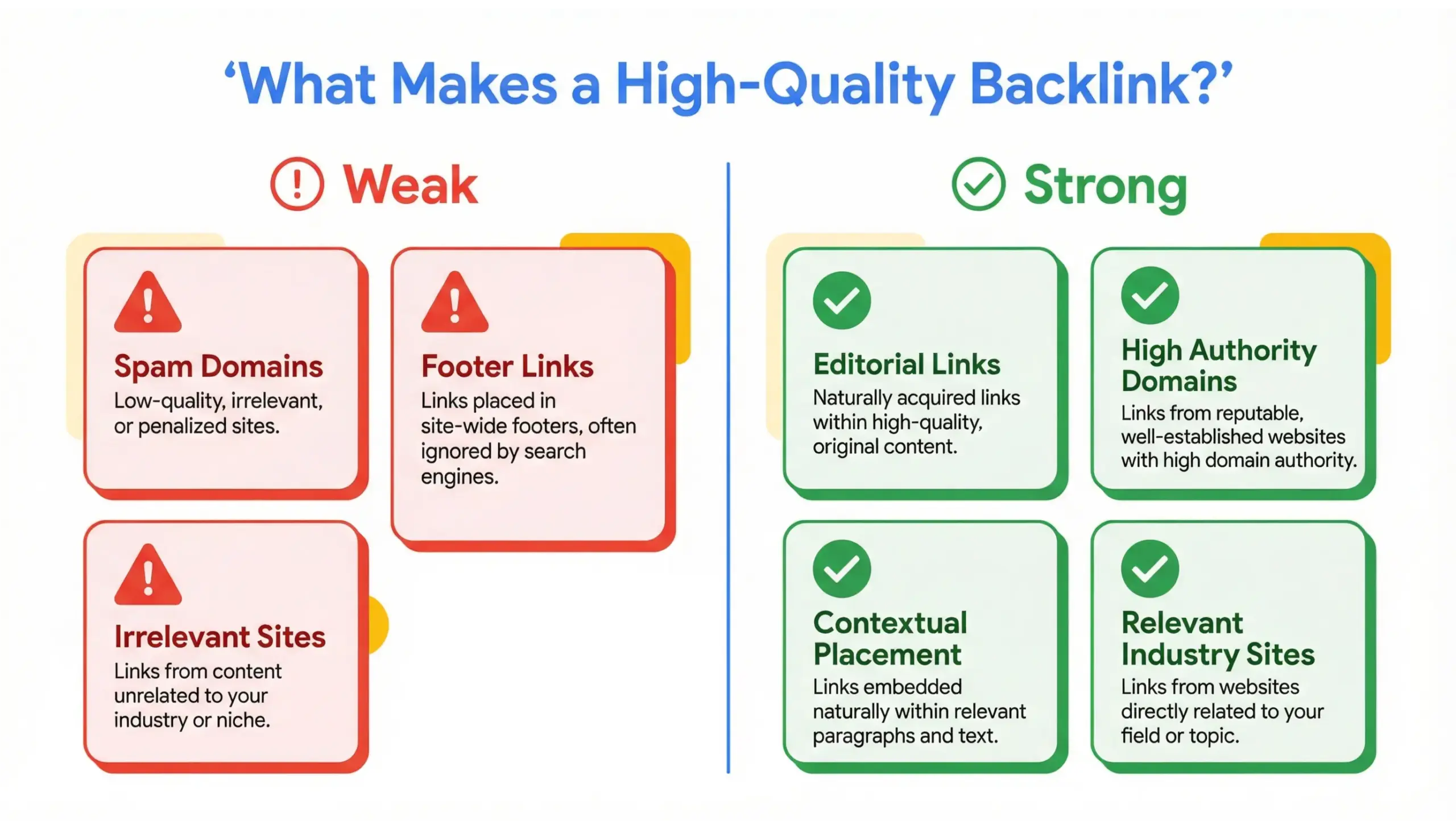
Why Is Backlink Building Still Important in 2026?
Backlinks remain one of the strongest ranking signals because they function as digital trust votes. Search engines and AI systems use backlinks to determine authority, credibility, and topical relevance.
However, the algorithm has evolved.
In 2026, backlinks influence:
- Google organic rankings
- Google AI Overviews
- Chat GPT Search & Perplexity citations
- Domain authority signals
- Brand entity recognition
- E-E-A-T evaluation
“Backlinks are no longer about quantity, they are about credibility amplification.”
Search engines now evaluate:
- Relevance of the linking domain
- Context of the link
- Anchor naturalness
- Brand mentions
- Entity consistency
- Topical authority clusters
Spam link directories and private blog networks are either ignored or penalized.
What Are High-Quality Backlinks?
High-quality backlinks are links from relevant, authoritative, and contextually aligned websites that genuinely reference your content as a trusted source.
Characteristics of Strong Backlinks
| Factor | Weak Link | Strong Link |
|---|---|---|
| Domain Authority | Low, spammy | High, reputable |
| Relevance | Random niche | Same industry/topic |
| Placement | Footer/sidebar | Editorial content |
| Anchor Text | Over-optimized | Natural and contextual |
| Traffic | No visitors | Real organic traffic |
| Indexing | Not indexed | Indexed & ranking |
A backlink from a respected industry blog with contextual placement is worth more than 500 spam links.
What Backlink Building Tactics No Longer Work?
Outdated backlink tactics fail because search engines can detect manipulation patterns instantly.
Avoid:
- Link farms
- Paid backlink marketplaces
- PBNs (Private Blog Networks)
- Comment spam
- Forum signature links
- Low-quality guest post networks
- Automated outreach blasts
“If you wouldn’t proudly show the backlink to Google’s spam team, don’t build it.”
AI systems are now trained to detect unnatural linking behavior at scale.
The 7 Strategic Methods to Build Backlinks That Actually Move Rankings
Now we move to what works.
1. Create Linkable Assets (Authority Content)
The most scalable way to build backlinks is to publish content so valuable that others want to reference it.
Examples:
- Original research
- Industry data studies
- Detailed frameworks
- Step-by-step systems
- Case studies with measurable results
- Visual guides & infographics
- Tools and calculators
Example:
Instead of writing:
“Backlinks are important.”
Publish:
“A 12-Month Backlink Case Study: How 47 Authority Links Increased Rankings by 312%.”
That gets cited.
2. Digital PR & Media Outreach
Digital PR builds authoritative backlinks from news sites, industry publications, and media outlets.
Tactics:
- Data-driven press releases
- Founder insights
- Expert commentary
- Industry predictions
- Survey results
- Reactive PR (responding to news trends)
Tools:
- HARO (Help A Reporter Out)
- Qwoted
- Featured.com
- Direct journalist outreach
One backlink from a recognized publication can outperform 100 smaller links.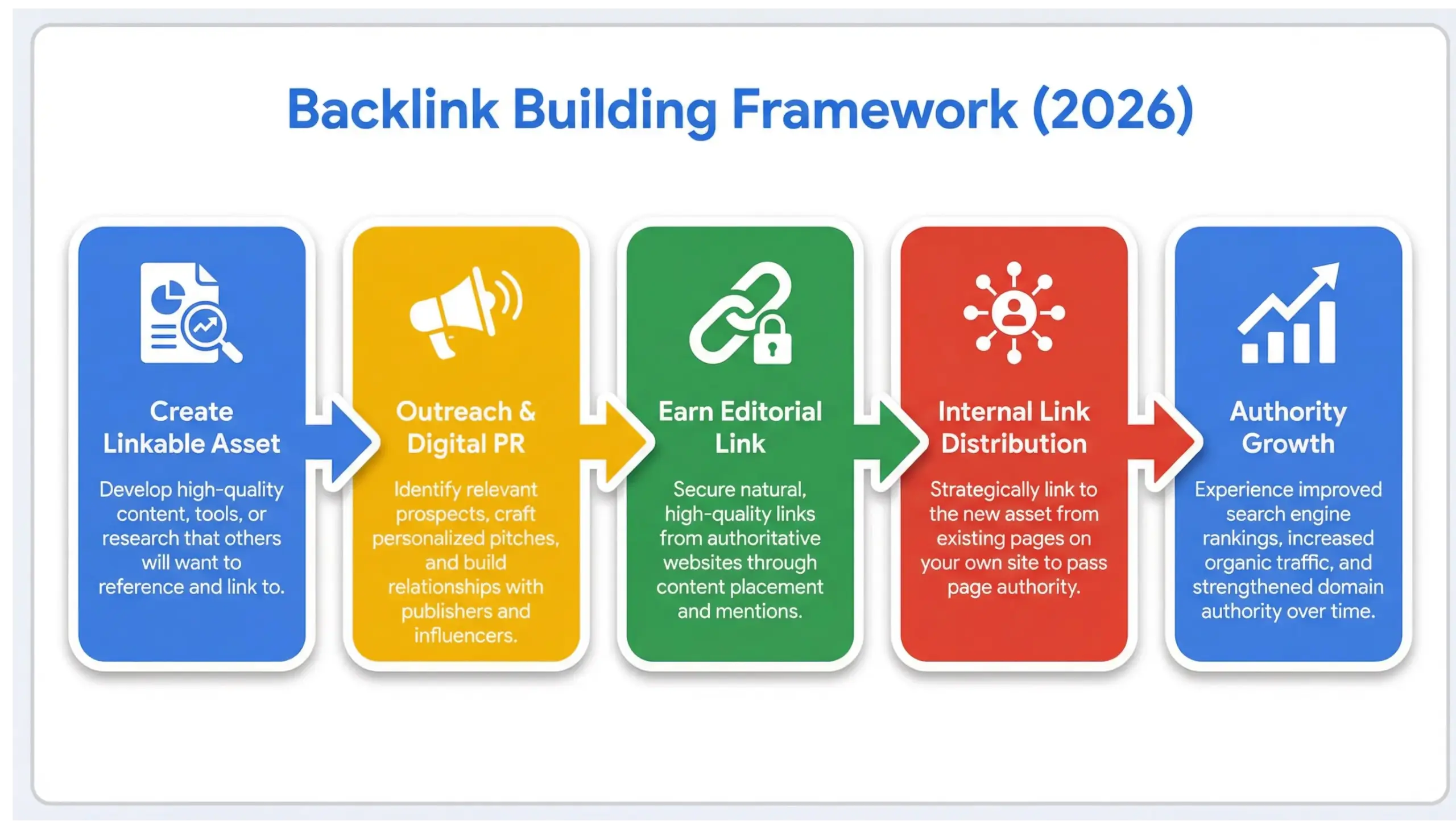
3. Strategic Guest Posting (White Hat Only)
Guest posting works when it builds authority, not when it is transactional.
Best practices:
- Publish on real industry blogs
- Provide high-value educational content
- Avoid over-optimized anchor text
- Link naturally within context
- Focus on thought leadership
Bad guest posting = link insertion.
Good guest posting = authority positioning.
4. Resource Page Link Building
Many authoritative sites maintain resource lists, getting listed is a powerful backlink opportunity.
Example:
“Top SEO Guides for 2026”
“Best Digital Marketing Resources”
Approach:
- Identify resource pages
- Confirm relevance
- Offer value-based outreach
- Show how your guide enhances their list
Conversion rate is high when relevance is clear.
5. Broken Link Building
Broken link building replaces outdated or dead links with your improved content.
Steps:
- Find broken links on authority sites.
- Create or identify a better resource.
- Reach out politely.
- Offer your content as a replacement.
This works because you’re helping, not selling.
6. Build Authority Through Local & Industry Partnerships
For local businesses especially:
- Chamber of Commerce listings
- Local sponsorships
- Event collaborations
- Industry association memberships
- Vendor directories
Local backlinks significantly improve:
- Google Maps visibility
- Local pack rankings
- Regional authority signals
7. Build Topical Authority Clusters
One powerful article won’t carry your backlink profile. A content cluster will.
Create:
- Pillar content (Backlink Building Guide)
- Supporting articles:
- Anchor text optimization
- Local backlinks
- Toxic backlinks
- AI search citation signals
- Link velocity myths
Interlink strategically.
When authority sites link to one article, internal linking distributes equity across your cluster.
How Many Backlinks Do You Need to Rank?
There is no universal number. Rankings depend on authority relative to competitors.
Analyze:
- Competitor backlink profile
- Domain authority
- Content depth
- Search intent match
- Topical authority strength
Quality always beats volume.
10 relevant authority backlinks > 500 spam links.
Do Backlinks Matter for AI Search & GEO?
Yes, and more than ever.
AI search engines:
- Cite authoritative sources
- Prioritize trusted domains
- Evaluate entity authority
- Analyze backlink credibility signals
If your site earns backlinks from respected publications, AI engines are more likely to cite you.
“Backlinks now influence not just rankings, but whether AI systems trust you as a source.”
How to Audit Your Backlink Profile
Backlink building also requires cleanup.
Audit for:
- Toxic links
- Spam domains
- Over-optimized anchors
- Irrelevant placements
Tools:
- Ahrefs
- SEMrush
- Google Search Console
- Majestic
Disavow only when necessary.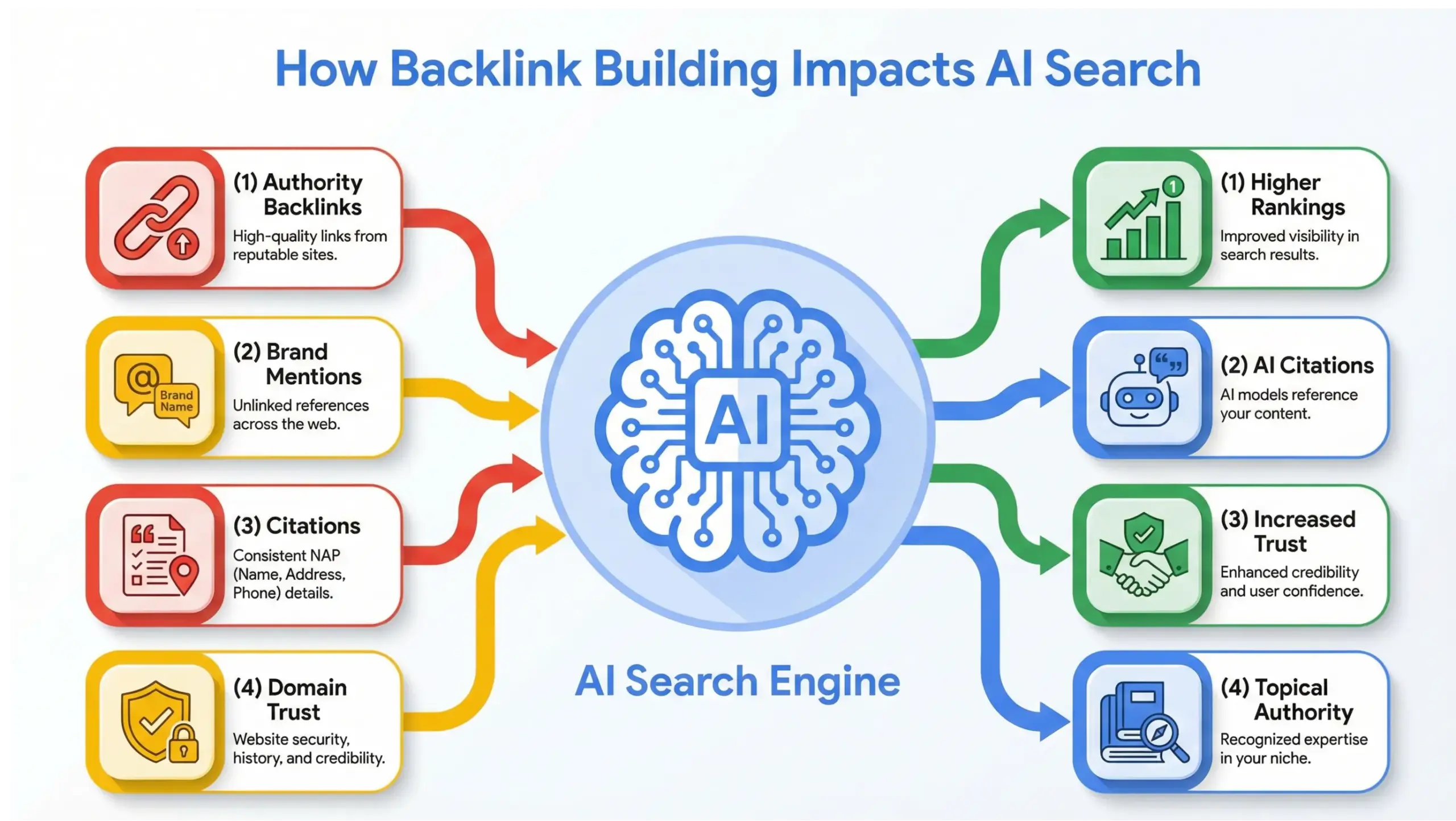
Anchor Text Strategy (Without Over-Optimization)
Anchor text should feel natural and contextual.
Safe mix:
- 50-60% branded anchors
- 20-30% partial match
- 10-20% generic anchors
- Minimal exact match
Avoid repeating “backlink building” in every anchor.
Variation signals natural growth.
Backlink Velocity: How Fast Should You Build Links?
There is no fixed number.
Build links:
- Gradually
- Naturally
- In alignment with content publishing
Sudden spikes can trigger scrutiny if unnatural.
Steady growth signals authority expansion.
How Long Does Backlink Building Take?
Backlink building is a long-term strategy.
Expect:
- 3-6 months for measurable movement
- 6-12 months for compounding authority
Short-term link buying does not build sustainable growth.
10 Frequently Asked Questions (FAQ)
1. Do backlinks still matter for SEO in 2026?
Yes. Backlinks remain one of the strongest ranking factors because they signal authority and trust. However, quality and relevance now matter far more than volume.
2. What is the safest way to build backlinks?
The safest method is creating high-value content and earning links through digital PR, strategic guest posting, and industry partnerships.
3. Are paid backlinks worth it?
No. Paid backlinks often violate guidelines and can harm rankings. Sustainable SEO requires earned links, not purchased ones.
4. How many backlinks do I need?
It depends on competition. Focus on outperforming competitors in quality and authority, not quantity.
5. What are toxic backlinks?
Toxic backlinks come from spammy, irrelevant, or low-quality domains and may negatively impact trust signals.
6. Can backlinks improve local SEO?
Yes. Local backlinks from regional directories, sponsorships, and business associations significantly improve map visibility.
7. How long does backlink building take?
Typically 3-6 months to see results and up to a year for strong authority gains.
8. What is anchor text optimization?
Anchor text optimization ensures that link text appears natural, varied, and contextually relevant.
9. Is guest posting still effective?
Yes, when done strategically on relevant, authoritative platforms.
10. Can backlinks help AI search visibility?
Absolutely. AI systems prioritize authoritative domains for citations. Strong backlinks increase trustworthiness.
Final Takeaway
Backlink building in 2026 is no longer about gaming the system.
It’s about:
- Authority
- Strategy
- Trust
- Relevance
- Entity clarity
- E-E-A-T alignment
“The best backlinks are earned because your content deserves to be referenced.”


