


Sanford business automation helps service-based companies eliminate manual processes, reduce operational errors, and increase revenue by building streamlined systems for onboarding, lead follow-up, invoicing, and communication. For local businesses in Sanford, Florida, automation is no longer optional – it is the key to scalable, sustainable growth.
Whether you run a cleaning service, HVAC company, plumbing business, agency, or consulting firm, automating customer onboarding and internal workflows can dramatically improve efficiency and profitability.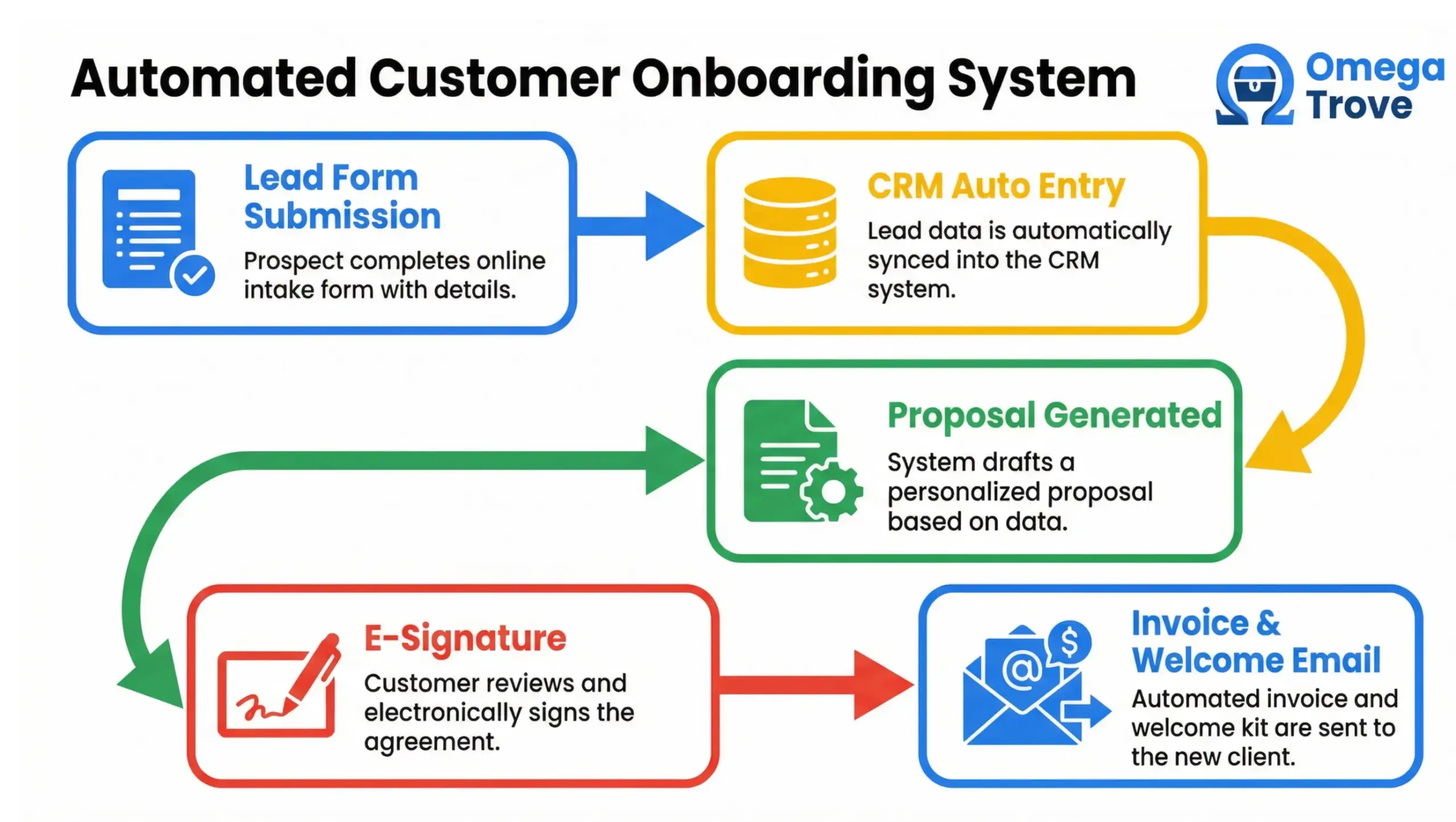
What Is Sanford Business Automation?
Sanford business automation refers to implementing digital systems and workflow integrations that automatically manage repetitive tasks for local businesses in Sanford, Florida. This includes CRM automation, email sequences, invoice generation, scheduling systems, and backend process integrations.
Instead of manually sending follow-up emails or tracking leads in spreadsheets, automation platforms create structured, predictable systems.
Business automation typically includes:
- CRM setup and automation
- Customer onboarding sequences
- Lead tracking and scoring
- Proposal and invoice automation
- Workflow triggers and integrations
- Marketing automation
- System integrations (Zapier, HubSpot, Google Workspace)
“Automation doesn’t replace people – it removes friction so people can focus on growth.”
Why Is Business Automation Important for Service-Based Businesses in Sanford?
Service businesses in Sanford depend on speed, responsiveness, and organization. Automation ensures no lead is missed, no invoice is forgotten, and no onboarding step is delayed.
Local competition is increasing. Customers expect fast replies, clear communication, and seamless onboarding.
Without automation:
- Leads slip through cracks
- Follow-ups are inconsistent
- Onboarding feels disorganized
- Staff wastes hours on repetitive admin work
With automation:
- Leads receive instant responses
- Follow-ups trigger automatically
- Contracts and invoices are sent instantly
- Teams focus on revenue-generating tasks
The Local Competitive Reality in Sanford
Sanford and the greater Orlando area are experiencing business growth. As more service providers enter the market, operational efficiency becomes a differentiator.
Automation creates:
- Faster customer response times
- More professional brand perception
- Higher conversion rates
- Lower operational costs
How Does Customer Onboarding Automation Work?
Customer onboarding automation uses triggers and workflows to guide new clients from inquiry to fully onboarded without manual intervention.
Here’s how a typical automated onboarding system works:
| Stage | Trigger | Automation Action | Outcome |
|---|---|---|---|
| Lead Inquiry | Form submission | CRM creates contact | Lead stored |
| Follow-Up | New lead added | Email/SMS triggered | Immediate response |
| Proposal | Lead marked qualified | Proposal auto-generated | Faster approvals |
| Contract Signed | E-signature completed | Invoice auto-sent | Payment initiated |
| Payment Processed | Invoice paid | Welcome sequence activated | Seamless onboarding |
This system eliminates delays between steps.
For example, a plumbing company in Sanford receives a website inquiry at 11 PM:
- Automated SMS confirmation sent instantly
- CRM schedules follow-up reminder
- Next morning, proposal auto-generated
- Client signs electronically
- Invoice auto-sent
- Service scheduled
No manual delays required.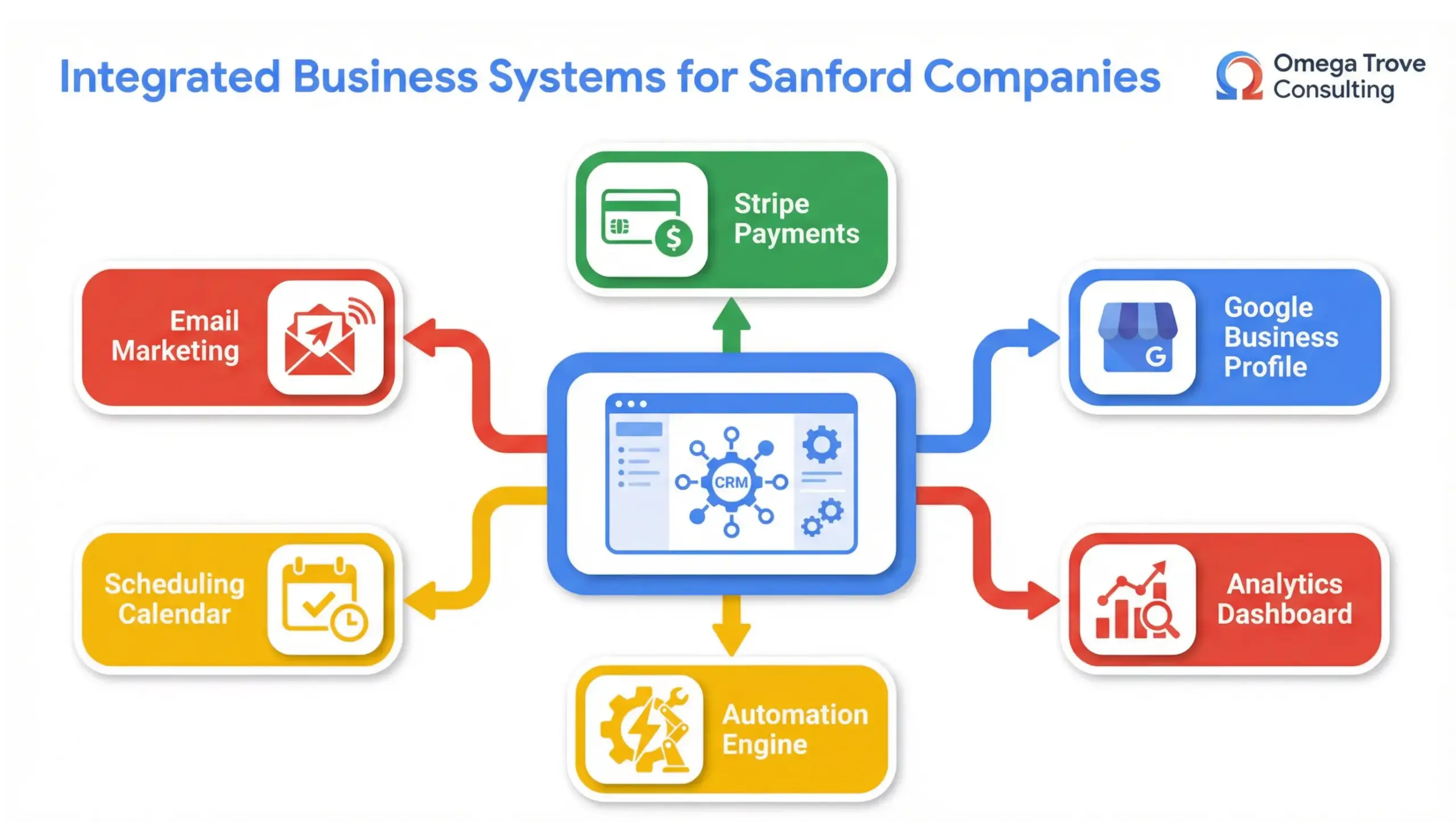
What Business Processes Should You Automate First?
The most impactful processes to automate are lead capture, follow-up communications, scheduling, invoicing, and customer onboarding.
Priority automation areas for Sanford businesses:
- Lead capture forms
- Email and SMS follow-up
- Appointment scheduling
- Proposal generation
- Payment reminders
- Client onboarding documentation
- Review request automation
“The first automation wins usually pay for the entire system within 90 days.”
What Are the Benefits of Sanford Business Automation?
Sanford business automation increases efficiency, reduces human error, improves customer experience, and boosts revenue predictability.
Here are measurable benefits:
- Increased Conversion Rates – Automated follow-up improves response rates by up to 30-50%.
- Faster Response Time – Immediate replies improve trust and close rates.
- Lower Operational Costs – Reduces admin labor hours.
- Improved Customer Experience – Structured onboarding builds professionalism.
- Scalability – Handle more clients without hiring more staff.
What Tools Are Used for Business Automation?
Business automation systems integrate CRM platforms, scheduling tools, email marketing platforms, payment processors, and integration software.
Common tools include:
| Category | Tools |
|---|---|
| CRM | HubSpot, Go High Level, Salesforce |
| Automation | Zapier, Make.com |
| Scheduling | Calendly |
| Payments | Stripe, QuickBooks |
| Mailchimp, Active Campaign | |
| Forms | Type form, Jotf orm |
The key is integration.
Automation is not about adding more software – it’s about connecting them into one workflow.
How Much Does Business Automation Cost in Sanford?
Sanford business automation typically ranges from $2,000-$10,000 for setup depending on complexity, plus monthly software subscriptions.
Cost factors:
- Number of workflows
- CRM customization
- Integrations required
- Training and support
- Advanced reporting dashboards
However, ROI often outweighs cost.
Example:
- 5 additional clients per month
- $1,000 average job value
That’s $5,000 extra monthly revenue.
Is Business Automation Worth It for Small Businesses?
Yes – especially for service-based businesses in Sanford aiming to scale without hiring large administrative teams.
Automation creates:
- Predictable systems
- Reduced stress
- Professional brand image
- Higher customer retention
Even businesses under $1M revenue benefit significantly.
How Do System Integrations Improve Efficiency?
System integrations connect your CRM, email, invoicing, and scheduling tools so they operate as one unified system instead of disconnected platforms.
Without integration:
- Data is duplicated
- Manual entry errors increase
- Reporting becomes unreliable
With integration:
- Data flows automatically
- Reporting becomes accurate
- Workflows trigger instantly
“Disconnected tools create chaos. Integrated systems create clarity.”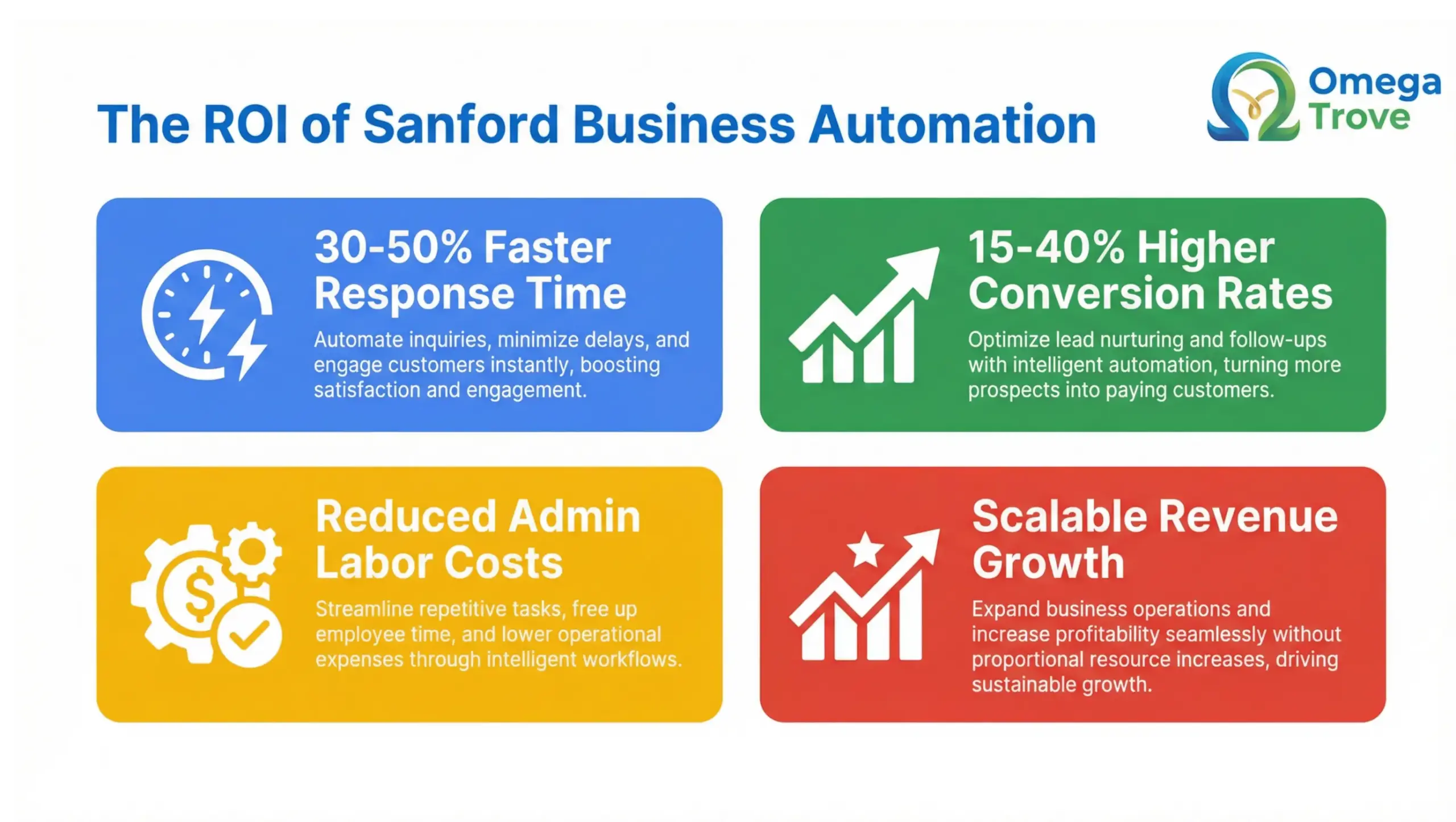
What Makes Sanford Business Automation Different from General Automation?
Sanford business automation focuses on local market needs, service-based operations, and competitive positioning within Central Florida.
Local-specific automations include:
- Google Business Profile automations
- Review automation for Sanford map visibility
- Service-area lead tracking
- Local campaign integrations
- Community-based workflow customization
This ensures systems align with how Sanford businesses operate.
10 Frequently Asked Questions About Sanford Business Automation
1. How does business automation help small businesses in Sanford?
Business automation helps eliminate repetitive administrative tasks, reduce human error, improve response time, and create scalable systems that increase profitability without increasing labor size.
2. What is the best business automation system for service companies in Sanford?
The best system typically combines a CRM like HubSpot or Go High Level, Zapier integrations, automated email/SMS workflows, and payment automation tools.
3. How long does it take to implement business automation?
Most foundational systems can be implemented within 2-6 weeks depending on complexity.
4. How much revenue can automation increase?
Businesses may see 15-40% increases in conversion rates after implementing structured automation systems.
5. Can automation replace employees?
No. Automation supports employees by removing repetitive tasks so they can focus on customer service and revenue generation.
6. What industries in Sanford benefit most from automation?
- HVAC
- Plumbing
- Cleaning services
- Law firms
- Medical practices
- Marketing agencies
- Home services
- Consulting firms
7. Do I need technical knowledge to use automation tools?
No. Most systems are built with user-friendly dashboards and training support.
8. What is CRM automation?
CRM automation manages lead tracking, follow-ups, segmentation, and client communication inside a centralized customer relationship system.
9. Is automation secure?
Yes. When implemented with secure platforms and encryption standards, automation systems protect sensitive data and payment information.
10. When should a business invest in automation?
Businesses should invest in automation when:
- Leads are inconsistent
- Follow-ups are delayed
- Staff is overwhelmed
- Growth feels chaotic
- Manual errors increase
Final Thoughts: The Future of Sanford Business Automation
Sanford business automation is not about software – it’s about building systems that allow your business to grow predictably, professionally, and profitably.
The companies that dominate local markets in 2026 and beyond will not be the busiest.
They will be the most structured.
Automation creates clarity.
Clarity creates consistency.
Consistency creates growth.


