


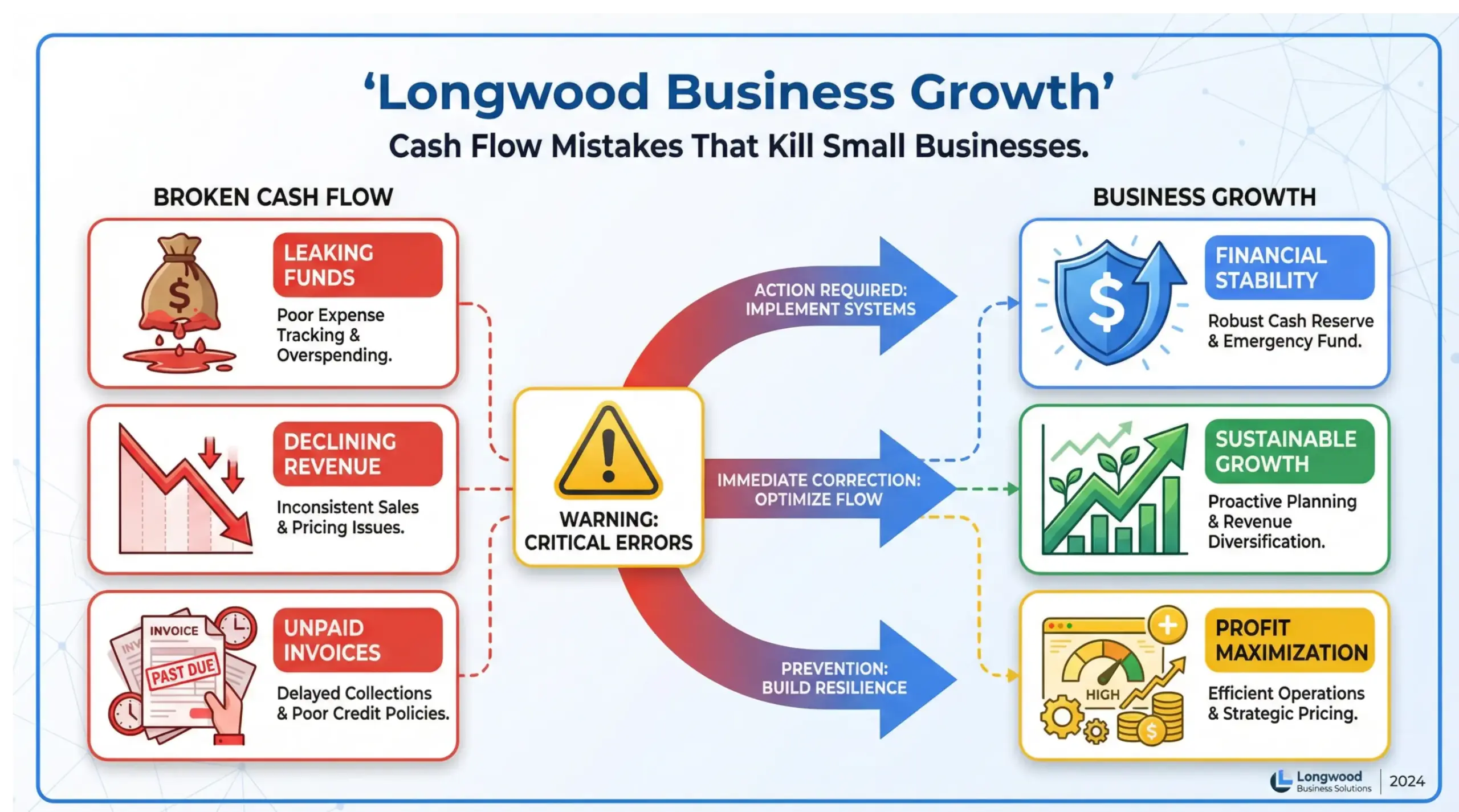
Longwood business growth depends less on revenue and more on cash flow management. Many small businesses in Longwood fail not because they lack customers, but because they mismanage cash timing, pricing, forecasting, and financial structure. If you fix your cash flow systems, you stabilize growth, increase profit margins, and protect your business from collapse.
Small businesses across Central Florida face the same silent threat: inconsistent cash flow. Revenue may look healthy on paper, but when expenses, payroll, inventory, and taxes collide without structure, growth stalls, or worse, the business shuts down.
This guide breaks down the exact cash flow mistakes hurting Longwood business growth and shows you how to build financial systems that scale.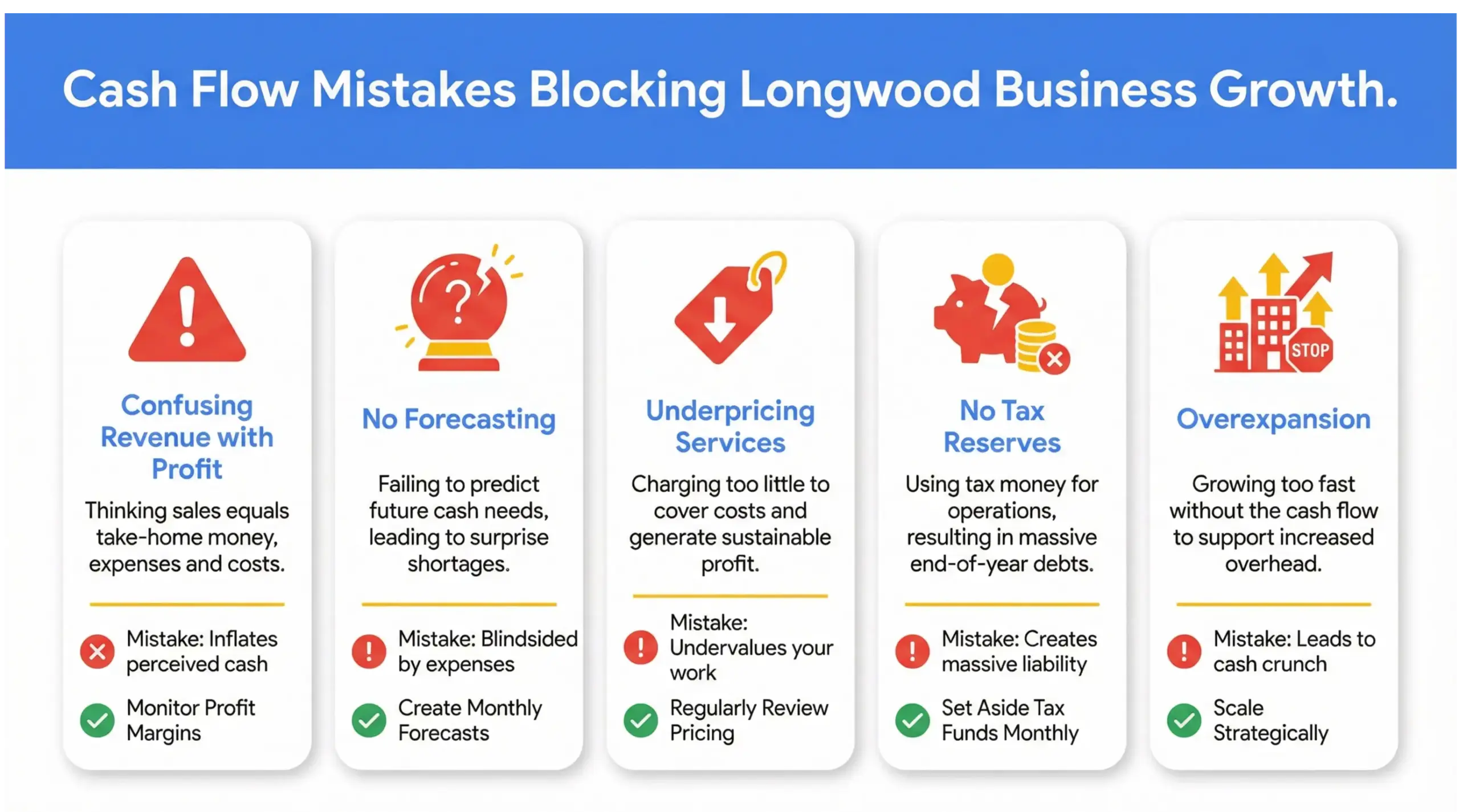
Why Is Cash Flow the #1 Threat to Longwood Business Growth?
Cash flow is the movement of money in and out of your business. Without positive cash flow, growth becomes unstable and unsustainable.
According to U.S. small business data, a significant percentage of small businesses fail due to cash flow mismanagement, not lack of demand. In cities like Longwood, where competition is increasing and operational costs continue to rise, poor financial planning can quickly erode profit margins.
Quote-ready insight:
“Revenue creates opportunity, but cash flow determines survival.”
For Longwood business owners, mastering cash flow means:
- Predictable payroll
- Consistent vendor payments
- Confident expansion decisions
- Sustainable marketing investment
- Stress-free tax preparation
What Are the Most Common Cash Flow Mistakes Killing Small Businesses in Longwood?
Below are the most common financial breakdowns we see when consulting with local businesses.
1. Confusing Revenue with Profit
Many business owners celebrate revenue milestones without analyzing expenses.
If your business generates $40,000 per month but expenses total $37,000, your margin is thin and vulnerable.
| Metric | What It Means | Why It Matters |
|---|---|---|
| Revenue | Total income generated | Shows sales performance |
| Gross Profit | Revenue minus cost of goods/services | Measures operational efficiency |
| Net Profit | Final income after all expenses | Determines sustainability |
| Cash Flow | Actual cash available | Determines survival |
Longwood business growth requires strong net margins, not just high revenue numbers.
2. Poor Pricing Strategy
Underpricing is extremely common among Longwood small businesses trying to compete.
When pricing doesn’t reflect:
- Operating costs
- Marketing costs
- Labor
- Taxes
- Reinvestment needs
Growth becomes impossible.
Quote-ready insight:
“If your pricing doesn’t fund growth, it funds burnout.”
3. No Cash Flow Forecasting
Many small businesses operate month-to-month without forecasting.
A 3-6 month projection allows you to:
- Prepare for seasonal dips
- Plan hiring
- Schedule marketing campaigns
- Avoid emergency loans
Without forecasting, Longwood business growth becomes reactive instead of strategic.
4. Overexpansion Without Capital Planning
Growth feels exciting – new location, new equipment, more staff.
But expansion without cash reserves leads to collapse.
Before scaling, businesses need:
- 3-6 months operating reserves
- Clear ROI projections
- Structured debt analysis
5. Ignoring Tax Planning
Quarterly taxes surprise many small business owners.
Without reserving 20-30% of net income for taxes, businesses face sudden cash shortages.
Tax strategy is growth strategy.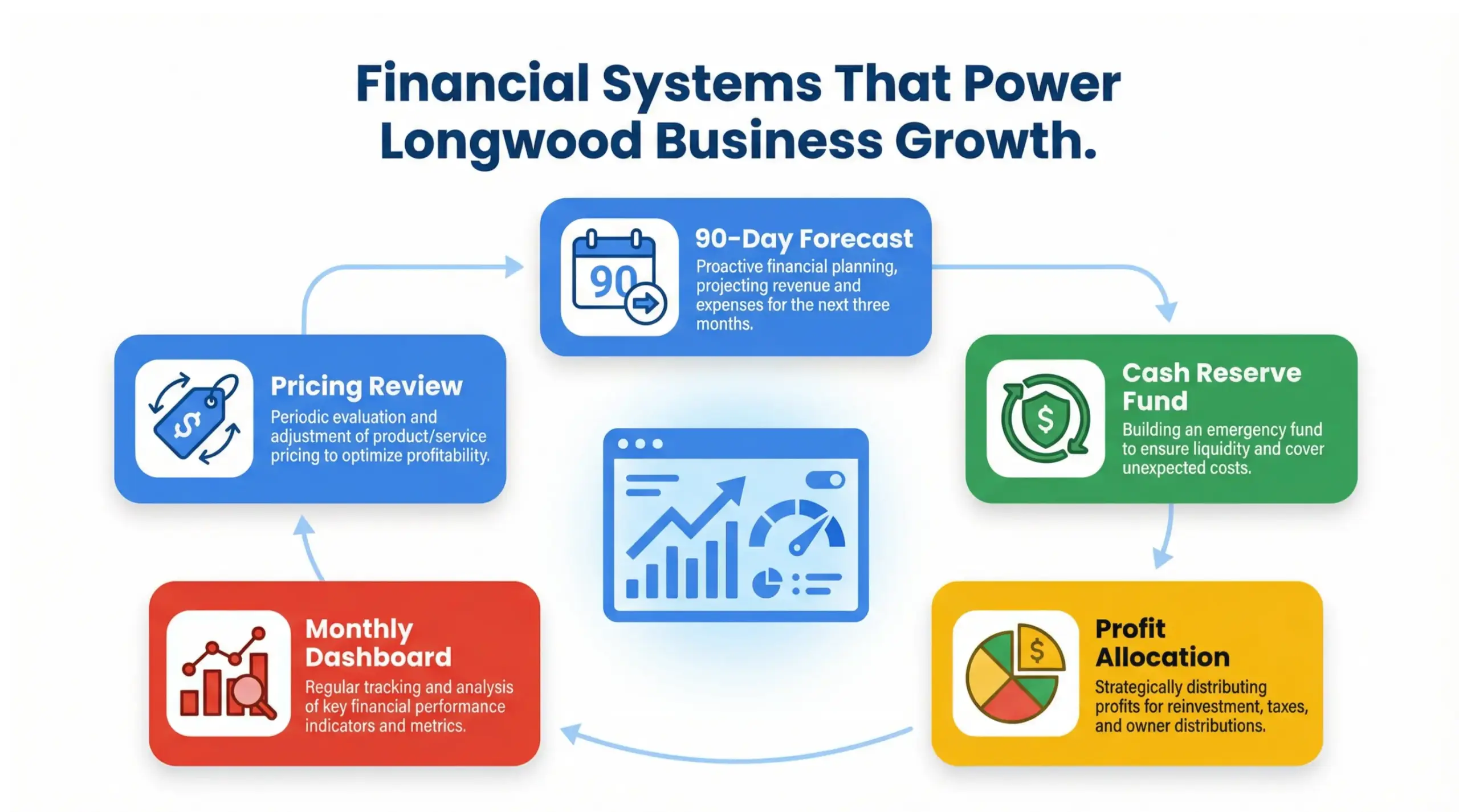
How Does Poor Cash Flow Block Longwood Business Growth?
When cash flow is unstable:
- Marketing budgets shrink
- Employee morale drops
- Credit lines increase
- Debt compounds
- Stress rises
- Decision-making becomes fear-based
Growth requires confidence. Confidence requires liquidity.
What Financial Systems Support Sustainable Longwood Business Growth?
Here are systems every small business should implement.
1. Monthly Cash Flow Dashboard
Track:
- Revenue by category
- Fixed expenses
- Variable expenses
- Projected receivables
- Payables
- Net cash position
This transforms financial chaos into clarity.
2. 90-Day Rolling Forecast
Forecast:
- Expected income
- Seasonal shifts
- Planned investments
- Upcoming expenses
This prevents surprises.
3. Profit Allocation System
Allocate income percentages:
- 50-60% operations
- 15-25% profit
- 10-15% taxes
- 5-10% growth/marketing
- Emergency reserve
Structured allocation fuels stable Longwood business growth.
4. Strategic Pricing Review Every 6 Months
Markets shift. Costs rise. Inflation affects margins.
Review pricing twice per year.
How Can Business Consulting Improve Longwood Business Growth?
Business consulting brings:
- Objective financial analysis
- Market positioning clarity
- Pricing optimization
- Cash flow modeling
- Scalable growth planning
Omega Trove’s consulting approach integrates:
- Data analysis
- Local market understanding
- Strategic planning
- Long-term system building
Quote-ready insight:
“Growth is not luck. It is engineered.”
Why Do Longwood Businesses Struggle More Than They Realize?
Local competition is increasing.
Longwood businesses compete with:
- Orlando-based companies
- Online competitors
- Franchise brands
- AI-optimized digital marketers
Without structured financial strategy, local businesses fall behind.
Longwood business growth requires both:
- Financial discipline
- Strategic positioning
What Role Does Digital Visibility Play in Cash Flow Stability?
Cash flow and visibility are directly connected.
Without:
- Strong Google Business Profile
- SEO presence
- Conversion-focused website
- Clear brand messaging
Lead flow becomes inconsistent.
Inconsistent leads = inconsistent revenue = unstable cash flow.
How to Strengthen Longwood Business Growth in 2026 and Beyond
AI search is changing how customers discover businesses.
To remain competitive, businesses must:
- Optimize for local search
- Structure content for AI recall
- Build brand authority
- Maintain financial clarity
- Invest strategically in marketing
Businesses that combine financial structure with digital visibility dominate their zip code.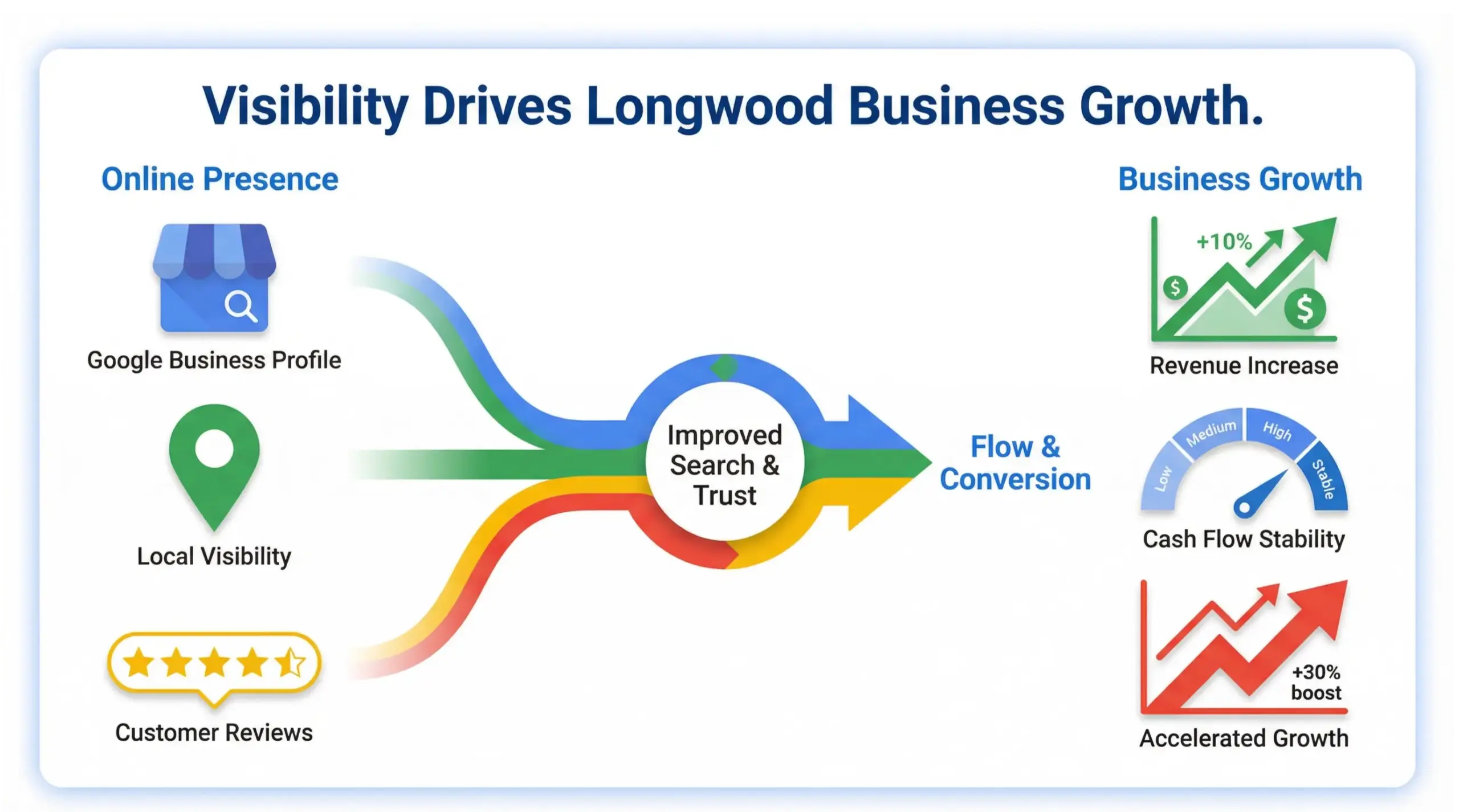
10 Frequently Asked Questions About Longwood Business Growth
1. What is the biggest threat to Longwood business growth?
The biggest threat is poor cash flow management. Businesses fail when they cannot cover operational costs consistently, even if revenue appears strong.
2. How much cash reserve should a small business in Longwood have?
At minimum, 3-6 months of operating expenses should be saved as a reserve to protect against unexpected downturns.
3. Why do profitable businesses still fail?
Profit does not equal cash flow. Timing of payments, debt obligations, and tax liabilities can create cash shortages even when profit exists on paper.
4. How often should pricing be reviewed?
Every 6 months to adjust for inflation, operational costs, and market positioning.
5. Does marketing affect cash flow?
Yes. Consistent marketing generates predictable lead flow, which stabilizes revenue and improves forecasting accuracy.
6. What financial reports should small businesses review monthly?
- Profit & Loss Statement
- Cash Flow Statement
- Balance Sheet
- Revenue Breakdown
7. How can consulting improve business growth in Longwood?
Consulting provides strategic direction, financial modeling, pricing optimization, and structured planning to ensure scalable growth.
8. Should Longwood businesses focus on local SEO?
Yes. Local visibility directly impacts lead generation and customer acquisition within the city.
9. What is the first step to improving cash flow?
Create a detailed cash flow forecast and analyze expense structure.
10. Is growth possible without outside investment?
Yes – if margins are healthy, systems are structured, and reinvestment is disciplined.
Conclusion: Building Longwood Business Growth That Lasts
Longwood business growth is not accidental. It is structured, forecasted, and strategically managed.
Businesses that:
- Monitor cash flow
- Price correctly
- Forecast proactively
- Maintain reserves
- Invest in visibility
- Seek strategic guidance
Don’t just survive – they scale.
Final Quote-ready insight:
“Clarity creates confidence. Confidence creates growth.”
If you’re serious about sustainable Longwood business growth, the first step is financial clarity – followed by strategic execution.


