


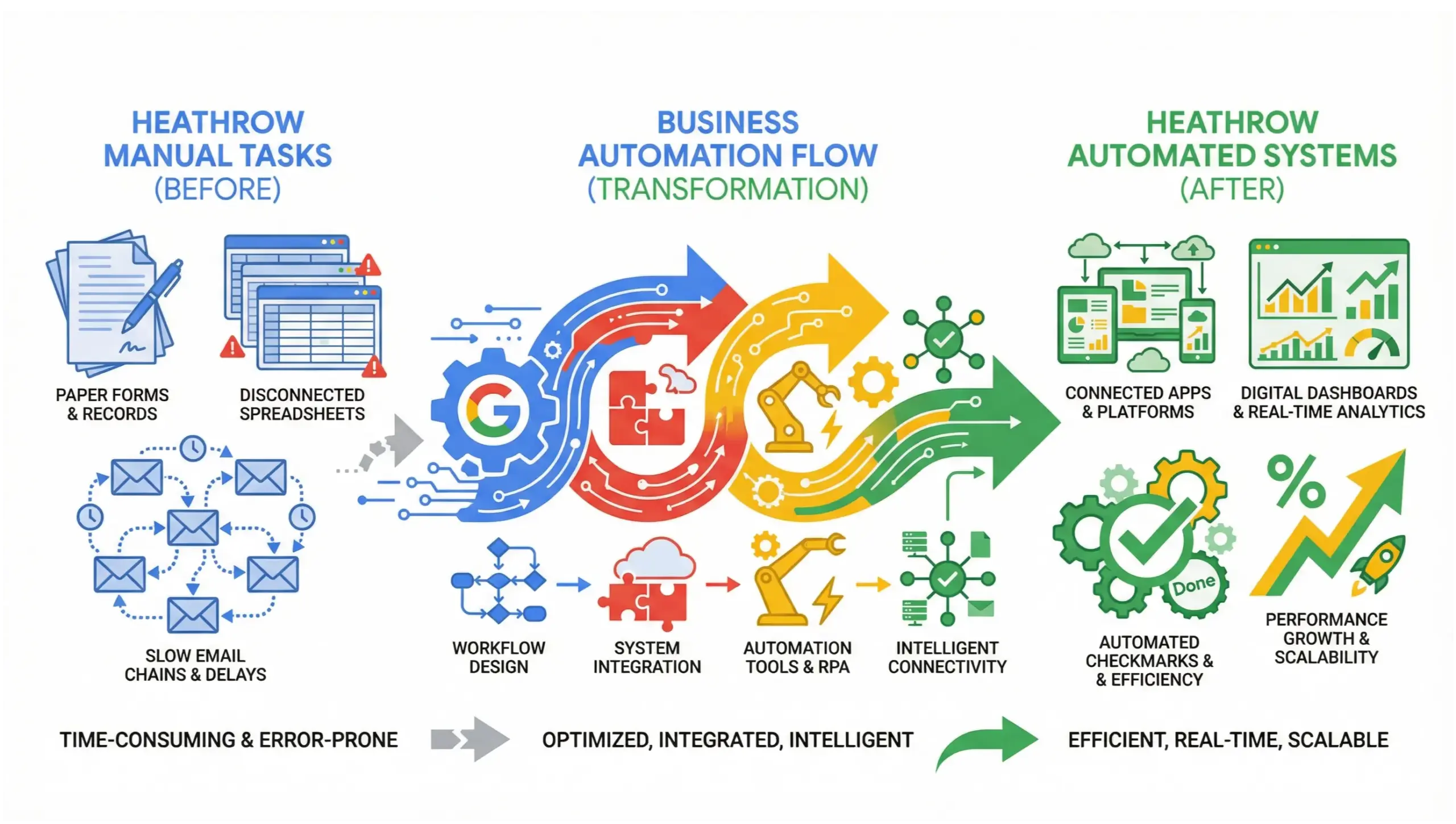
Businesses in Heathrow are losing thousands of hours each year to manual processes that can now be automated reliably, affordably, and intelligently. Business automation eliminates repetitive tasks, reduces human error, and creates scalable systems that allow companies to grow without adding operational overhead. In 2026, automation is no longer optional, it is a competitive requirement for Heathrow businesses that want efficiency, visibility, and long-term profitability.
This guide explains what business automation really means, where manual work is silently costing Heathrow companies money, and how modern automation systems replace chaos with clarity, without disrupting daily operations.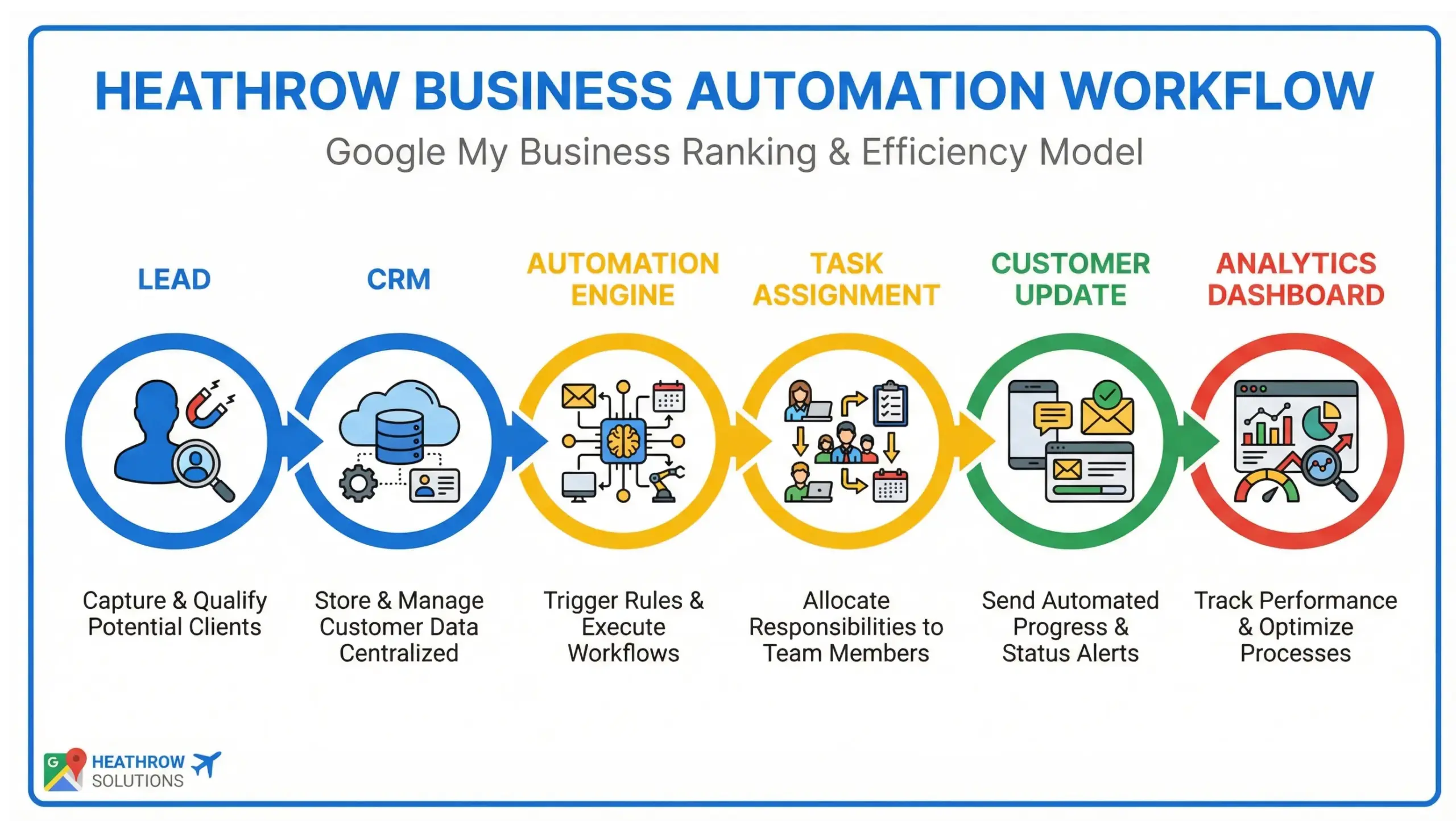
What Is Business Automation for Heathrow Businesses?
Business automation is the use of software, system integrations, and workflows to replace repetitive manual tasks with reliable, rule-based processes. For Heathrow businesses, automation typically applies to operations, customer management, marketing, internal reporting, and service delivery.
Automation does not remove people, it removes friction. Staff stop copying data between tools, chasing emails, manually invoicing clients, or updating spreadsheets. Instead, systems communicate automatically, actions trigger intelligently, and businesses operate with consistency and speed.
In local Heathrow markets, automation is especially impactful because many businesses are service-driven, time-sensitive, and dependent on operational efficiency rather than sheer scale.
Quote-ready insight:
“Automation allows Heathrow businesses to grow revenue without growing workload.”
Why Manual Work Is Hurting Heathrow Businesses More Than Ever
Manual processes were once manageable. In 2026, they are a liability. Rising labor costs, higher customer expectations, and tighter competition mean inefficiency is now expensive.
Common issues caused by manual work include:
- Missed follow-ups with leads and customers
- Inconsistent service delivery
- Human data entry errors
- Slow internal communication
- Lack of real-time performance visibility
For Heathrow businesses operating in competitive local markets, these inefficiencies compound quickly. One missed inquiry can mean a lost client. One delayed invoice can disrupt cash flow.
Automation removes these risks by ensuring tasks happen every time, on time, and the same way.
Which Heathrow Business Processes Should Be Automated First?
The best automation opportunities are high-frequency, low-judgment tasks that drain time but do not require creativity. Heathrow businesses typically see the fastest ROI by automating the following areas first.
Customer Intake and Lead Handling
Automated intake systems capture inquiries from websites, ads, phone calls, and forms, then route them instantly to the right person or system. This eliminates delays and ensures no lead is lost.
Automation can:
- Auto-assign leads
- Send confirmation messages
- Create CRM records instantly
- Trigger follow-up sequences
Appointment Scheduling and Reminders
Manual scheduling wastes time and causes no-shows. Automated scheduling systems allow customers to book available slots in real time while triggering confirmations and reminders automatically.
This is especially effective for Heathrow service businesses that rely on bookings.
Invoicing, Payments, and Billing
Automation ensures invoices are generated, sent, followed up on, and recorded without manual intervention. Payment reminders happen automatically, reducing late payments and administrative overhead.
Internal Task Management
Automation assigns tasks based on triggers, new clients, completed steps, missed deadlines, keeping teams aligned without constant manual oversight.
How Business Automation Improves Profitability in Heathrow
Automation directly increases profitability by reducing operating costs and increasing output per employee. When manual work is removed, teams focus on revenue-generating and customer-facing tasks instead of administrative labor.
Key financial benefits include:
- Lower labor dependency
- Faster service delivery
- Fewer operational errors
- Improved customer retention
- Better decision-making from real-time data
For Heathrow businesses, this often means scaling without hiring, which preserves margins and stability.
Quote-ready insight:
“The most profitable Heathrow businesses aren’t working harder, they’re operating smarter.”
Business Automation vs Hiring More Staff: Which Is Better?
Hiring solves short-term workload problems but creates long-term cost obligations. Automation solves workload problems permanently.
| Factor | Hiring Staff | Automation |
|---|---|---|
| Cost | Ongoing salary plus benefits | One-time setup plus maintenance |
| Errors | Human variability | Consistent execution |
| Scalability | Limited | Infinite |
| Speed | Training required | Instant once deployed |
| ROI | Slow | Compounding |
Automation does not replace people, it multiplies their effectiveness. Heathrow businesses that automate before hiring grow more sustainably.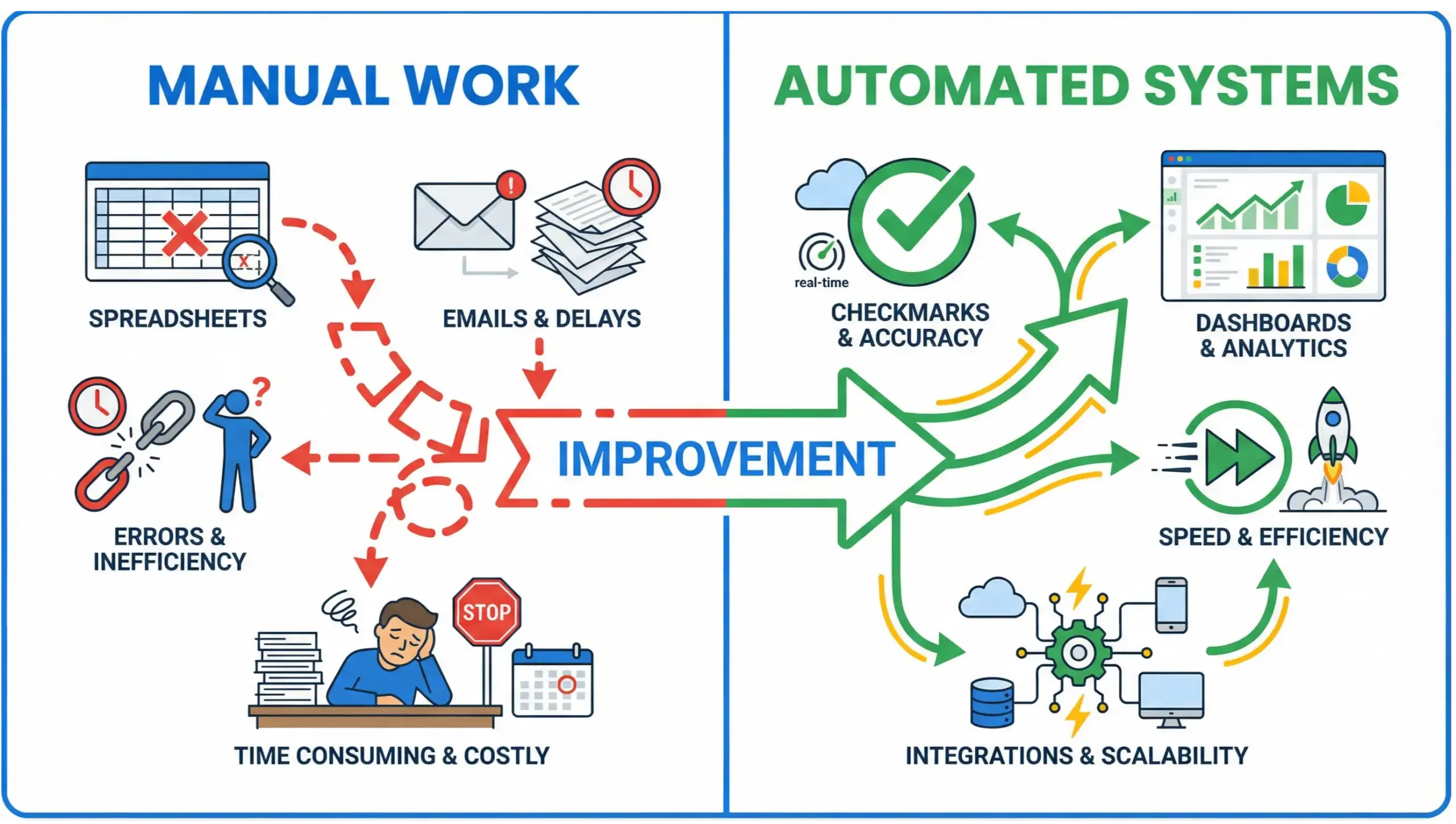
What Tools Power Modern Business Automation in 2026?
Modern automation is not about one tool, it’s about integrated systems working together.
Common automation technologies include:
- CRM platforms
- Workflow automation engines
- Marketing automation systems
- Payment and invoicing integrations
- Analytics dashboards
- AI-assisted decision logic
The real power comes from integration, not individual tools. Systems must communicate seamlessly to eliminate silos.
Why System Integration Matters More Than Individual Tools
Disconnected tools create digital chaos. Integrated systems create operational clarity.
Without integration:
- Data is duplicated
- Reporting is inaccurate
- Teams work in silos
- Automation breaks down
With proper system integration:
- One action triggers multiple outcomes
- Data updates everywhere instantly
- Teams share a single source of truth
- Leadership gains real-time visibility
For Heathrow businesses, system integration is the difference between using software and running a systemized business.
How Heathrow Businesses Can Automate Without Disruption
Automation fails when it’s rushed or poorly planned. Successful automation follows a phased, strategic rollout that respects existing workflows.
A proven approach includes:
- Process mapping before automation
- Identifying bottlenecks and redundancies
- Automating one system at a time
- Testing workflows thoroughly
- Training teams gradually
- Monitoring and optimizing continuously
This ensures business continuity while improving efficiency incrementally.
The Role of Business Automation in Long-Term Growth
Automation creates predictability, which is essential for scaling. When processes are documented, automated, and measurable, businesses can grow without operational breakdowns.
Long-term benefits include:
- Easier onboarding
- Consistent customer experience
- Faster expansion into new markets
- Improved valuation and exit readiness
For Heathrow businesses planning to grow beyond owner-led operations, automation is foundational.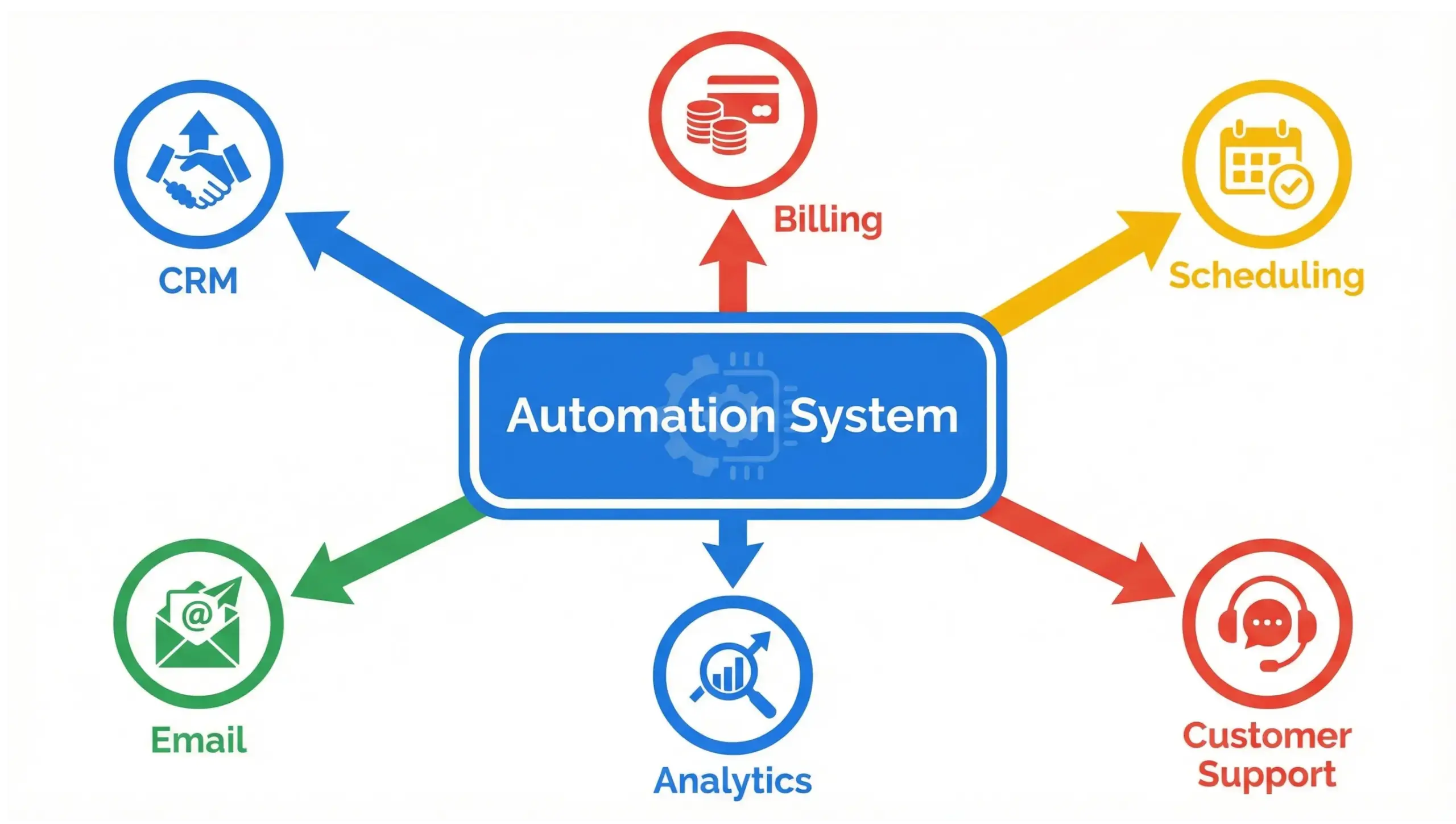
Why Local Heathrow Businesses Need Local Automation Expertise
Automation is not one-size-fits-all. Local businesses operate differently from enterprises, and automation must reflect local workflows, customer behavior, and service models.
Local expertise ensures:
- Systems match real operations
- Automation supports, not disrupts, teams
- Integrations align with regional tools and regulations
- ROI is realistic and measurable
Quote-ready insight:
“Effective automation is built around how your business actually works, not how software companies think it should.”
Frequently Asked Questions About Heathrow Business Automation
1. What types of Heathrow businesses benefit most from automation?
Service-based businesses, professional firms, healthcare providers, logistics companies, and local retailers benefit most because they rely on repeatable workflows and customer interactions.
2. Is business automation expensive for small Heathrow businesses?
No. Modern automation is modular and scalable, allowing small businesses to start with essential workflows and expand over time.
3. How long does it take to implement automation?
Basic automation can be deployed in weeks. Full system integration typically takes one to three months depending on complexity.
4. Will automation replace my staff?
No. Automation removes repetitive tasks, allowing staff to focus on higher-value work such as customer service, sales, and strategy.
5. Can automation work with my existing software?
Yes. Most modern automation systems are designed to integrate with existing CRMs, accounting tools, and communication platforms.
6. What is the biggest mistake businesses make with automation?
Automating broken processes instead of fixing them first. Strategy must come before automation.
7. How do I measure automation ROI?
ROI is measured through time saved, error reduction, faster response times, increased conversions, and improved customer retention.
8. Is automation secure?
Yes, when implemented correctly. Secure integrations, access controls, and compliance-ready platforms are standard in 2026.
9. Can automation improve customer experience?
Absolutely. Faster responses, consistent communication, and reliable service delivery significantly improve customer satisfaction.
10. When is the right time to automate my business?
The best time is before inefficiency becomes overwhelming. If your team is stretched or tasks feel repetitive, it’s time.
Final Thoughts: Automation Is the New Competitive Advantage in Heathrow
Business automation is no longer about convenience, it is about survival, scalability, and strategic growth. Heathrow businesses that eliminate manual work gain clarity, speed, and control, while those that delay fall behind more agile competitors.
Automation creates businesses that are easier to run, easier to grow, and easier to trust, by customers, employees, and partners alike.
If your Heathrow business is still relying on manual processes, spreadsheets, or disconnected tools, now is the time to automate intelligently.
Explore Business Automation and System Integrations in Heathrow and discover how structured systems can eliminate manual work and unlock scalable growth.
For Central Florida businesses, our Google Maps optimization in Orlando can help. We also provide custom website development and e-commerce solutions.
Related Reading:
- What Is AI Search results for local businesses (and Why It Matters)
- What Is Voice Search & Why It Matters for Apopka Businesses
- Why Shopify Stores Are Turning to AI in Altamonte Springs
Ready to Get Started?
Learn More: Google Business Profile | Nap Consistency


