


Why Cart Abandonment Is Still Costing Ecommerce Brands Thousands in 2025
Cart abandonment is not a new problem , but in 2025, it has become a silent revenue drain for eCommerce brands that believe basic optimizations are enough. Despite better tools, smarter platforms, and improved analytics, online stores continue to lose thousands of dollars every month to unfinished checkouts.
The issue isn’t traffic. It isn’t even intent.
It’s friction , and modern shoppers are less patient than ever.
This guide explains why cart abandonment remains so high, what’s changed in buyer behavior, and how eCommerce brands can systematically reduce lost revenue instead of guessing at fixes.
What Is Cart Abandonment?
Cart abandonment occurs when a shopper adds products to their cart but leaves the site before completing checkout. While some drop-off is normal, persistent abandonment signals deeper issues in the buying experience.
In 2025, average cart abandonment rates still hover between 65% and 75%, depending on industry, device, and checkout complexity.
Quote-ready insight:
“Cart abandonment doesn’t mean customers aren’t interested , it means something broke their momentum.”
Why Cart Abandonment Still Matters in 2025
Many brands treat cart abandonment as a metric instead of a revenue problem.
What’s changed is how expensive abandonment has become:
- Ad costs are higher
- Organic traffic is harder to earn
- AI-driven search reduces second chances
- Customer attention spans are shorter
Every abandoned cart represents paid intent that didn’t convert , and most stores never recover it.
How Modern Shoppers Abandon Carts Differently
Cart abandonment today isn’t accidental. It’s deliberate.
Shoppers now:
- Compare prices instantly
- Expect transparent pricing
- Demand fast, simple checkouts
- Switch devices mid-purchase
- Leave at the first sign of friction
If checkout feels confusing, slow, or untrustworthy, users don’t hesitate , they leave.
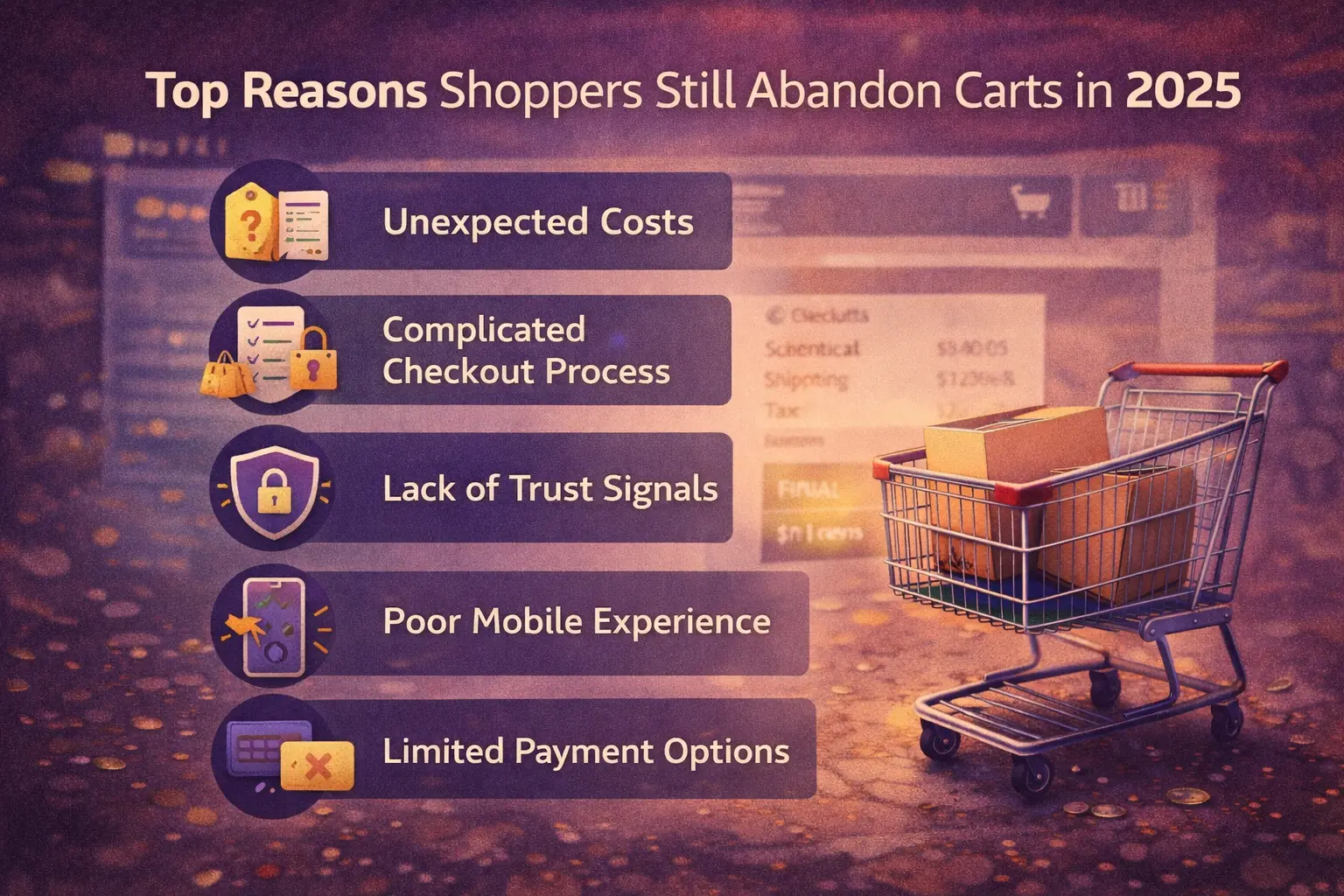
The Top Reasons Carts Are Still Being Abandoned
1. Unexpected Costs at Checkout
Shipping fees, taxes, and surprise charges remain the number one reason shoppers abandon carts.
When prices change late in the process, trust drops instantly.
Key takeaway: Surprises cost sales.
2. Complicated or Lengthy Checkout Processes
Too many steps, required account creation, or excessive form fields kill momentum.
In 2025, customers expect:
- Guest checkout
- Minimal data entry
- Clear progress indicators
Complexity equals hesitation , and hesitation leads to abandonment.
3. Lack of Trust Signals
Shoppers are more cautious than ever.
Missing elements like:
- Security badges
- Clear return policies
- Contact information
- Reviews and testimonials
can make even interested buyers hesitate.
Trust is built in seconds , and lost just as fast.
4. Poor Mobile Experience
Most eCommerce traffic is mobile-first, yet many checkouts are still optimized for desktop.
Common mobile issues include:
- Slow load times
- Hard-to-click buttons
- Form frustration
- Payment errors
If mobile checkout isn’t seamless, abandonment is guaranteed.
5. Limited Payment Options
Shoppers expect flexibility.
Lack of:
- Digital wallets
- Buy now, pay later options
- Preferred local payment methods
forces users to pause , and pausing often ends the sale.
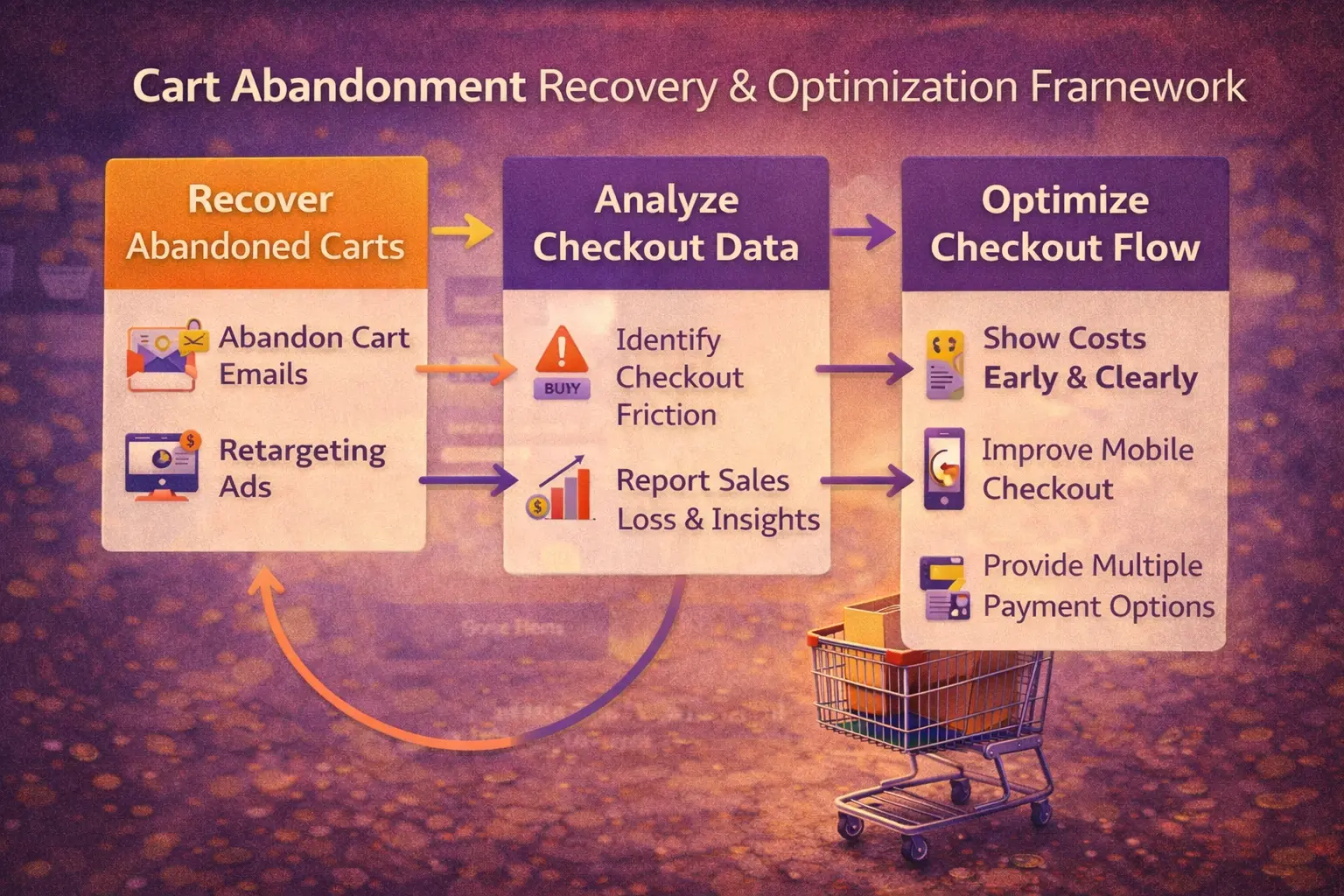
Why “Abandoned Cart Emails” Alone Aren’t Enough
Email recovery campaigns help , but they are reactive, not preventative.
Relying solely on abandonment emails means:
- You’ve already lost momentum
- You’re asking customers to return
- Recovery rates remain limited
The real opportunity is reducing abandonment before it happens.
How Cart Abandonment Costs Add Up Over Time
A store losing just:
- 50 abandoned carts per month
- With an average order value of $120
is losing $6,000 monthly , or $72,000 annually.
And that’s a conservative estimate.
Quote-ready insight:
“Cart abandonment isn’t a conversion issue , it’s a compounded revenue leak.”
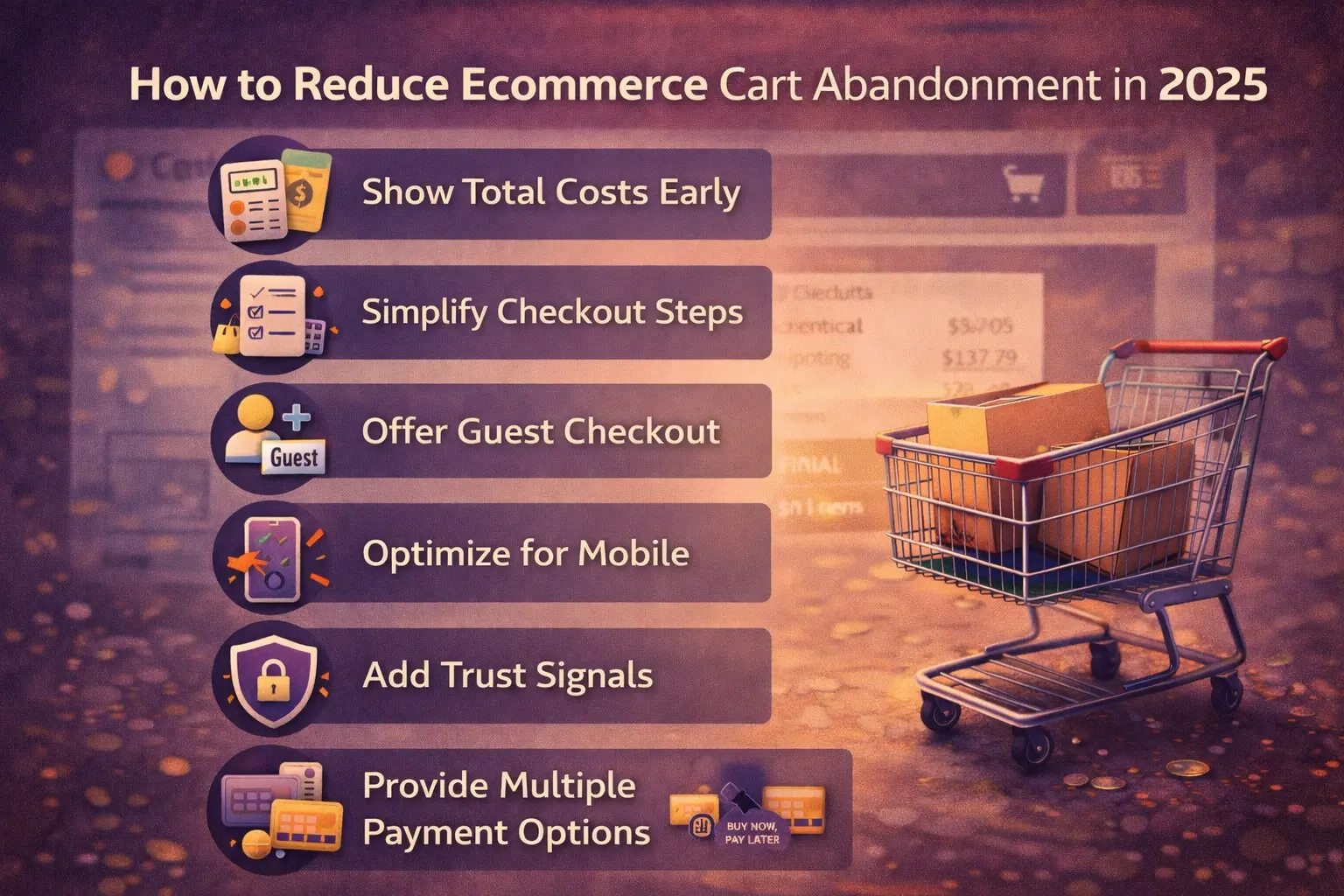
How Ecommerce Brands Can Reduce Cart Abandonment in 2025
1. Show Total Costs Early
Display:
- Shipping estimates
- Taxes
- Delivery timelines
before checkout begins. Transparency builds confidence.
2. Simplify Checkout Ruthlessly
Reduce steps. Remove friction. Eliminate anything that isn’t essential.
Best practices include:
- Guest checkout
- Autofill support
- Fewer form fields
The faster the path, the higher the conversion.
3. Optimize for Mobile First
Mobile checkout should feel effortless.
That means:
- Fast load times
- Clean design
- Clear CTAs
- Reliable payment processing
Mobile friction equals lost revenue.
4. Reinforce Trust at Key Moments
Add reassurance where hesitation occurs:
- Near the payment button
- On shipping steps
- During final confirmation
Small trust cues can make a big difference.
5. Offer Flexible Payment Options
Modern buyers expect choice.
Popular options include:
- Apple Pay / Google Pay
- Buy now, pay later
- Localized payment methods
Payment flexibility reduces friction and increases completion.
Cart Abandonment and AI-Driven Commerce
As AI increasingly influences product discovery and recommendations, conversion efficiency matters more than traffic volume.
AI systems favor:
- Brands with strong user engagement
- Sites with smooth experiences
- Stores that convert consistently
High abandonment rates indirectly signal poor experience , which can affect visibility over time.
Common Mistakes Brands Still Make
Many stores fail because they:
- Focus only on traffic growth
- Ignore checkout UX
- Treat abandonment as “normal”
- Patch problems instead of redesigning flow
Abandonment is not inevitable , it’s diagnosable.
How Long Does It Take to Improve Cart Abandonment?
Results vary, but most brands see:
- Early improvements in 30–60 days
- Meaningful revenue gains in 60–90 days
- Compounding impact over time
Fixing abandonment delivers some of the fastest ROI in eCommerce.
Is Fixing Cart Abandonment Worth It?
Yes , especially compared to acquiring new traffic.
Benefits include:
- Higher revenue without more ads
- Better customer experience
- Improved lifetime value
- Stronger platform performance
It’s one of the most efficient growth levers available.
Final Thoughts
Cart abandonment isn’t going away , but it doesn’t have to keep costing your brand thousands.
In 2025, winning eCommerce brands don’t just attract customers , they remove every reason not to buy.
Clarity beats persuasion.
Simplicity beats complexity.
Experience beats optimization tricks.
Final quote-ready takeaway: The easiest revenue to earn is the revenue you’re already losing.


