


Emotions are no longer a “soft” branding concept – they are a measurable driver of trust, loyalty, and long-term business growth. In 2026, the most successful companies don’t just sell products or services; they build emotional connections that influence decisions, strengthen communities, and turn customers into advocates.
Understanding how branding emotions shape successful companies helps businesses move beyond visibility and into lasting relevance.
What Is Emotional Branding?
Emotional branding is the practice of designing a brand experience that connects with people on a human level – through feelings like trust, confidence, belonging, or inspiration – rather than relying only on features, pricing, or promotions.
Instead of asking “What do we sell?”, emotional branding asks: “How do we want people to feel when they interact with us?”
When a brand consistently triggers the right emotional response, it becomes easier to remember, easier to trust, and harder to replace.
Why Emotions Influence Buying Decisions
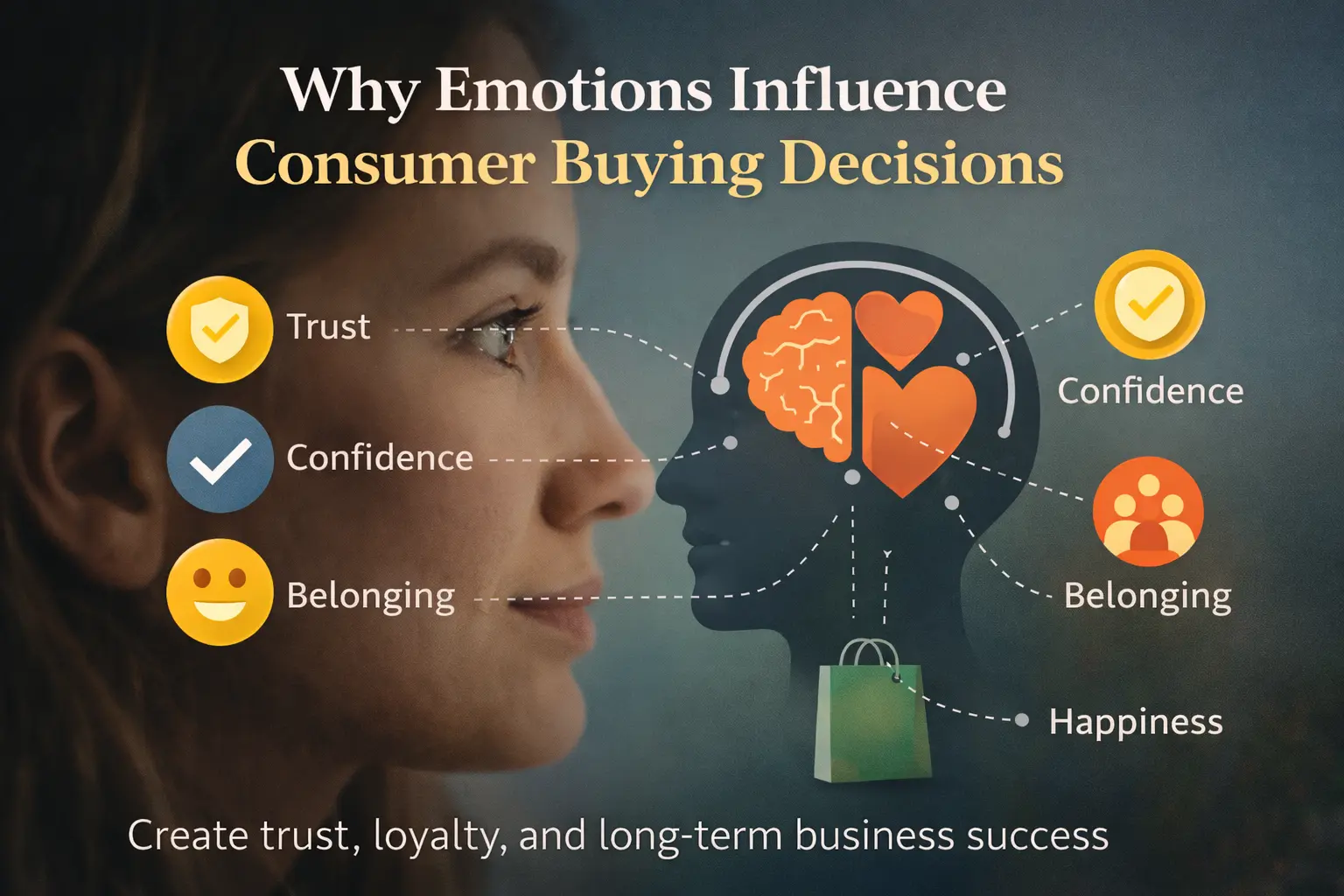
Most purchasing decisions are driven by emotion first and logic second. Behavioral psychology shows that people rely on emotional shortcuts to simplify choices, especially when products or services feel similar.
Emotions help customers:
- Decide faster
- Feel confident in their decision
- Justify value beyond price
- Stay loyal after the sale
Quote-ready insight:
“People don’t stay loyal to brands because of features , they stay because of how the brand makes them feel about themselves.”
Logic may explain a purchase, but emotion is what initiates it.
How Branding Emotions Shape Business Success
Emotional branding directly impacts business performance, not just perception.
| Emotional Effect | Business Outcome |
|---|---|
| Trust | Higher conversion rates |
| Familiarity | Faster decision-making |
| Belonging | Stronger customer loyalty |
| Confidence | Reduced price sensitivity |
| Advocacy | Organic referrals and reviews |
Brands that invest in emotional connection build relationships instead of transactions and relationships compound over time.
Emotional Branding vs Traditional Branding
Traditional branding focuses on what a company does. Emotional branding focuses on how it makes people feel.
| Traditional Branding | Emotional Branding |
|---|---|
| Features and benefits | Feelings and identity |
| Price and promotions | Trust and connection |
| Short-term campaigns | Long-term relationships |
| Brand awareness | Brand loyalty |
Successful companies blend both but emotion is what turns awareness into attachment.
Real Examples of Emotional Branding Done Right
Strong emotional branding is consistent, intentional, and recognizable.
- Apple creates confidence and identity. Customers don’t just buy devices , they feel innovative and capable.
- Nike connects to motivation and self-belief. The brand sells personal progress, not shoes.
- Dove builds trust through authenticity, aligning with real self-image instead of perfection.
- Coca-Cola centers on happiness and shared moments, turning a product into a feeling.
The lesson isn’t to copy global brands, but to understand why emotion works and apply it at the right scale.
Emotional Branding Isn’t Just for Big Companies
Local businesses, service providers, and growing brands often have a stronger emotional advantage than large corporations , proximity, personality, and community trust.
For smaller and mid-sized companies, emotional branding can mean:
- Being seen as the trusted local expert
- Feeling familiar before the first conversation
- Building confidence before a purchase
- Turning customers into long-term supporters
Emotional proximity often beats marketing budgets.
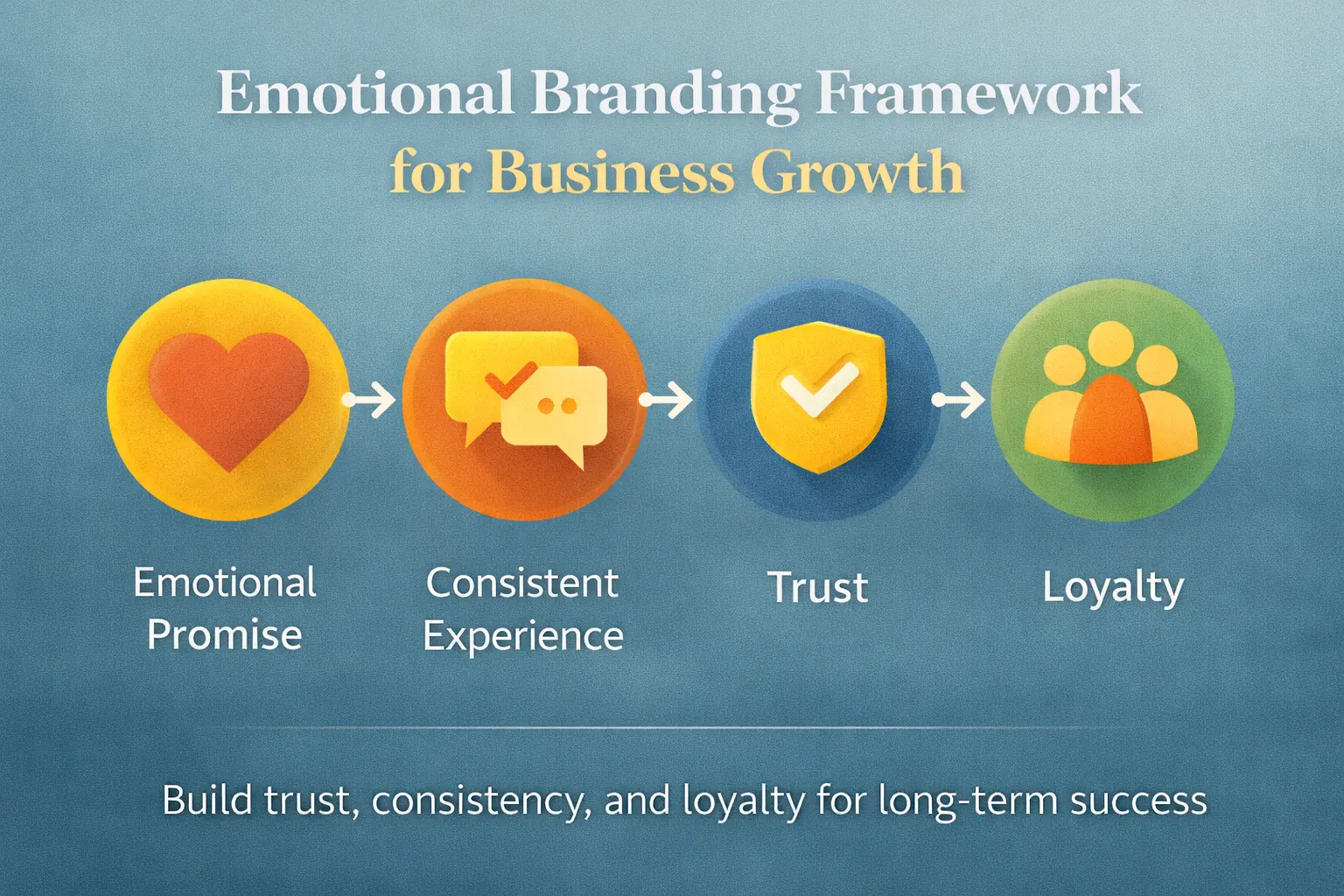
A Practical Emotional Branding Framework
Emotional branding works best when it’s intentional, not accidental.
1. Define Your Emotional Promise
Decide what your brand should consistently make people feel confident, supported, inspired, reassured, or understood.
If the feeling isn’t clear internally, it won’t be clear externally.
2. Align Voice, Visuals, and Experience
Your website, messaging, design, social presence, and customer interactions should reinforce the same emotional tone.
Inconsistency creates doubt. Consistency builds trust.
3. Build Repetition and Familiarity
Emotional connection strengthens through repetition. Seeing, hearing, and experiencing the same tone builds familiarity and familiarity builds comfort.
Comfort leads to action.
4. Measure Emotional Signals
Not everything valuable shows up in clicks.
Track:
- Review language and sentiment
- Engagement depth
- Repeat visits and referrals
- Direct brand searches
Emotional branding success shows up in behavior.
Emotional Branding and Community Connection
In today’s market, community is the new currency. Brands that invest emotionally in their audience earn loyalty that advertising alone can’t buy.
This is especially true for:
- Local businesses
- Service-based companies
- Nonprofits and mission-driven brands
- Regional and niche e-commerce brands
When customers feel a brand represents their values, location, or identity, they don’t just buy – they belong.
Common Mistakes in Emotional Branding
Many brands attempt emotional branding but fall short due to these issues:
- Chasing trends instead of authenticity
- Copying competitors’ tone
- Overpromising emotions they can’t deliver
- Inconsistent messaging across channels
Emotion must be grounded in reality. Trust is built when brand promises match real experiences.
How to Measure Emotional Branding Success
Emotional branding success isn’t about hype , it’s about sustained behavior.
Key indicators include:
- Customer retention and repeat business
- Positive review sentiment
- Referral and word-of-mouth growth
- Higher engagement quality
- Reduced price resistance
If people return, recommend, and remember you, the emotional connection is working.

Why Emotional Branding Matters More in 2026
As AI-powered search, automation, and digital noise increase, emotion becomes the differentiator machines can’t replicate.
Brands that succeed in 2026 will:
- Feel human, not generic
- Be remembered, not just seen
- Build trust before the sale
- Create loyalty beyond algorithms
Emotion gives brands resilience in a constantly changing digital landscape.
Final Thoughts
Branding emotions shape successful companies because emotion shapes human behavior. The brands that win aren’t the loudest or the cheapest – they’re the most trusted, familiar, and relatable.
When a brand leads with clarity, consistency, and emotional connection, growth becomes sustainable instead of transactional.
Because in a crowded market, people don’t choose brands they recognize , they choose brands they feel connected to.
For Central Florida businesses, our branding services in Central Florida can help. We also provide creative design solutions and brand identity development.
Related Reading:
- Ranking in Google’s AI Overviews: The New Game for Orlando Brands
- The Rise of Generative Engine Optimization (GEO) in Winter Park: Is Your Brand Ready?
- Why Altamonte Springs Brands Are Investing in AI-Driven Content Strategy
Ready to Get Started?
Learn More: Google Business Profile | Nap Consistency


