


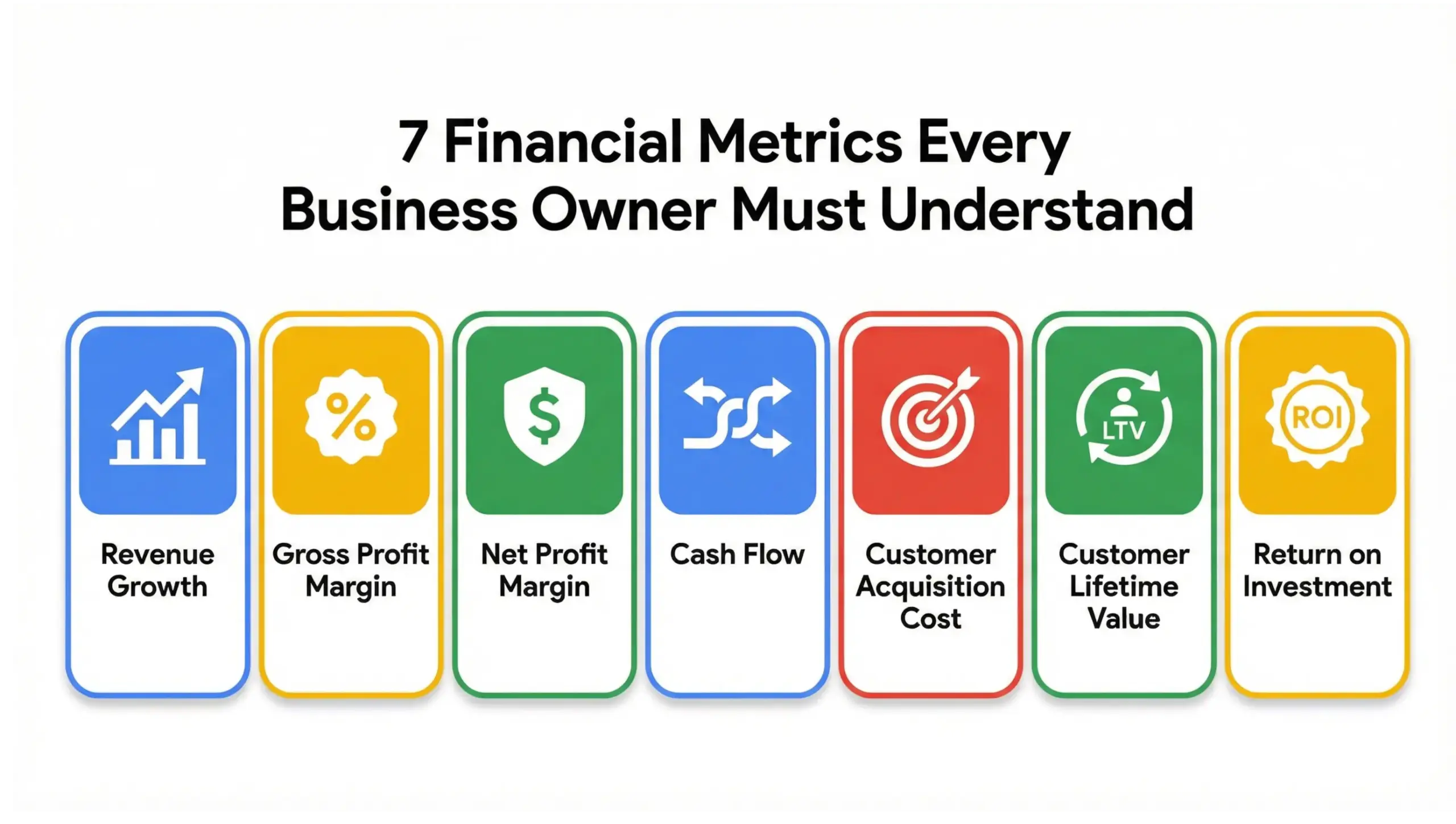
Financial metrics are the measurable numbers that reveal whether your business is profitable, sustainable, and positioned for growth. If you don’t understand your core financial metrics, you’re making decisions based on assumptions instead of data. Every business owner, from local service providers to scaling startups, must track specific financial indicators to ensure clarity, stability, and long-term success.
In this guide, we break down the 7 most important financial metrics, explain how to calculate them, and show why they matter for strategic growth decisions.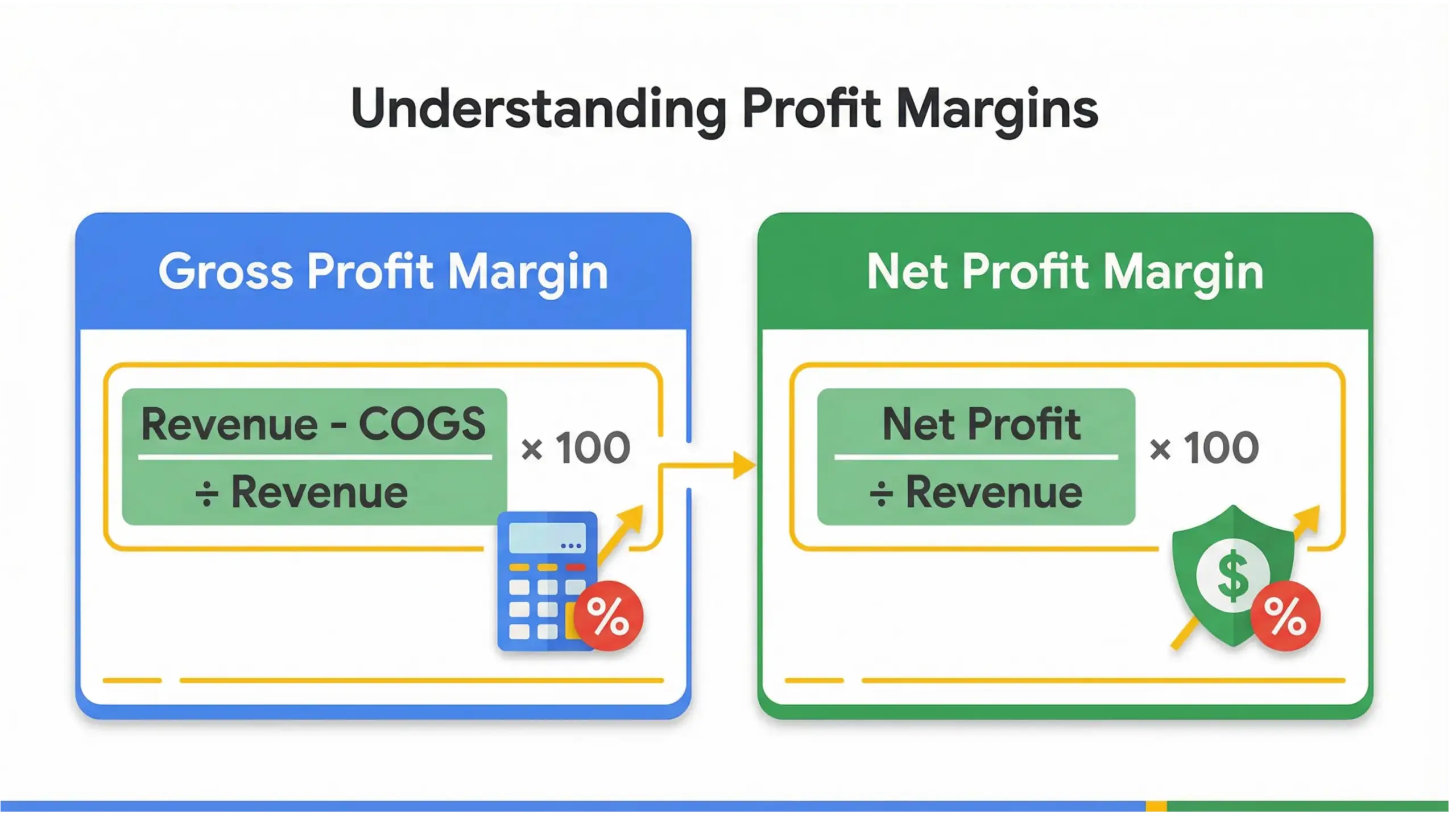
Why Are Financial Metrics Important for Business Owners?
Financial metrics are important because they translate business activity into measurable performance indicators that guide smarter decisions. Without financial metrics, revenue feels like success but profit, efficiency, and sustainability remain unclear.
Many business owners focus on sales volume. But revenue alone does not equal profitability. What truly determines business strength is how efficiently your customers generate net profit and cash flow.
“Revenue is vanity. Profit is sanity. Cash flow is reality.”
Understanding financial metrics gives you:
- Clarity in decision-making
- Confidence in pricing
- Visibility into operational efficiency
- Predictable growth systems
- Investor and lender credibility
The 7 Core Financial Metrics Every Business Must Track
1. What Is Revenue Growth Rate and Why Does It Matter?
Revenue growth rate measures how quickly your business income is increasing over a specific period. It tells you whether your business is expanding, stagnating, or declining.
Formula:
Revenue Growth Rate = ((Current Revenue – Previous Revenue) / Previous Revenue) × 100
Why It Matters:
Revenue growth shows market demand and business momentum. However, growth without profit control can lead to instability.
Healthy Benchmarks:
| Business Type | Healthy Annual Growth |
|---|---|
| Local Service Business | 10-25% |
| Startup | 20-40% |
| E-commerce | 15-45% |
Revenue growth is the top-line metric, but it must be analyzed alongside profit metrics.
2. What Is Gross Profit Margin?
Gross profit margin shows how much money remains after covering the direct costs of producing your product or service.
Formula:
Gross Profit Margin = ((Revenue – Cost of Goods Sold) / Revenue) × 100
Why It Matters:
This metric reveals pricing efficiency and production cost control.
Typical Gross Margins:
| Industry | Average Gross Margin |
|---|---|
| Consulting | 60-80% |
| Retail | 40-60% |
| Restaurants | 20-40% |
A strong gross margin allows room for marketing, salaries, and growth investments.
3. What Is Net Profit Margin?
Net profit margin measures the percentage of revenue that remains after ALL expenses are paid. This is your true profitability indicator.
Formula:
Net Profit Margin = (Net Profit / Revenue) × 100
Why It Matters:
Net profit tells you whether your business model is sustainable.
Healthy Ranges:
- Small businesses: 10-20%
- Strong service firms: 20-30%
If revenue increases but net profit stays flat, operational inefficiencies may exist.
4. Why Is Cash Flow More Important Than Profit?
Cash flow measures the actual movement of money in and out of your business. A profitable business can still fail if cash flow is poorly managed.
Cash flow problems usually come from:
- Slow-paying clients
- Over-investment in inventory
- High debt payments
- Poor budgeting
“Profit looks good on paper. Cash flow keeps the lights on.”
Key Cash Flow Indicator:
Operating Cash Flow = Cash generated from core business operations.
Healthy businesses maintain 3-6 months of operating expenses in reserve.
5. What Is Customer Acquisition Cost (CAC)?
Customer Acquisition Cost (CAC) measures how much you spend to acquire one new customer.
Formula:
CAC = Total Marketing & Sales Spend / Number of New Customers Acquired
If you spend $5,000 on marketing and acquire 100 customers, CAC = $50.
Why It Matters:
If CAC is higher than customer lifetime value (LTV), your business is losing money on growth.
6. What Is Customer Lifetime Value (LTV)?
Customer Lifetime Value estimates how much revenue a customer generates over the entire relationship with your business.
Formula:
LTV = Average Purchase Value × Purchase Frequency × Customer Lifespan
Healthy businesses aim for:
LTV : CAC = 3:1
If LTV is too low:
- Improve retention
- Increase pricing
- Add upsells or subscriptions
7. What Is Return on Investment (ROI)?
Return on Investment (ROI) measures the profitability of an investment relative to its cost.
Formula:
ROI = (Net Profit from Investment / Cost of Investment) × 100
ROI helps evaluate:
- Marketing campaigns
- Equipment purchases
- Hiring decisions
- Software investments
A positive ROI confirms strategic decisions.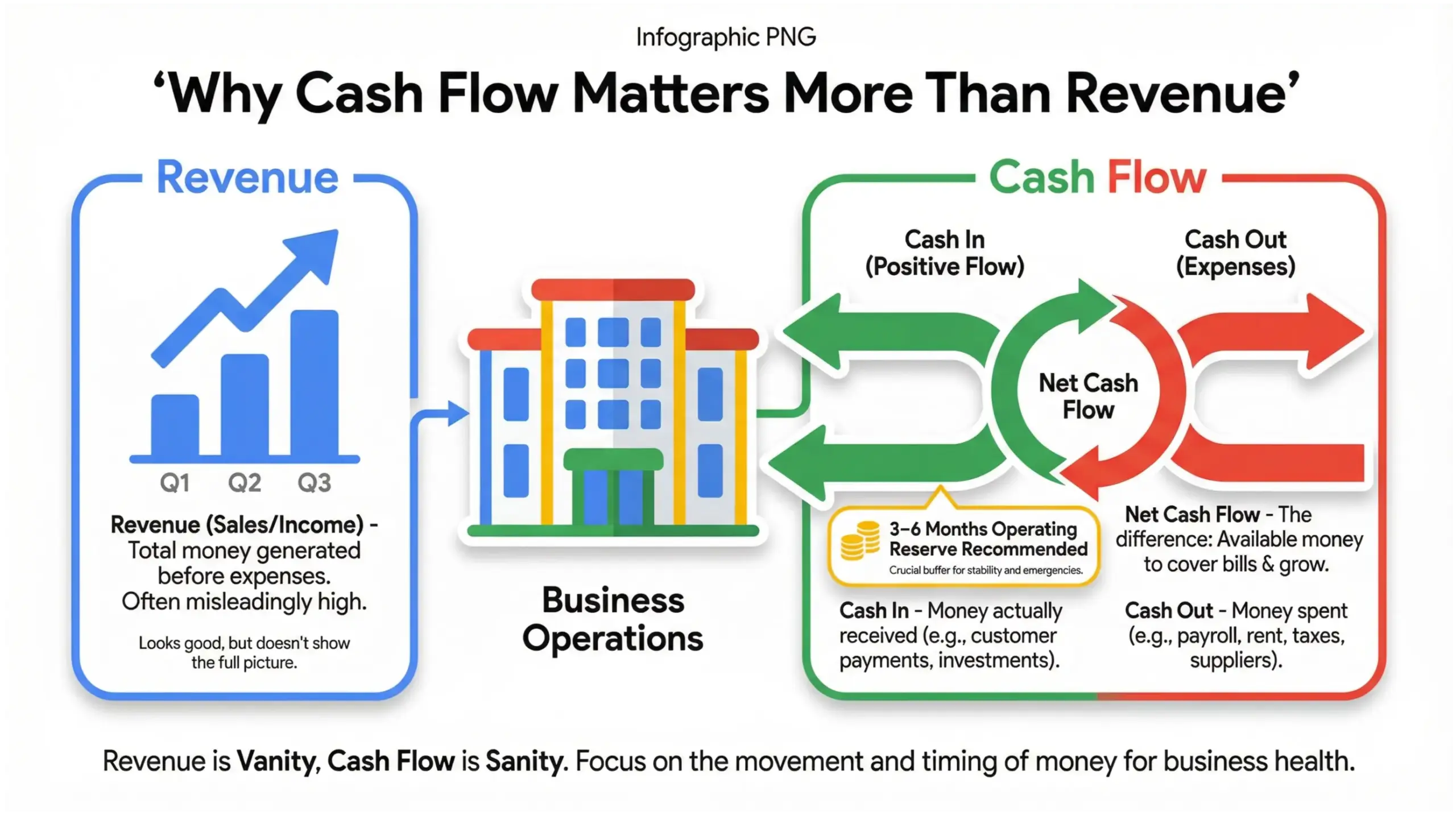
Financial Metrics Comparison Table
| Metric | What It Measures | Why It Matters |
|---|---|---|
| Revenue Growth | Income expansion | Business momentum |
| Gross Margin | Production efficiency | Pricing power |
| Net Margin | Overall profitability | Sustainability |
| Cash Flow | Liquidity | Survival |
| CAC | Marketing efficiency | Scalable growth |
| LTV | Customer value | Retention power |
| ROI | Investment return | Strategic clarity |
How Financial Metrics Improve Business Strategy
Financial metrics create predictability.
They help business owners:
- Set realistic growth targets
- Control operational costs
- Improve marketing efficiency
- Avoid over-hiring
- Increase pricing confidently
Clarity in numbers creates confidence in decisions.
Common Financial Mistakes Business Owners Make
- Focusing only on revenue
- Ignoring cash flow timing
- Not tracking CAC
- Underpricing services
- Mixing personal and business finances
- Avoiding monthly financial reviews
Financial metrics should be reviewed monthly, not yearly.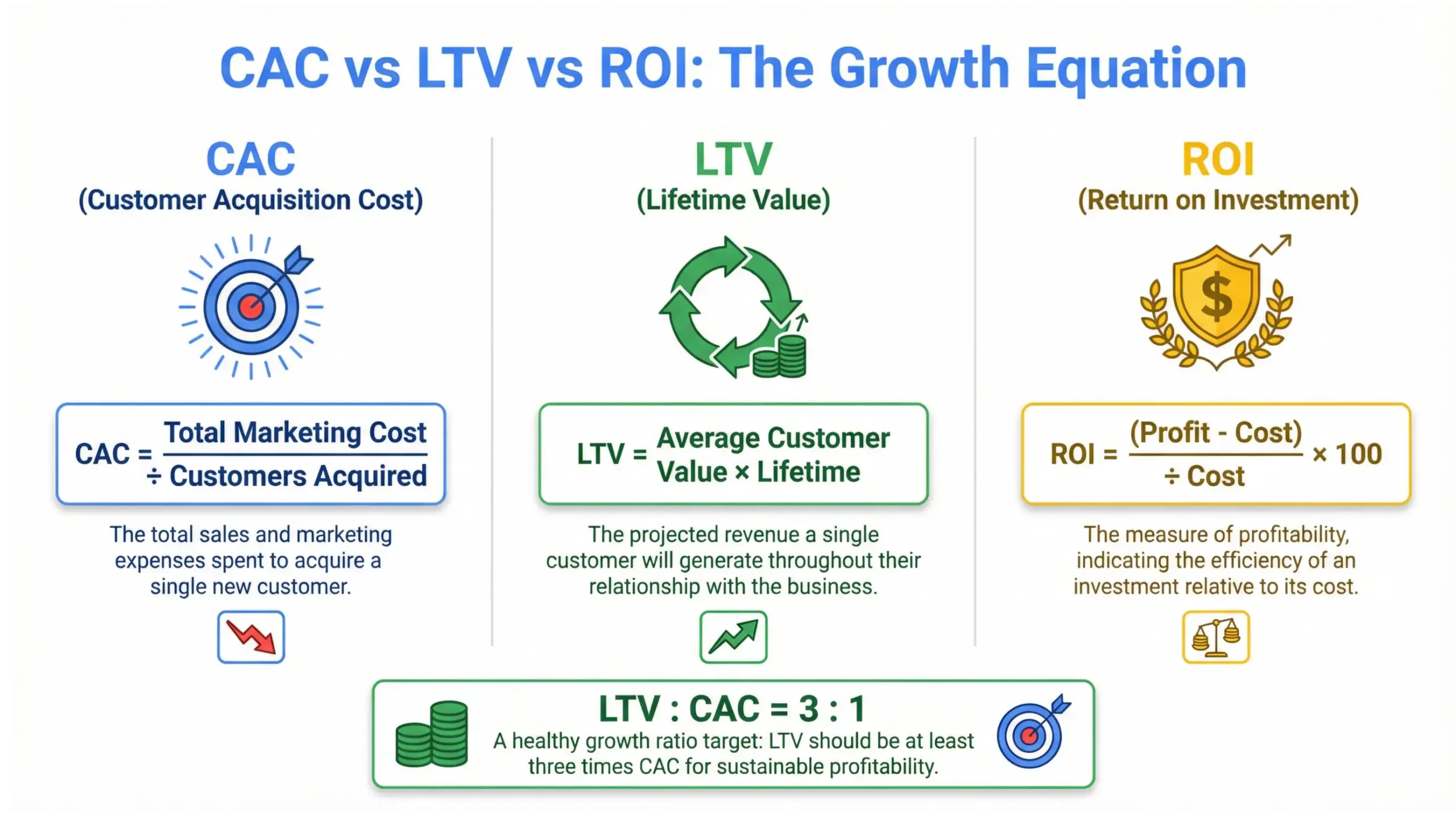
10 Frequently Asked Questions About Financial Metrics
1. What financial metrics should every small business track?
Revenue growth, gross margin, net profit margin, cash flow, CAC, LTV, ROI, operating expenses, break-even point, and working capital.
2. How often should financial metrics be reviewed?
Financial metrics should be reviewed monthly, with quarterly deep analysis and annual strategic planning reviews.
3. What is the most important financial metric?
Cash flow is often the most critical metric because it determines survival. However, net profit margin determines sustainability.
4. How do I calculate my break-even point?
Break-even point = Fixed Costs / (Price per Unit – Variable Cost per Unit).
5. Why is revenue not enough to measure success?
Revenue does not account for expenses, debt, taxes, or inefficiencies. Profit and cash flow provide a clearer picture.
6. What is a healthy net profit margin?
For most small businesses, 10-20% is healthy. Service-based firms may achieve 20-30%.
7. How can I lower my customer acquisition cost?
Improve targeting, optimize ads, increase referrals, improve conversion rates, and refine messaging.
8. What happens if CAC is higher than LTV?
You lose money acquiring customers. This model is unsustainable long-term.
9. Should startups prioritize profit or growth?
Early-stage startups may prioritize growth, but unit economics (LTV > CAC) must be validated early.
10. Do financial metrics help with funding or loans?
Yes. Investors and lenders evaluate profitability, revenue growth, margins, and cash flow before approving capital.
Final Thoughts: Financial Metrics Create Strategic Confidence
Financial metrics are not accounting tasks – they are leadership tools. Business owners who understand their numbers make better decisions, reduce risk, and scale sustainably.
The difference between struggling businesses and scalable brands is not effort – it’s financial clarity.
“When your numbers are clear, your growth becomes intentional.”


