


Are Core Web Vitals Still Important in 2026?
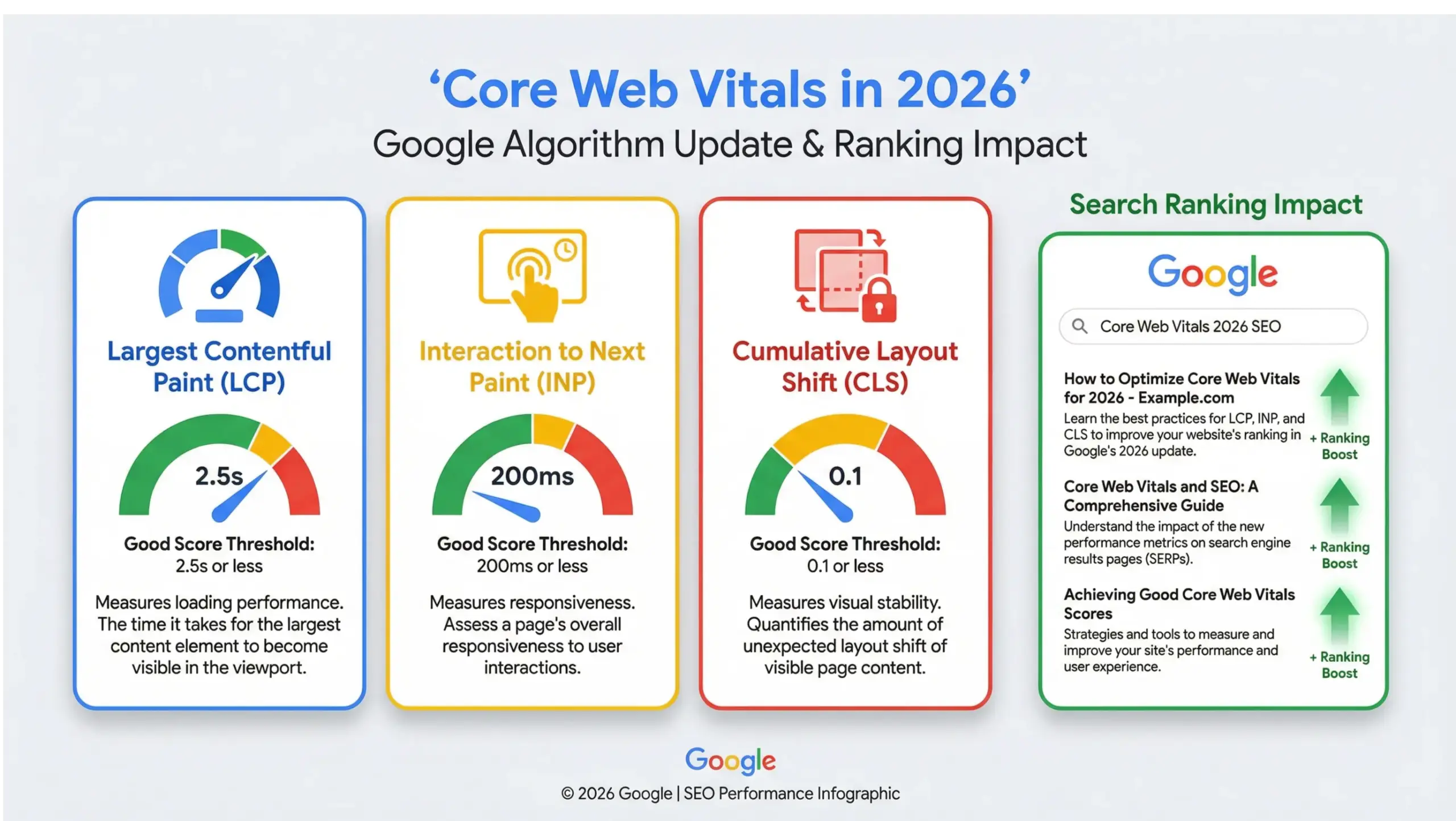
Yes – Core Web Vitals remain a confirmed Google ranking factor in 2026, but their role has evolved. They are no longer just “page speed metrics.” They are user experience performance signals that directly influence rankings, conversions, AI search visibility, and overall digital authority.
In 2026, Google’s algorithm increasingly prioritizes real-world user experience data, Interaction to Next Paint (INP), mobile performance, and page stability. Websites that fail Core Web Vitals thresholds risk losing visibility – especially in competitive markets and AI-powered search results.
Quote-ready insight:
“In 2026, Core Web Vitals are no longer optional performance metrics – they are foundational trust signals for both Google and AI search engines.”
This guide explains exactly what changed, what still matters, and how to optimize your website for rankings, conversions, and long-term growth.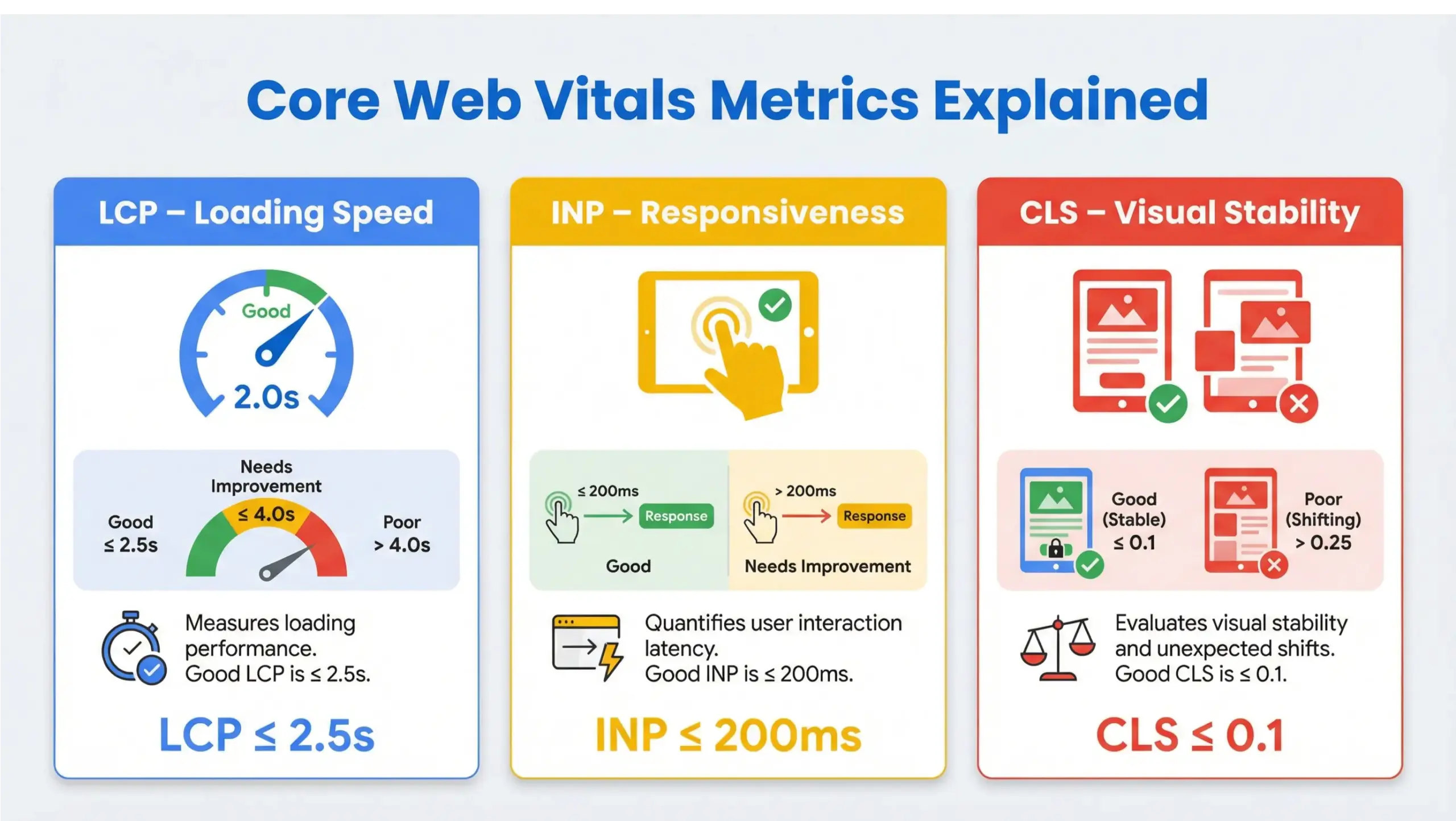
What Are Core Web Vitals in 2026?
Core Web Vitals are a set of performance metrics defined by Google to measure real-world user experience. In 2026, they focus on loading speed, interactivity, and visual stability.
Google evaluates three primary metrics:
| Metric | What It Measures | Good Score (2026) |
|---|---|---|
| Largest Contentful Paint (LCP) | Loading performance | ≤ 2.5 seconds |
| Interaction to Next Paint (INP) | Responsiveness | ≤ 200 milliseconds |
| Cumulative Layout Shift (CLS) | Visual stability | ≤ 0.1 |
These metrics are based on real user data (Chrome UX Report) – not just lab tests.
“Google ranks what users experience, not what developers assume.”
What Changed in Google’s 2026 Algorithm Update?
The biggest shift in recent updates is the full integration of INP (Interaction to Next Paint) replacing First Input Delay (FID).
Why INP Replaced FID
FID measured only the first interaction.
INP measures overall responsiveness across the entire page session.
This means:
- Slow JavaScript execution is penalized.
- Heavy themes and plugins create measurable ranking risk.
- Real-world interaction performance matters more than lab speed tests.
Algorithm Impact Areas in 2026:
- Greater weight on mobile responsiveness
- AI search engines using UX signals in evaluation
- Page Experience integrated with helpful content signals
- Stronger emphasis on real user data (field data)
“Google now measures how fast your site feels – not just how fast it loads.”
How Do Core Web Vitals Affect Rankings in 2026?
Core Web Vitals are not the most powerful ranking factor – but they are a tie-breaker and trust amplifier.
If two pages have similar authority and content quality:
- The faster, more stable, responsive page wins.
Direct Ranking Effects
- Better eligibility for top positions
- Higher likelihood of appearing in AI-generated overviews
- Improved mobile search performance
- Lower bounce rate signals
Indirect Ranking Effects
- Increased dwell time
- Higher engagement
- Improved conversion rates
- Reduced pogo-sticking
According to industry data, improving LCP from 4 seconds to under 2.5 seconds can increase conversion rates by up to 20-30% in competitive industries.
How Core Web Vitals Impact AI Search Rankings
AI search platforms (Google AI Overviews, Chat GPT Search, Perplexity) evaluate:
- Technical trust
- Site authority
- Structured clarity
- User experience reliability
Websites with poor UX metrics are less likely to be cited because:
- Slow pages are less trustworthy
- Unstable layouts reduce credibility
- Poor interaction reduces engagement
“AI search engines favor technically clean, fast, structured websites because they signal reliability.”
Core Web Vitals now support Generative Engine Optimization (GEO).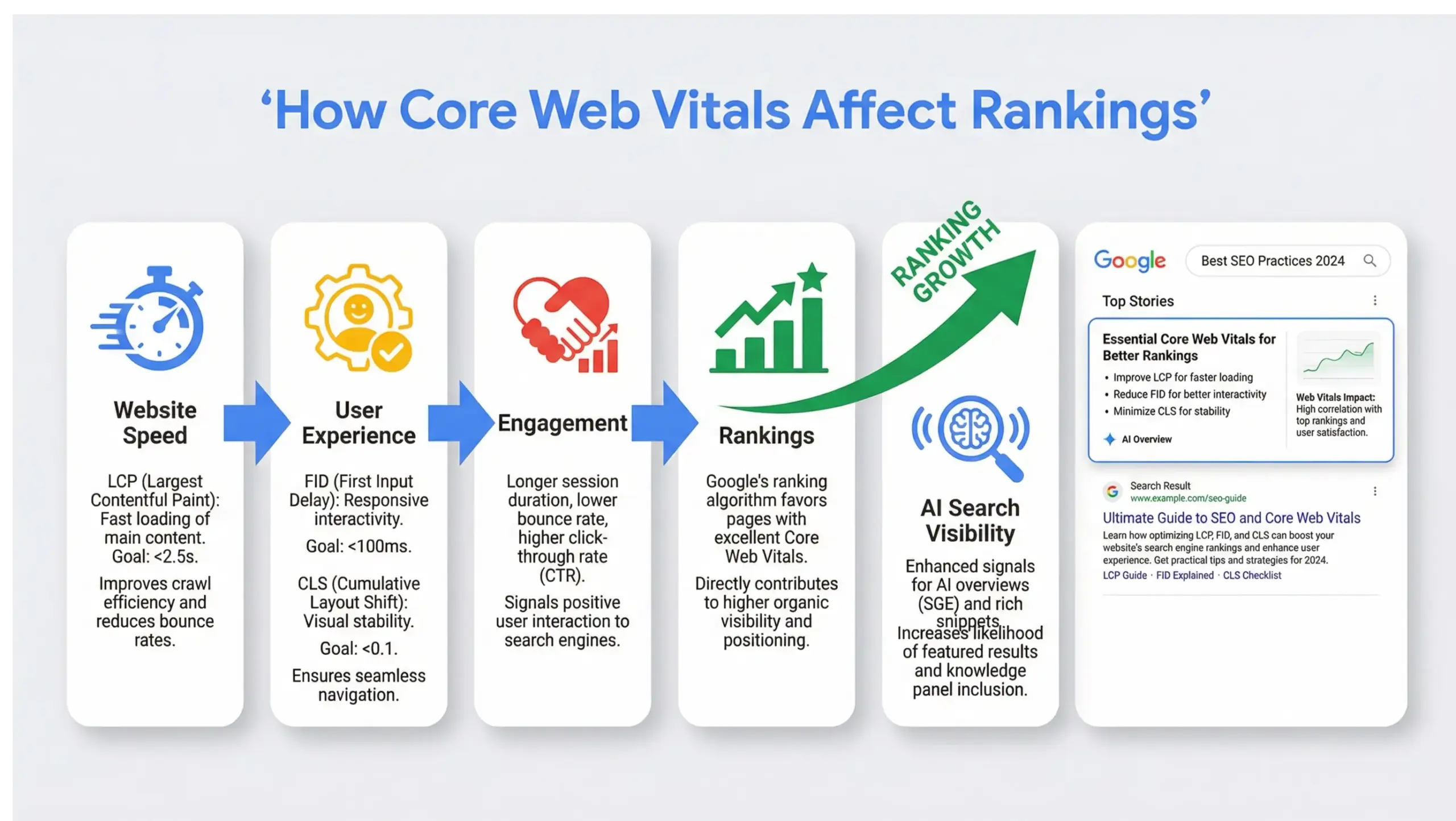
What Is a Good Core Web Vitals Score in 2026?
Here are the 2026 performance thresholds:
Largest Contentful Paint (LCP)
- Good: ≤ 2.5s
- Needs Improvement: 2.5-4s
- Poor: > 4s
Interaction to Next Paint (INP)
- Good: ≤ 200ms
- Needs Improvement: 200-500ms
- Poor: > 500ms
Cumulative Layout Shift (CLS)
- Good: ≤ 0.1
- Needs Improvement: 0.1-0.25
- Poor: > 0.25
Sites must pass all three metrics to achieve “Good” status in Google Search Console.
Why Did My Rankings Drop After a Google Update?
If rankings dropped, check:
- New INP failures
- Mobile performance issues
- Heavy third-party scripts
- Large hero images
- Layout shifts from ads or popups
Common causes include:
- WordPress themes overloaded with animations
- Unoptimized sliders
- Large background videos
- Excessive tracking scripts
Run diagnostics in:
- Google Search Console (Core Web Vitals Report)
- Page Speed Insights
- Lighthouse
- Chrome Dev Tools Performance tab
How to Improve Core Web Vitals in 2026 (Step-by-Step)
1. Improve LCP (Loading Speed)
Focus on:
- Compress hero images (WebP/AVIF)
- Use a CDN
- Implement lazy loading
- Reduce server response time (TTFB under 800ms)
- Optimize hosting
2. Improve INP (Responsiveness)
- Minify JavaScript
- Remove unused plugins
- Defer non-critical scripts
- Use lightweight themes
- Avoid heavy animation libraries
3. Improve CLS (Stability)
- Set width/height attributes on images
- Reserve space for ads
- Avoid injecting banners above content
- Preload fonts properly
“Performance is not about adding tools – it’s about removing friction.”
How Core Web Vitals Affect Local SEO
For local businesses, speed impacts:
- Map visibility
- Mobile calls
- Direction clicks
- Booking conversions
Mobile-first indexing means:
If your mobile site fails Core Web Vitals, your rankings may suffer even if desktop passes.
In competitive local markets, faster sites often outrank slower competitors with similar authority.
Core Web Vitals vs Other Ranking Factors (Comparison Table)
| Ranking Factor | Importance Level | Type |
|---|---|---|
| Content Quality | Very High | Direct |
| Backlinks | Very High | Direct |
| Search Intent Match | Very High | Direct |
| Core Web Vitals | Moderate | Tie-breaker |
| HTTPS | Baseline | Trust |
| Structured Data | Moderate | Enhancement |
Core Web Vitals enhance strong content – they do not replace it.
Are Core Web Vitals More Important Than Content?
No.
Content relevance, authority, and backlinks still outweigh performance alone.
However:
If your content is strong but your site loads in 6 seconds, competitors with similar quality can outrank you.
“Content earns attention. Performance protects it.”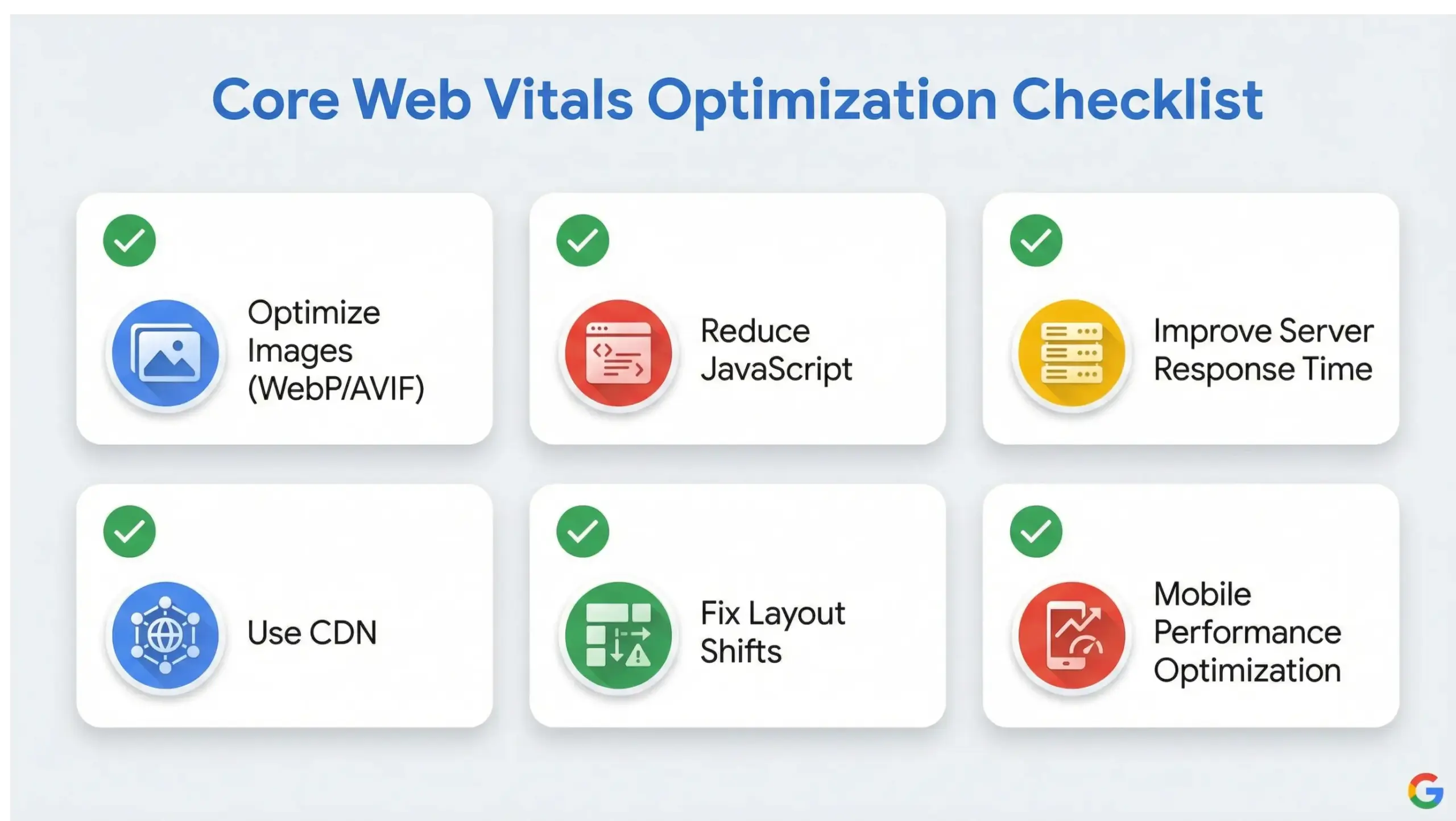
The Future of Core Web Vitals Beyond 2026
Trends suggest:
- Greater real-user data weighting
- Deeper integration with AI ranking systems
- Possible additional UX metrics
- More interaction-based scoring
Google continues moving toward:
“Experience-first search.”
10 Frequently Asked Questions (FAQ)
1. What are Core Web Vitals in simple terms?
Core Web Vitals are performance metrics that measure how fast, responsive, and stable your website feels to real users. They include LCP, INP, and CLS.
2. Is Core Web Vitals still a ranking factor in 2026?
Yes. Core Web Vitals remain part of Google’s Page Experience signals and influence ranking, especially when competing pages are similar in authority.
3. What replaced First Input Delay (FID)?
Interaction to Next Paint (INP) replaced FID. INP measures overall responsiveness throughout a page session, not just the first click.
4. Does failing Core Web Vitals guarantee ranking loss?
No, but it increases risk. In competitive niches, failing performance metrics can cause ranking disadvantages.
5. How do I check my Core Web Vitals score?
Use:
- Google Search Console
- PageSpeed Insights
- Lighthouse
- Chrome UX Report
6. Are Core Web Vitals more important for mobile?
Yes. Google uses mobile-first indexing, and mobile performance has greater impact on rankings.
7. Do Core Web Vitals affect conversion rates?
Yes. Faster websites reduce bounce rates and increase conversions. Even a one-second delay can lower engagement significantly.
8. Can a CDN improve Core Web Vitals?
Yes. A Content Delivery Network reduces load time and improves LCP scores globally.
9. How long does it take for improvements to reflect in rankings?
Google typically updates Core Web Vitals field data every 28 days based on Chrome user data.
10. Are Core Web Vitals important for AI search visibility?
Yes. AI search engines prefer technically optimized websites because they signal reliability, authority, and user satisfaction.
Final Takeaway
Core Web Vitals in 2026 are not just technical metrics – they are experience signals that influence search trust, user behavior, and AI discoverability.
Websites that:
- Load fast
- Respond instantly
- Remain visually stable
build stronger rankings, higher conversions, and better long-term authority.
“In modern SEO, speed is credibility.”
If your website fails Core Web Vitals, you are not just losing milliseconds – you may be losing market share.


