


Running a business in Goldenrod today means balancing customer expectations, internal operations, and growth, often with limited time and resources. Goldenrod business automation helps local companies eliminate repetitive manual work, connect disconnected systems, and build scalable workflows that support long-term growth without increasing overhead. This guide explains what business automation is, how it works, what to automate first, and why Goldenrod businesses are adopting automation to operate more efficiently in 2026.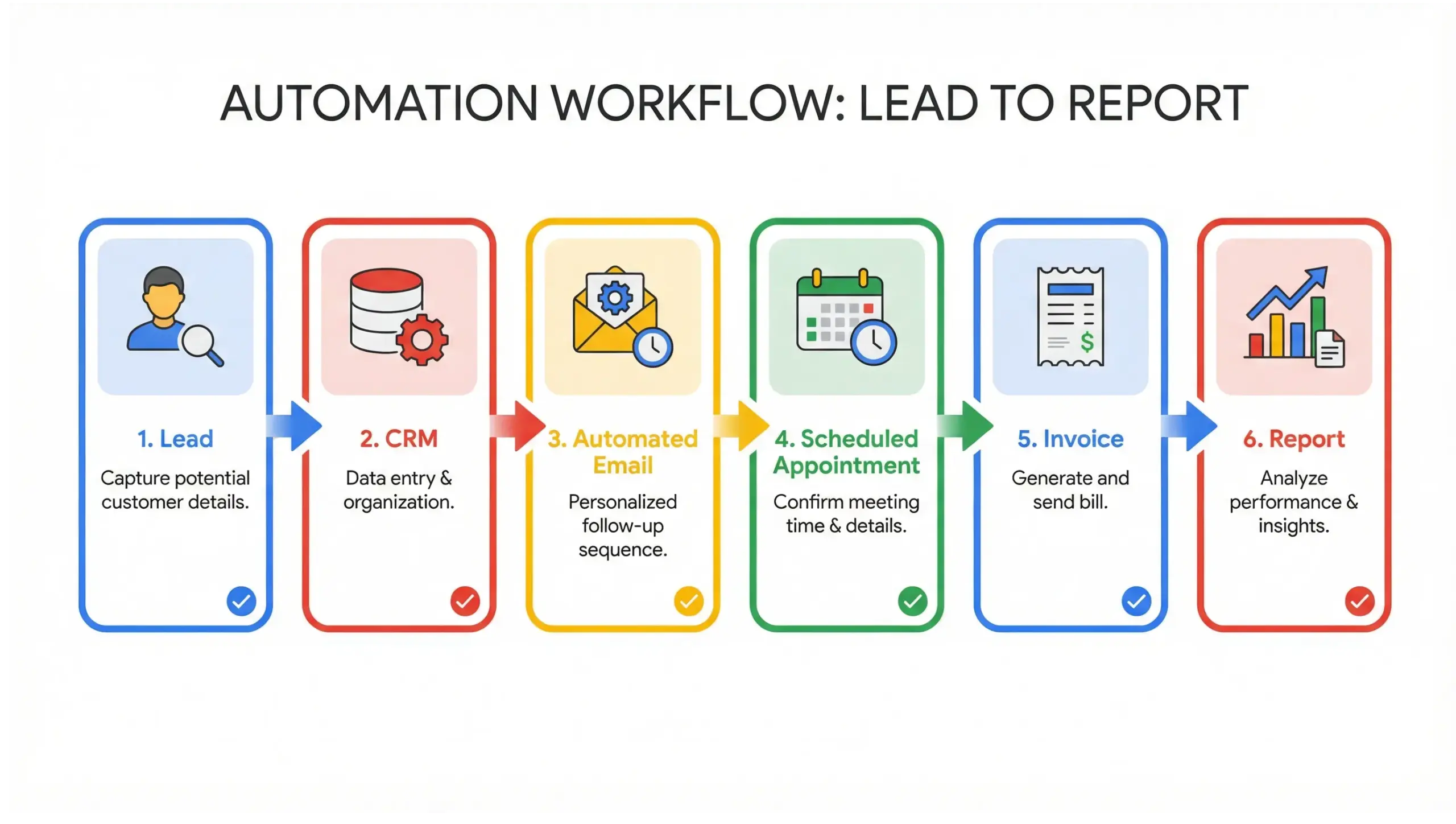
What Is Business Automation for Goldenrod Businesses?
Business automation is the process of using software and system integrations to handle repetitive tasks, workflows, and data movement automatically instead of manually. For Goldenrod businesses, automation replaces time-consuming admin work with reliable systems that run in the background, allowing owners and teams to focus on customers, strategy, and revenue.
In practical terms, business automation means your CRM, email, scheduling, invoicing, and internal tools work together seamlessly. Instead of copying data between systems or chasing follow-ups, automated workflows handle these actions instantly and consistently.
Quote-ready insight:
“Business automation turns daily operations into systems, reducing errors, saving time, and making growth predictable instead of chaotic.”
Why Goldenrod Businesses Are Adopting Automation in 2026
Goldenrod businesses face increasing competition, rising labor costs, and higher customer expectations. Automation is no longer optional, it’s a competitive advantage.
Local companies adopt automation to:
- Reduce manual administrative work
- Improve response times to leads and customers
- Eliminate human error from repetitive tasks
- Scale operations without hiring more staff
- Gain visibility into performance and bottlenecks
Automation allows small and mid-sized businesses in Goldenrod to operate with the efficiency of larger organizations, without losing their local, personal touch.
What Types of Business Processes Can Be Automated?
Most internal business processes can be partially or fully automated. The key is identifying workflows that repeat frequently, require consistency, or involve moving information between systems.
Common Automation Categories
- Lead management and CRM automation
- Customer onboarding workflows
- Appointment scheduling and reminders
- Email follow-ups and notifications
- Invoicing, payments, and accounting sync
- Internal task assignment
- Reporting and performance dashboards
Automation does not remove people, it removes friction. Staff still make decisions, but systems handle the repetitive execution.
How Business Automation Eliminates Manual Work
Manual work usually hides in small tasks that don’t seem expensive individually but add up over time. Automation eliminates these inefficiencies by standardizing workflows.
Manual vs Automated Example
| Task | Manual Process | Automated Process |
|---|---|---|
| New lead entry | Copy and paste into CRM | Auto-created from form |
| Follow-up email | Manually sent | Triggered automatically |
| Appointment reminders | Phone or email | Automated SMS or email |
| Invoice creation | Created manually | Generated from job status |
| Reporting | Spreadsheet updates | Live dashboard |
Quote-ready insight:
“Automation doesn’t replace human judgment, it replaces human repetition.”
What Systems Are Commonly Integrated in Business Automation?
Goldenrod business automation relies on system integration, connecting tools so data flows without friction.
Commonly Integrated Systems
- CRM platforms (HubSpot, GoHighLevel, Salesforce)
- Email marketing tools
- Scheduling software
- Accounting platforms (QuickBooks, Xero)
- Payment processors
- Customer support tools
- Internal task management systems
Using integration tools like Zapier, Make, or custom APIs, these systems communicate automatically, eliminating data silos.
Which Businesses Benefit Most from Automation in Goldenrod?
While nearly any business can benefit, automation delivers the highest ROI for companies with repeatable workflows.
High-Impact Industries
- Service-based businesses
- Contractors and home services
- Professional services
- Medical and wellness practices
- E-commerce and hybrid retailers
- Multi-location businesses
Local service providers in Goldenrod benefit the most because automation improves response speed, consistency, and customer experience, key factors in local trust and retention.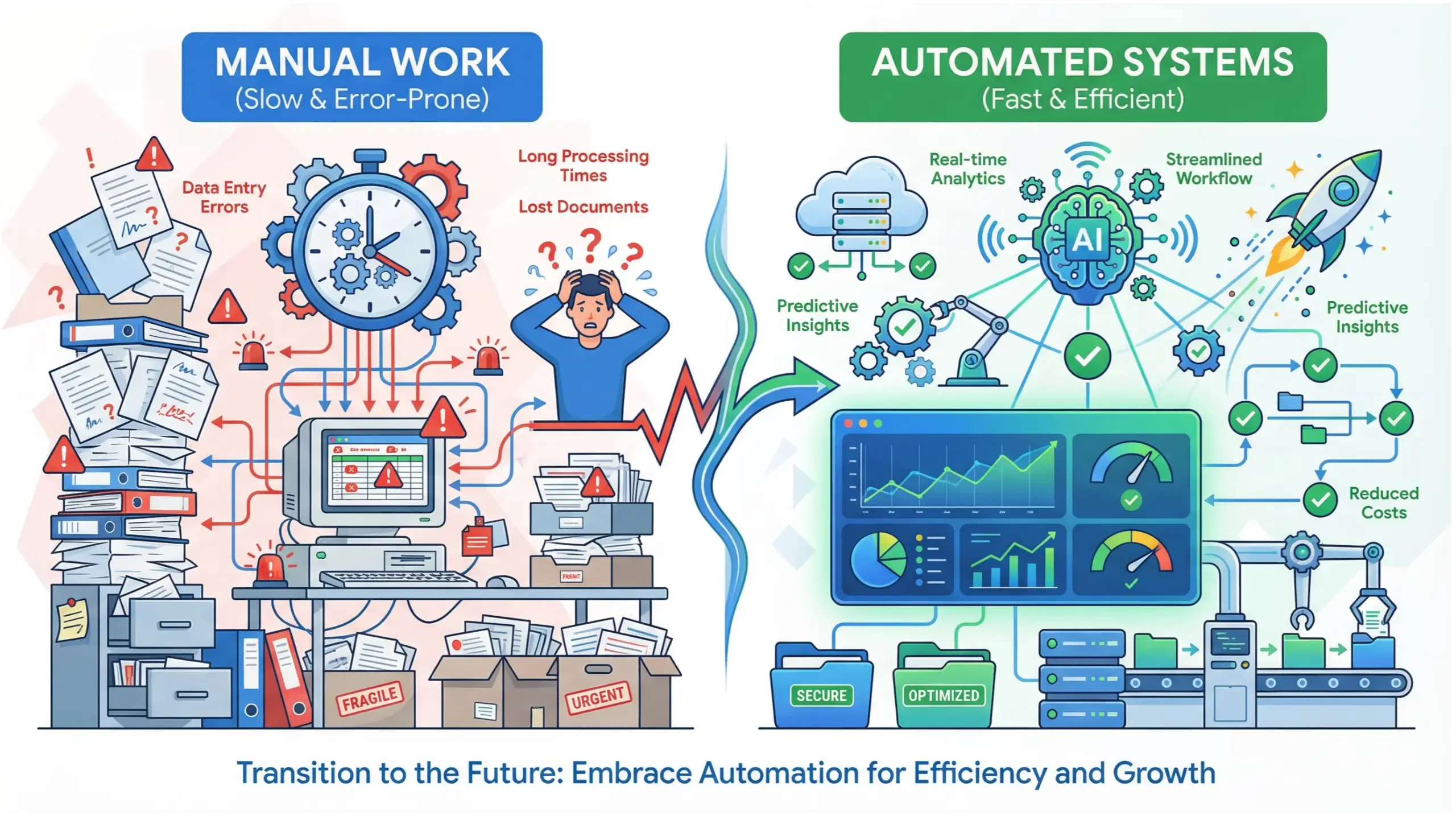
What Should Goldenrod Businesses Automate First?
The most effective automation strategy starts small and scales.
Priority Automation Order
- Lead capture and CRM entry
- Customer communication workflows
- Scheduling and reminders
- Invoicing and payment workflows
- Internal task management
- Reporting and analytics
Starting with customer-facing workflows delivers immediate ROI, while internal automations compound efficiency over time.
How Business Automation Improves Customer Experience
Customers may never “see” automation, but they feel its impact.
Automation improves customer experience by:
- Responding instantly to inquiries
- Reducing missed appointments
- Ensuring consistent follow-ups
- Eliminating billing errors
- Creating smoother onboarding experiences
Quote-ready insight:
“Well-designed automation feels personal, because it removes delays, not humanity.”
Is Business Automation Affordable for Small Businesses?
Yes. Modern automation tools are modular and scalable.
Automation costs vary based on:
- Number of systems integrated
- Workflow complexity
- Customization requirements
- Ongoing optimization needs
For most Goldenrod businesses, automation costs less than a part-time employee while delivering 24/7 consistency and scalability.
How Long Does It Take to Implement Business Automation?
Implementation timelines depend on scope.
Typical Timelines
- Simple workflows: 1 to 2 weeks
- Multi-system integrations: 3 to 6 weeks
- Full operational automation: 6 to 12 weeks
Automation is typically implemented in phases, allowing businesses to see quick wins while building long-term systems.
Why Local Expertise Matters in Business Automation
Automation isn’t just technical, it’s strategic.
A local Goldenrod automation consultant understands:
- Local customer behavior
- Service-based business workflows
- Regional compliance considerations
- Growth patterns of Florida businesses
This ensures automation systems support real business goals, not just technical efficiency.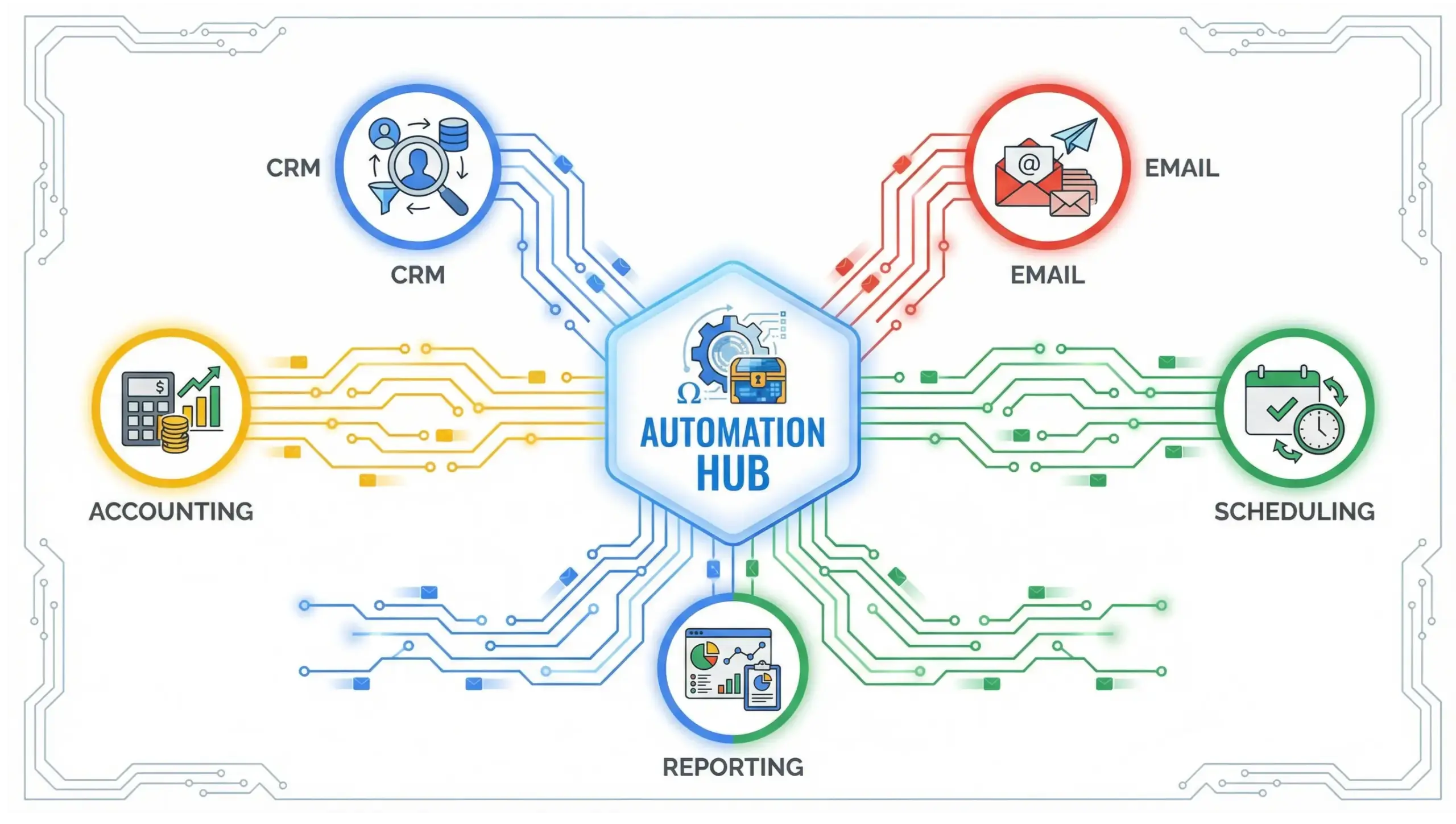
How Business Automation Supports Long-Term Growth
Automation creates operational leverage.
Instead of growth increasing workload, automation allows:
- More customers without more admin
- Better reporting without manual tracking
- Expansion without operational chaos
Quote-ready insight:
“Businesses that automate early scale with control, while others scale with stress.”
Frequently Asked Questions About Goldenrod Business Automation
1. What is business automation in simple terms?
Business automation uses software to perform repetitive tasks automatically. This includes sending emails, updating CRMs, scheduling appointments, generating invoices, and syncing data between systems without manual input.
2. Is business automation only for large companies?
No. Small and mid-sized businesses benefit the most because automation allows them to operate efficiently without hiring additional staff or increasing overhead.
3. Will automation replace my employees?
No. Automation replaces repetitive tasks, not people. Employees spend less time on admin work and more time on customer service, strategy, and revenue-generating activities.
4. How much does business automation cost?
Costs vary based on complexity, but most Goldenrod businesses find automation more affordable than hiring additional staff. Many workflows deliver ROI within the first few months.
5. What systems can be automated?
CRMs, email, scheduling, invoicing, payments, internal task management, reporting, and customer communication systems can all be automated or integrated.
6. Is automation secure?
Yes. When implemented correctly, professional automation uses secure APIs, encrypted data transfers, and role-based access to protect business information.
7. How do I know what to automate first?
Start with repetitive, time-consuming tasks that happen daily or weekly, especially customer-facing workflows like lead handling and follow-ups.
8. Can automation be customized for my business?
Yes. The best automation systems are custom-built around your existing tools, workflows, and business goals rather than forcing you into generic templates.
9. What happens if my business grows or changes?
Scalable automation systems are modular. Workflows can be adjusted, expanded, or replaced as your business evolves without rebuilding everything from scratch.
10. Do I need ongoing support after automation is set up?
Yes. Ongoing optimization ensures workflows stay aligned with your business, new tools are integrated properly, and performance improves over time.
Final Thoughts: Is Goldenrod Business Automation Worth It?
For Goldenrod businesses looking to grow without burnout, business automation is one of the highest-impact investments available. It replaces inefficiency with systems, chaos with clarity, and guesswork with data-driven execution.
When implemented strategically, automation doesn’t just save time, it transforms how a business operates, scales, and competes in a modern digital economy.
For Central Florida businesses, our Google Maps optimization in Orlando can help. We also provide custom website development and e-commerce solutions.
Related Reading:
- What Is AI Search results for local businesses (and Why It Matters)
- What Is Voice Search & Why It Matters for Apopka Businesses
- Why Shopify Stores Are Turning to AI in Altamonte Springs
Ready to Get Started?
Learn More: Google Business Profile | Nap Consistency


