


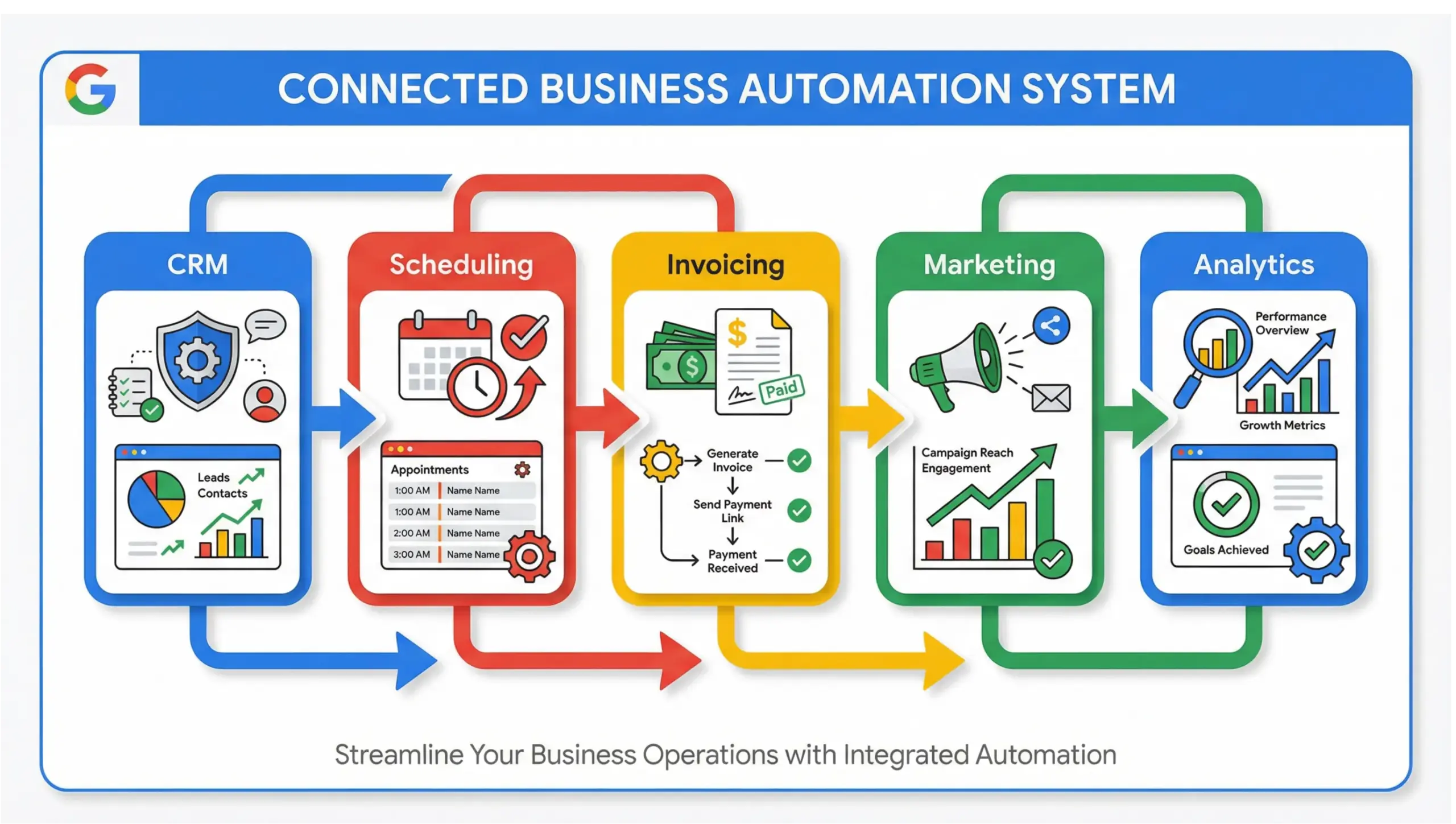
Casselberry business automation helps local companies eliminate repetitive manual tasks, reduce operational errors, and scale efficiently without hiring more staff.
In 2026, small and mid-sized businesses in Casselberry face rising labor costs, increased competition, and higher customer expectations. Business automation replaces fragmented tools and manual workflows with connected systems that save time, improve accuracy, and create predictable growth. For service providers, retail businesses, and professional firms, automation is no longer optional, it is a competitive requirement.
Quote-ready insight:
“Business automation allows Casselberry companies to grow revenue without increasing workload or headcount.”
What Is Casselberry Business Automation?
Casselberry business automation is the process of using software, integrations, and AI-driven systems to automate repetitive business tasks across operations, marketing, sales, and customer management.
Automation connects tools like CRMs, booking systems, accounting platforms, and marketing software so data flows automatically instead of being manually entered. This reduces human error, speeds up workflows, and creates real-time visibility into business performance.
Automation is not about replacing people, it is about removing busywork so teams can focus on higher-value tasks.
Why Business Automation Matters for Casselberry Businesses in 2026
Casselberry businesses are operating in a tighter, faster market where efficiency determines profitability and survival.
Local businesses compete not only with nearby companies but also with regional and national brands using advanced systems. Automation levels the playing field by giving small businesses access to enterprise-level efficiency without enterprise-level costs.
Key local challenges automation solves:
- Rising payroll and staffing shortages
- Manual data entry errors
- Disconnected software tools
- Slow customer response times
- Inconsistent follow-up and lead handling
Quote-ready insight:
“Automation turns operational chaos into predictable, scalable systems.”
What Business Processes Can Be Automated?
Nearly every repeatable process in a Casselberry business can be automated with the right system design.
Common Automation Areas
| Business Function | Automation Examples | Business Impact |
|---|---|---|
| Sales | Lead capture, CRM updates, follow-ups | Higher close rates |
| Marketing | Email campaigns, review requests, SMS | Consistent lead nurturing |
| Operations | Task routing, job scheduling | Faster delivery |
| Finance | Invoicing, payment reminders | Improved cash flow |
| Customer Support | Ticket routing, confirmations | Better customer experience |
Automation works best when systems are integrated instead of operating in silos.
How Business Automation Eliminates Manual Work
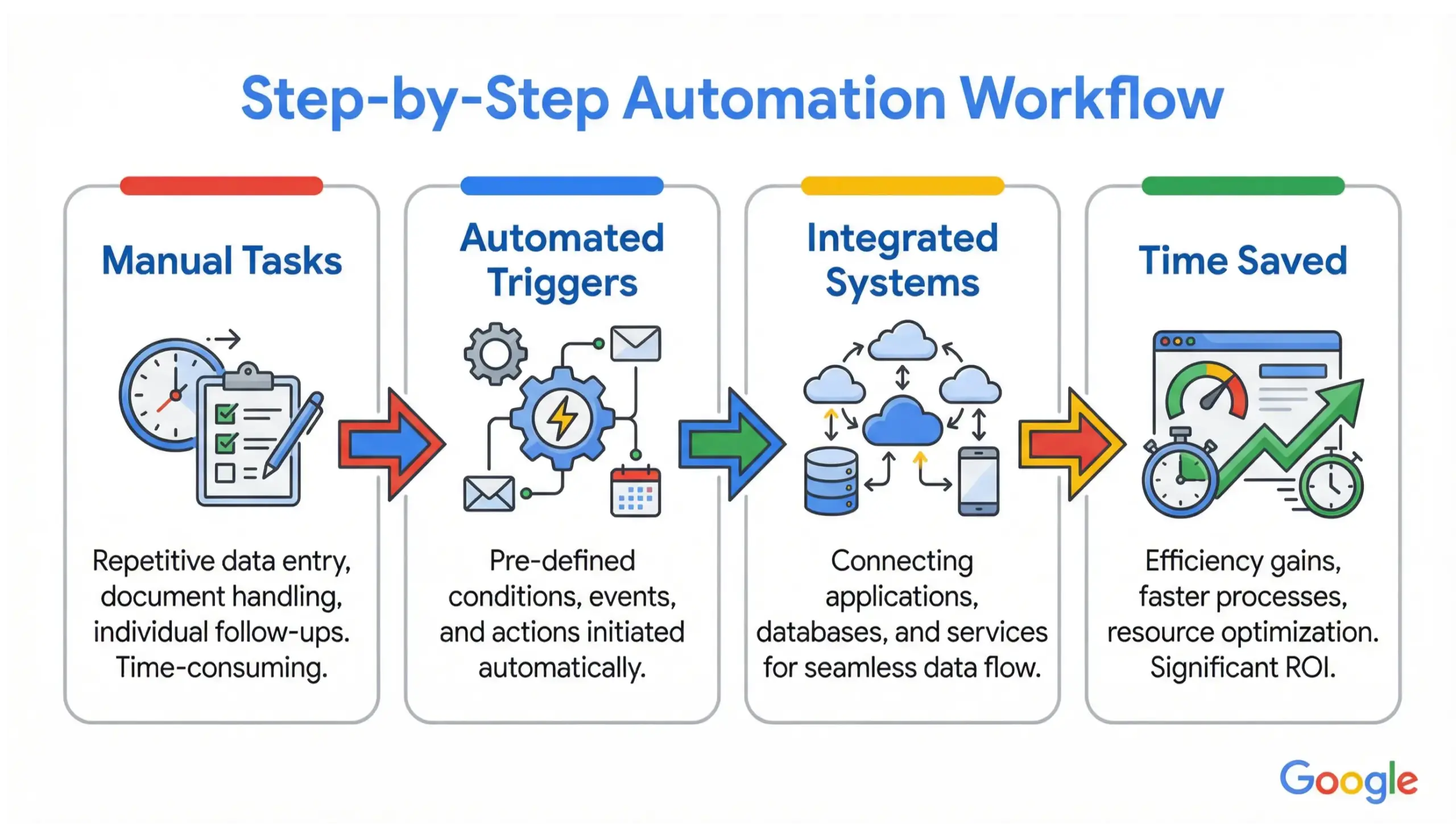
Automation replaces human-triggered actions with rule-based workflows that run automatically in the background.
Instead of manually copying data between tools, automation triggers actions based on events:
- A form submission creates a CRM record
- A booked appointment sends confirmations
- A completed job triggers an invoice
- A paid invoice updates accounting records
Manual vs Automated Workflow Comparison
| Task | Manual Process | Automated Process |
|---|---|---|
| Lead entry | Staff enters data | Auto-created in CRM |
| Follow-ups | Remembered manually | Scheduled automatically |
| Invoicing | Created by staff | Triggered on job completion |
| Reporting | Compiled manually | Real-time dashboards |
Quote-ready insight:
“Automation eliminates human dependency from routine tasks while increasing consistency.”
Casselberry Business Automation for Small Businesses
Small businesses benefit the most from automation because it multiplies limited resources.
Automation allows a 3-10 person team to operate like a much larger organization. Instead of hiring prematurely, automation increases output per employee.
Ideal Casselberry businesses for automation:
- Home service providers
- Medical and wellness practices
- Law firms and consultants
- Retail and e-commerce businesses
- Local service franchises
Automation scales alongside growth instead of breaking under pressure.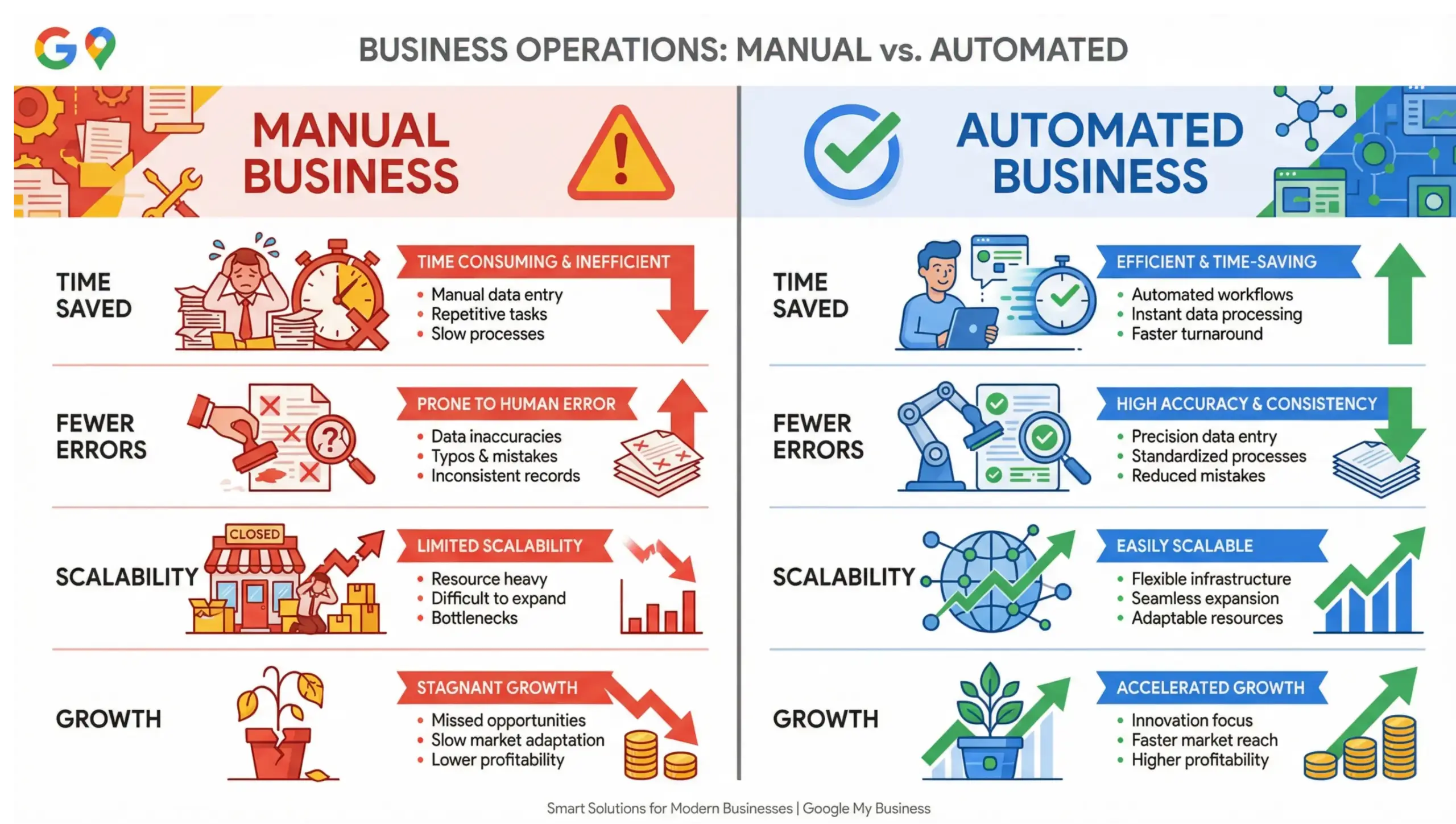
How System Integrations Power Business Automation
System integrations are the backbone of effective business automation.
Automation fails when tools are disconnected. Integrations ensure data flows between platforms such as:
- CRM systems
- Email and SMS tools
- Scheduling software
- Accounting platforms
- Payment processors
Example Integration Stack
- Website forms to CRM
- CRM to Email or SMS automation
- Booking system to Calendar and invoicing
- Payments to Accounting software
Quote-ready insight:
“Automation without integration creates complexity, not efficiency.”
The Role of AI in Casselberry Business Automation
AI-powered automation adds intelligence, prediction, and personalization to standard workflows.
AI enhances automation by:
- Scoring leads based on intent
- Predicting customer behavior
- Personalizing marketing messages
- Analyzing operational bottlenecks
AI does not replace human decision-making, it enhances it with better data.
Common Mistakes Casselberry Businesses Make with Automation
Automation fails when it is implemented without strategy.
Frequent mistakes:
- Automating broken processes
- Using too many disconnected tools
- No documentation or ownership
- Over-automation without human oversight
- Ignoring data quality
Quote-ready insight:
“Automation magnifies inefficiency if systems aren’t designed intentionally.”
How to Know If Your Business Is Ready for Automation
If your business repeats the same tasks daily, it is ready for automation.
Automation readiness checklist:
- Repetitive admin tasks
- Manual follow-ups
- Data entered multiple times
- Inconsistent customer communication
- Growth limited by staff capacity
If you answered yes to two or more, automation will deliver immediate ROI.
What Business Automation Costs in Casselberry
Business automation is an investment, not an expense.
Costs vary depending on:
- Number of systems
- Workflow complexity
- AI involvement
- Ongoing optimization needs
Typical ROI Timeline:
- 30-60 days: time savings
- 60-90 days: reduced errors
- 90-180 days: revenue lift and scalability
Quote-ready insight:
“Automation pays for itself by freeing time, improving accuracy, and unlocking growth.”
Real-World Example: Casselberry Service Business Automation
A local service provider automated booking, follow-ups, and invoicing.
Results:
- 40% faster response time
- 30% reduction in admin labor
- 25% increase in completed jobs
- Improved customer satisfaction
Automation allowed the owner to focus on growth instead of paperwork.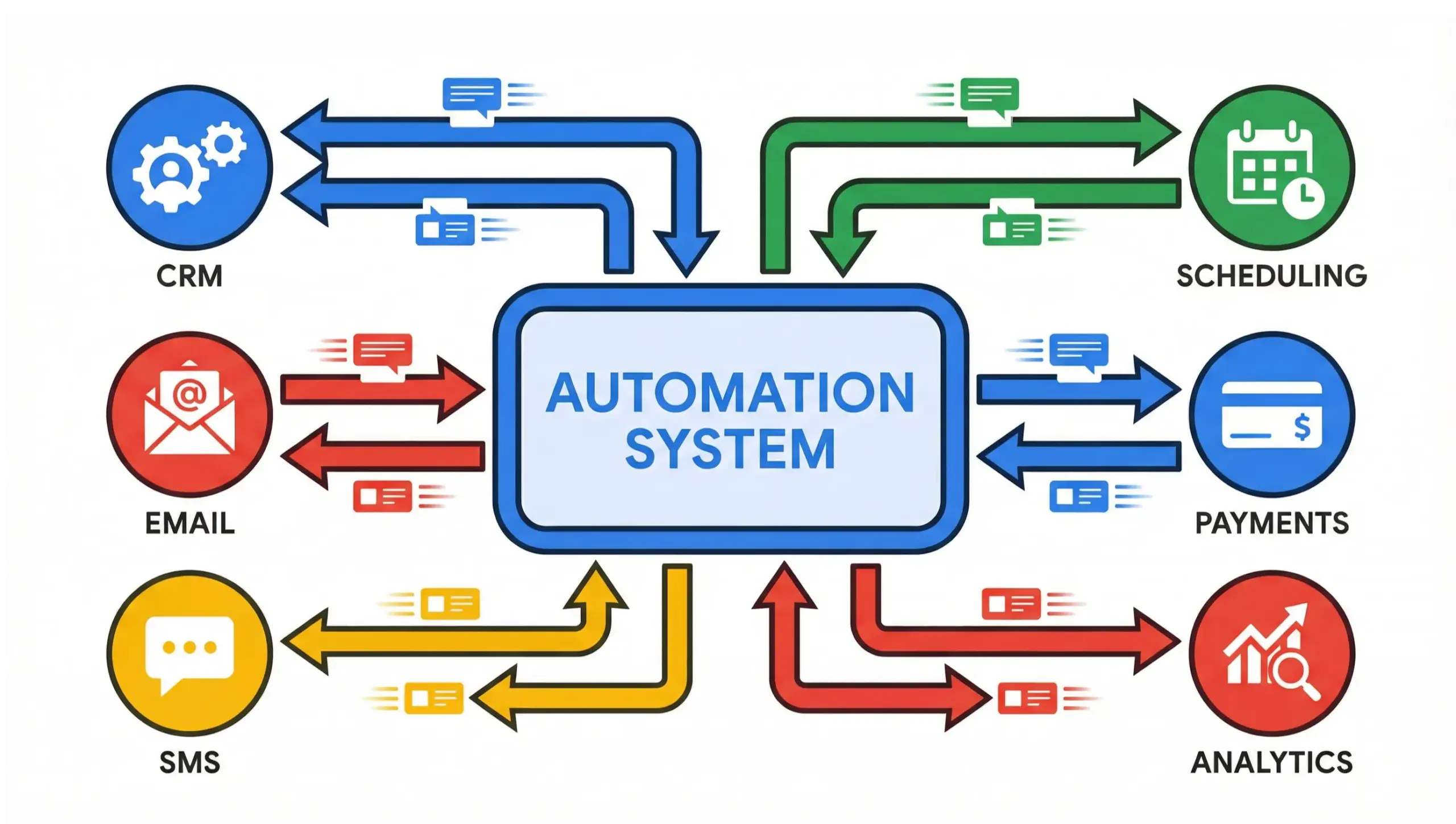
How Omega Trove Consulting Approaches Casselberry Business Automation
Omega Trove Consulting designs automation systems that align with real business operations, not generic templates.
Our approach:
- Workflow audit
- System mapping
- Integration planning
- Automation build
- Testing and optimization
Automation is built to scale, not just function.
Quote-ready insight:
“The best automation systems grow with the business instead of needing replacement.”
Frequently Asked Questions About Casselberry Business Automation
1. What is casselberry business automation?
Casselberry business automation uses software and system integrations to automate repetitive tasks like follow-ups, invoicing, scheduling, and data management so businesses operate more efficiently.
2. Is business automation only for large companies?
No. Small and local Casselberry businesses benefit the most because automation increases capacity without hiring additional staff.
3. How long does automation take to implement?
Simple workflows can be automated in weeks. Larger system integrations typically take 30-90 days depending on complexity.
4. Will automation replace employees?
No. Automation removes repetitive tasks so employees can focus on higher-value work like customer service and growth.
5. What tools are commonly used in business automation?
CRMs, email and SMS platforms, scheduling software, accounting tools, and integration platforms are commonly automated.
6. Can automation improve customer experience?
Yes. Faster responses, consistent follow-ups, and fewer errors improve customer satisfaction significantly.
7. How secure are automated systems?
When properly configured, automated systems are secure and often safer than manual processes due to reduced human error.
8. What industries benefit most from automation?
Service businesses, healthcare, legal firms, e-commerce, and professional services see the strongest ROI.
9. Is AI required for business automation?
No, but AI enhances automation by adding intelligence, prediction, and personalization.
10. How do I get started with casselberry business automation?
Start with a workflow audit to identify repetitive tasks, then design integrated automation systems around them.
Conclusion: Why Casselberry Business Automation Is a Growth Requirement
Casselberry business automation is no longer a future upgrade, it is a present-day necessity.
Businesses that automate:
- Scale faster
- Operate more efficiently
- Reduce operational stress
- Deliver better customer experiences
Those that delay fall behind competitors who operate with smarter systems.
Final quote-ready takeaway:
“Automation is how Casselberry businesses grow smarter, not harder.”
For Central Florida businesses, our Google Maps optimization in Orlando can help. We also provide custom website development and e-commerce solutions.
Related Reading:
- What Is AI Search results for local businesses (and Why It Matters)
- What Is Voice Search & Why It Matters for Apopka Businesses
- Why Shopify Stores Are Turning to AI in Altamonte Springs
Ready to Get Started?
Learn More: Google Business Profile | Nap Consistency


