


How Does Eustis System Integration Help Local Businesses Move Beyond Spreadsheets?
Eustis system integration helps businesses eliminate disconnected spreadsheets and manual processes by connecting CRM, accounting, marketing, scheduling, and operational tools into one automated ecosystem. Instead of manually updating multiple systems, integration synchronizes data automatically – reducing errors, saving 80-150 hours per month, and improving operational clarity.
For many businesses in Eustis, spreadsheets were once “good enough.” But as operations grow, disconnected systems create bottlenecks, lost data, and inefficiencies that directly impact revenue.
Quote-ready insight:
“Spreadsheets manage data. Integrated systems manage growth.”
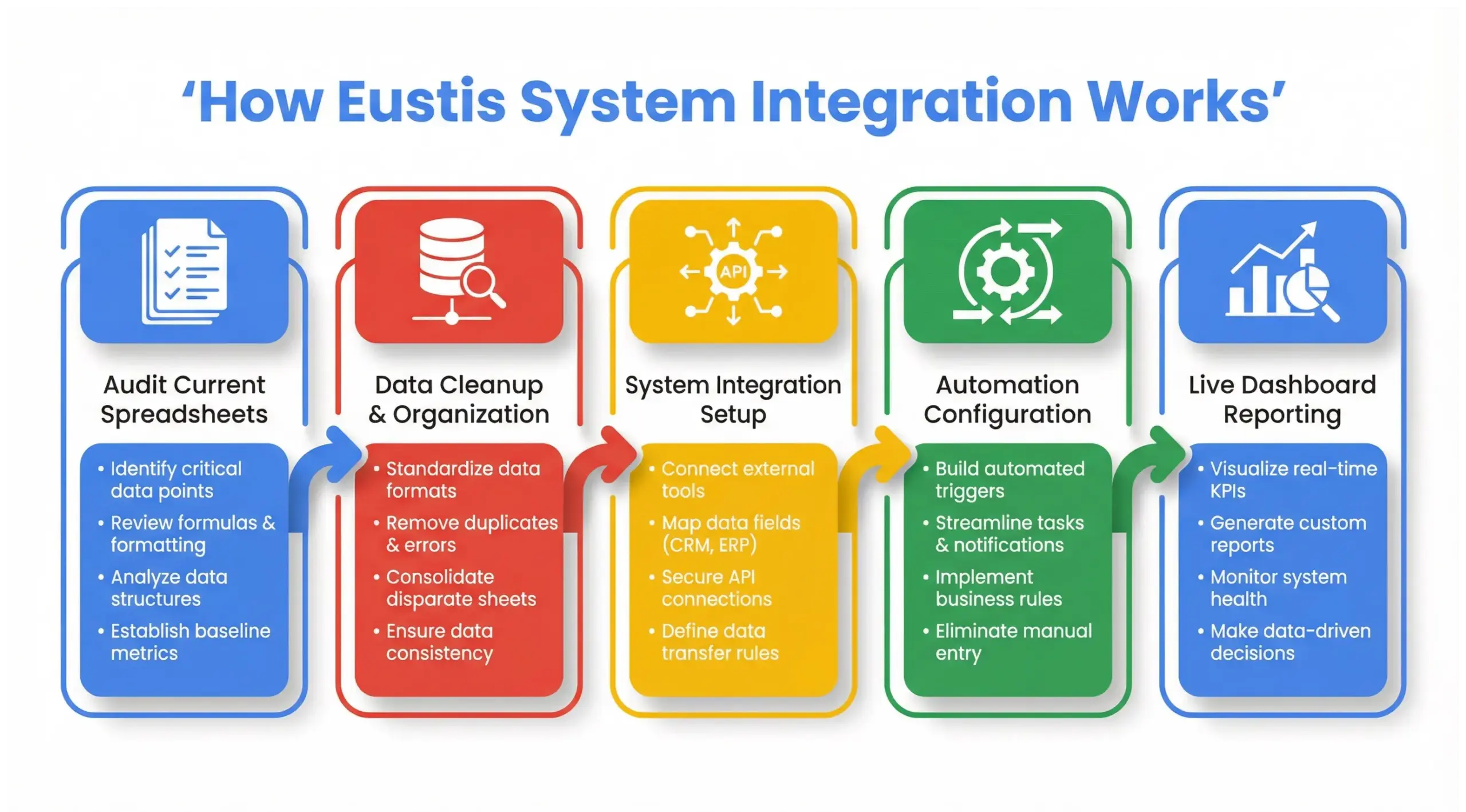
What Is System Integration for Small Businesses?
System integration is the process of connecting different software platforms so they communicate and share data automatically without manual entry.
For example:
- Website form – CRM – Email sequence – Invoice – Accounting system
- Appointment booked – Calendar sync – SMS reminder – Payment record update
- Sale completed – Inventory update – Analytics dashboard refresh
Instead of copying data between tools, integrations automate the workflow.
In Eustis, businesses commonly integrate:
- CRM platforms
- Accounting software
- Marketing automation systems
- Scheduling tools
- Payment processors
- Inventory systems
The goal is one centralized, synchronized operational system.
Why Are Spreadsheets Limiting Business Growth in Eustis?
Spreadsheets are powerful – but static tools. They lack automation, validation controls, real-time syncing, and scalability.
Here’s where spreadsheets fail:
According to research from McKinsey, businesses spend up to 30% of their time on manual data tasks that can be automated.
For a 5-person team in Eustis, that could equal:
- 40-60 hours per week
- 160-240 hours per month
- Thousands in hidden labor costs
Manual systems silently tax your growth.
What Systems Should Eustis Businesses Integrate First?
The first systems to integrate should be those that directly affect revenue and customer experience.
CRM + Lead Capture
Every form submission should automatically:
- Enter the CRM
- Trigger a follow-up sequence
- Notify sales staff
- Assign pipeline stage
Speed to lead directly impacts conversion rates. Harvard Business Review found companies responding within 5 minutes are 21x more likely to qualify leads.
Scheduling + Calendar Automation
Manual scheduling wastes time. Integrating booking systems eliminates back-and-forth emails and reduces no-shows with automated reminders.
Accounting + Invoicing + Payments
When invoices automatically sync to accounting:
- Cash flow improves
- Reporting becomes accurate
- Financial forecasting strengthens
Disconnected billing systems cause revenue leakage.
Marketing Automation
Automated nurture sequences convert cold leads into paying customers through:
- Email campaigns
- SMS reminders
- Retargeting triggers
- Review requests
Marketing automation generates measurable ROI when integrated properly.
How Does Eustis System Integration Improve Efficiency?
System integration improves efficiency in four measurable ways:
1. Time Savings
Most small businesses save 80-150 hours per month once integrations replace manual entry and follow-ups.
2. Error Reduction
Integrated systems eliminate duplicate data, mistyped invoices, and missed reminders.
3. Revenue Acceleration
Faster lead response and consistent follow-ups increase close rates.
4. Visibility & Reporting
When systems talk to each other, dashboards update in real time – allowing smarter decisions.
Quote-ready insight:
“Integrated systems turn scattered software into a single growth engine.”
What Does a Fully Integrated Business System Look Like?
A modern Eustis business with system integration typically includes:
When integrated properly, the system operates like a synchronized machine.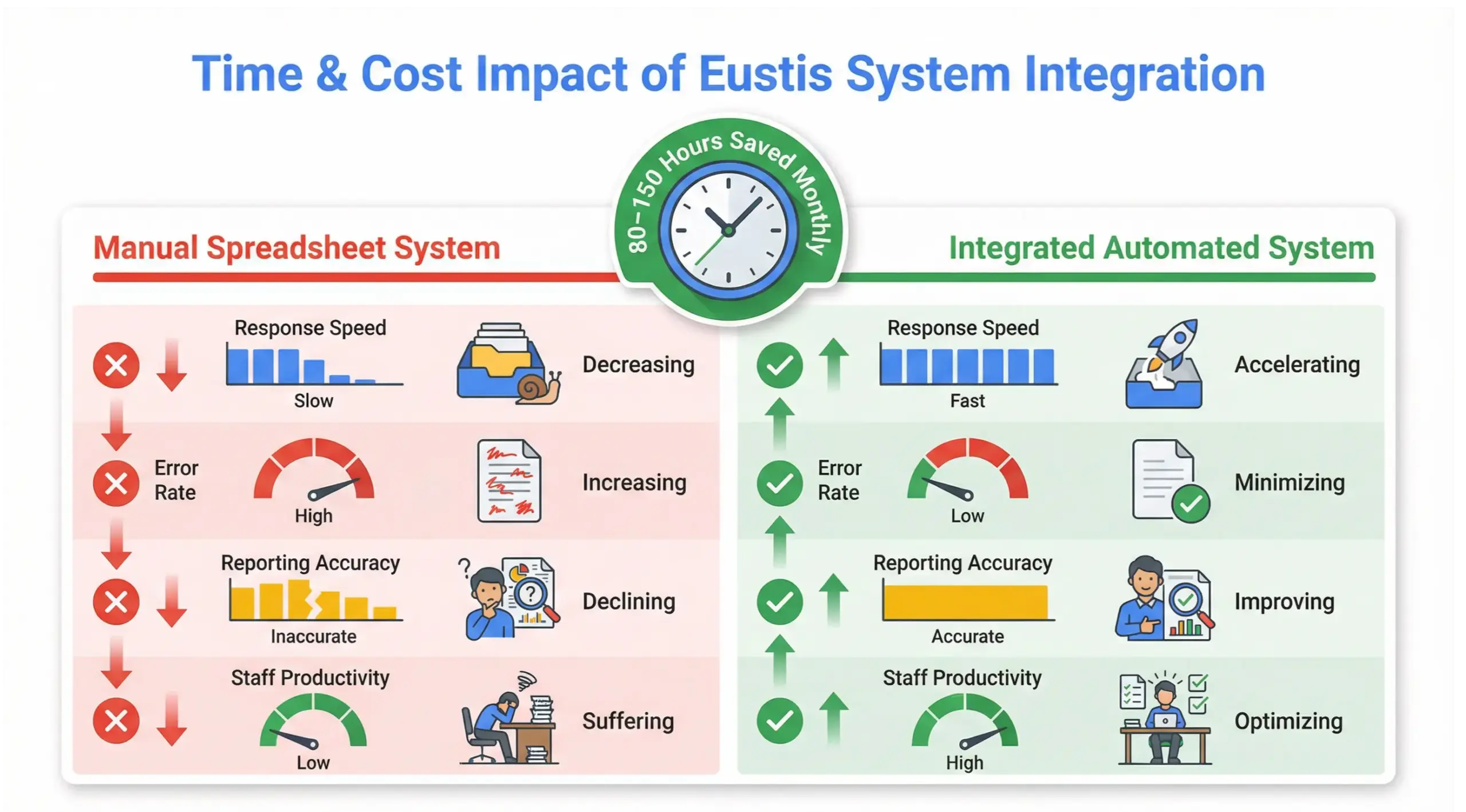
How Much Does System Integration Cost in Eustis?
Costs vary depending on complexity, but most small businesses invest:
- $1,000-$5,000 for setup
- $150-$500 per month for tools
However, compare that to:
- $25/hour admin wage
- 100 hours saved monthly = $2,500/month in recovered productivity
Many integrations pay for themselves within 60-90 days.
Quote-ready insight:
“System integration is not an expense – it is infrastructure.”
How Long Does It Take to Migrate from Spreadsheets?
Implementation depends on complexity:
Basic Integrations:
2-4 weeks
Advanced Multi-System Architecture:
6-10 weeks
Migration steps include:
- Audit existing workflows
- Connect integration apps
- Clean & organize data
- Configure automation triggers
- Test workflows
- Launch & monitor
Rushing integration leads to system confusion. Strategic implementation ensures long-term scalability.
What Industries in Eustis Benefit Most from System Integration?
System integration is especially powerful for:
- Contractors
- Home services
- Medical offices
- Legal firms
- Real estate agents
- Auto repair shops
- E-commerce brands
- Marketing agencies
Any business managing leads, appointments, billing, and reporting benefits significantly.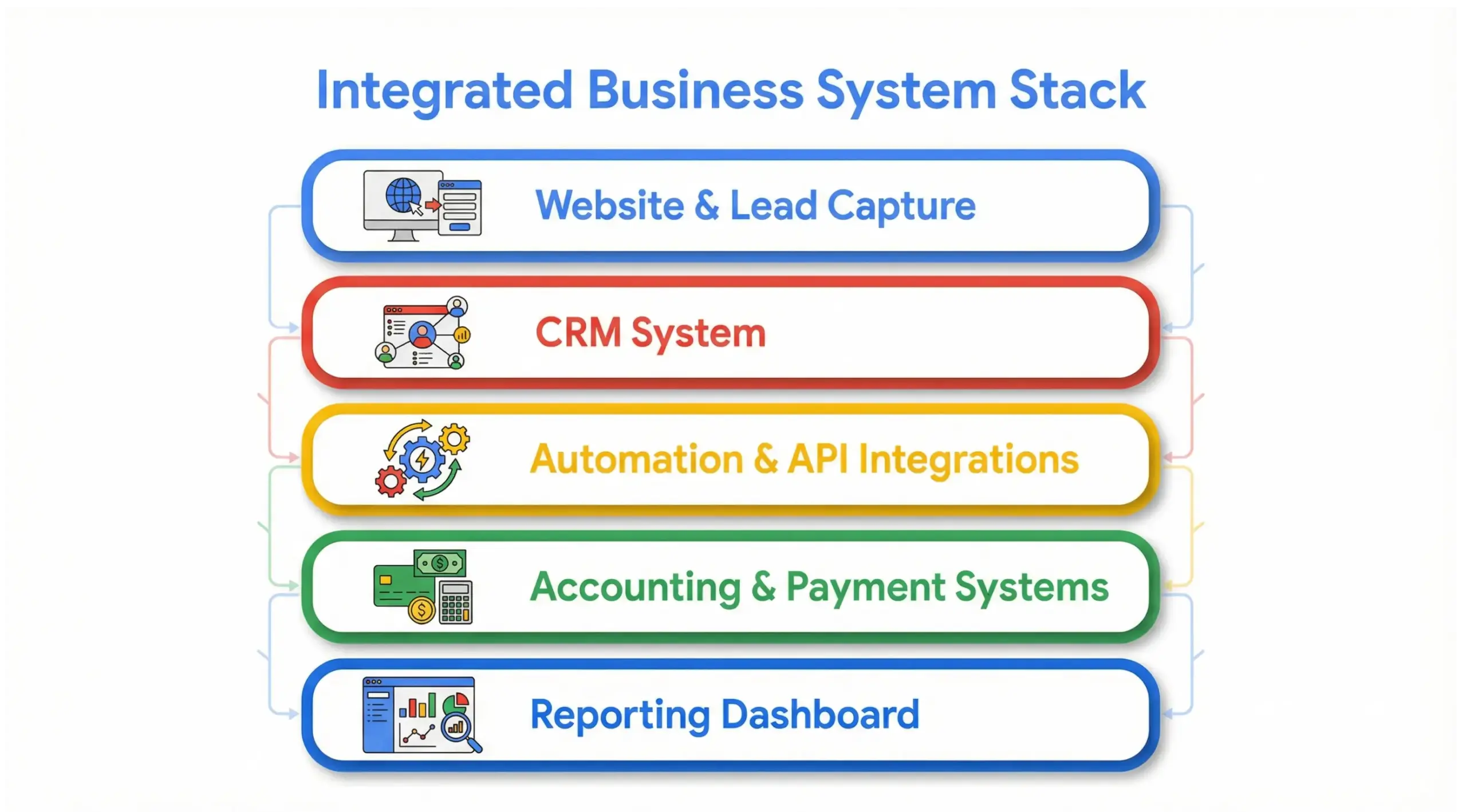
What Happens If You Don’t Integrate Your Systems?
Without system integration, businesses face:
- Slower lead response
- Missed follow-ups
- Manual billing errors
- Fragmented reporting
- Operational burnout
In competitive Florida markets, inefficiency becomes expensive.
Manual systems cap scalability.
10 Frequently Asked Questions (FAQ)
1. What is Eustis system integration in simple terms?
Eustis system integration connects different business software tools so they share data automatically, eliminating manual entry and improving operational efficiency.
2. Can I integrate systems without replacing my current software?
Yes. Many integrations connect existing tools through APIs and middleware platforms like Zapier or Make.
3. Is system integration only for large companies?
No. Small and mid-sized businesses often see the highest ROI because automation replaces time-consuming admin tasks.
4. How much time can system integration save?
Most businesses save between 80 and 150 hours per month, depending on workflow complexity.
5. Will integration disrupt my daily operations?
Proper planning minimizes disruption. Most migrations happen in phases to avoid downtime.
6. What software is commonly integrated?
CRM platforms, accounting systems, scheduling tools, email marketing platforms, and payment processors are most common.
7. Is system integration secure?
Yes, when implemented using secure APIs and encrypted connections. Proper configuration matters.
8. Do I need custom coding?
Not always. Many integrations use no-code or low-code platforms. Complex businesses may require custom API solutions.
9. How do I know which processes to automate first?
Start with revenue-impact workflows: lead capture, follow-up, scheduling, and invoicing.
10. Is Eustis system integration worth the investment?
Yes. When systems operate together, businesses gain efficiency, clarity, and scalable infrastructure – often recovering costs within months.
Conclusion: Why Eustis Businesses Must Move Beyond Spreadsheets in 2026
Spreadsheets were designed for organization – not scalability.
Eustis system integration transforms:
- Manual tasks – Automated workflows
- Disconnected tools – Unified systems
- Data confusion – Real-time clarity
- Labor-heavy processes – Strategic growth engines
The businesses that scale in 2026 are not the ones working harder.
They are the ones building smarter systems.
Clarity. Efficiency. Growth.
That is the power of integration.


