


What is Casselberry business automation and why does it matter?
Casselberry business automation refers to implementing software systems, AI tools, and workflow integrations that reduce manual work, increase efficiency, and improve profitability for local companies. For service businesses, retail shops, and growing companies in Casselberry, automation is no longer optional – it is a competitive advantage that directly impacts revenue, customer experience, and operational costs.
In a market like Central Florida, where competition is increasing, automation allows businesses to scale without proportionally increasing payroll. The companies that automate intelligently grow faster, operate leaner, and deliver more consistent customer experiences.
“Automation doesn’t replace people – it eliminates inefficiency.”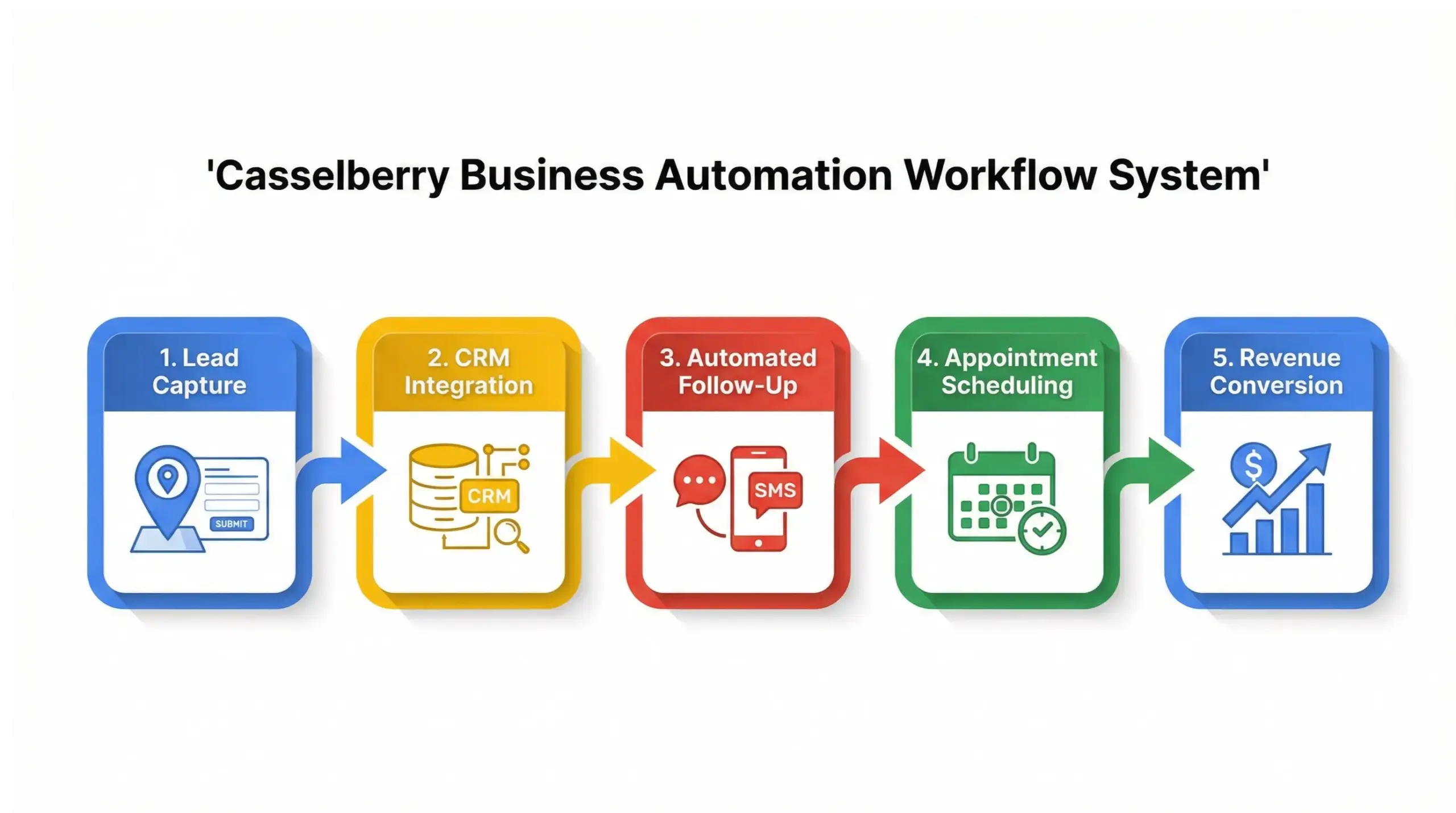
Why Are Casselberry Businesses Turning to Automation in 2026?
Local businesses in Casselberry are adopting automation because rising labor costs, increased competition, and higher customer expectations demand smarter systems. Automation reduces repetitive tasks, speeds up response times, and improves conversion rates without increasing overhead.
According to industry-wide studies, small businesses implementing workflow automation report productivity increases between 20% and 40%, depending on operational structure. In local service markets, that often translates into thousands of dollars in monthly savings or revenue growth.
For Casselberry businesses specifically, automation impacts:
- Lead capture and response speed
- Appointment scheduling
- Customer follow-up
- Billing and invoicing
- Internal communication
- Marketing campaigns
- CRM management
Automation transforms chaos into clarity.
What Types of Businesses in Casselberry Benefit Most from Automation?
Nearly every industry benefits, but some see faster ROI due to high lead volume and repetitive processes.
Service-Based Businesses
- Electricians
- Plumbers
- HVAC companies
- Cleaning services
- Home improvement contractors
Local Retail & Brick-and-Mortar
- Boutiques
- Gyms
- Salons
- Restaurants
Professional Services
- Consultants
- Agencies
- Financial services
- Medical practices
If a business handles recurring inquiries, scheduling, or repetitive admin tasks – automation will create measurable ROI.
How Does Business Automation Actually Increase ROI?
Business automation increases ROI by reducing operational costs while increasing output, consistency, and conversion rates. It works in two directions: cost reduction and revenue expansion.
1. Labor Cost Reduction
Manual administrative work consumes 10-30% of a small business owner’s time. Automating invoicing, reminders, data entry, and email responses eliminates hours of non-revenue-generating tasks.
| Task | Manual Hours Per Month | Automated Hours |
|---|---|---|
| Appointment scheduling | 25 hrs | 5 hrs |
| Invoice reminders | 10 hrs | 2 hrs |
| CRM updates | 16 hrs | 3 hrs |
If labor costs average $25/hour:
41 hours saved × $25 = $1,025 per month
Annual impact: $12,300 per year
2. Faster Lead Response – Higher Conversions
Studies consistently show that responding to leads within 5 minutes increases conversion rates dramatically compared to delayed responses.
Automation tools allow:
- Instant SMS replies
- Automated email sequences
- CRM lead routing
- Quote generation workflows
A Casselberry service business generating 100 leads per month could see:
- 15-25% conversion increase
- $5,000-$15,000 monthly revenue improvement (depending on service value)
Speed wins locally.
3. Reduced Human Error
Manual processes create billing mistakes, missed follow-ups, and inconsistent communication.
Automation ensures:
- Every lead receives follow-up
- Every invoice is sent
- Every appointment reminder goes out
- Every review request is triggered
Consistency builds trust.
What Systems Should a Casselberry Business Automate First?
The highest ROI automation areas are:
- Lead intake & CRM integration
- Appointment scheduling
- Email and SMS follow-up sequences
- Invoice reminders & payment processing
- Review generation workflows
Start with revenue-impacting systems before internal processes.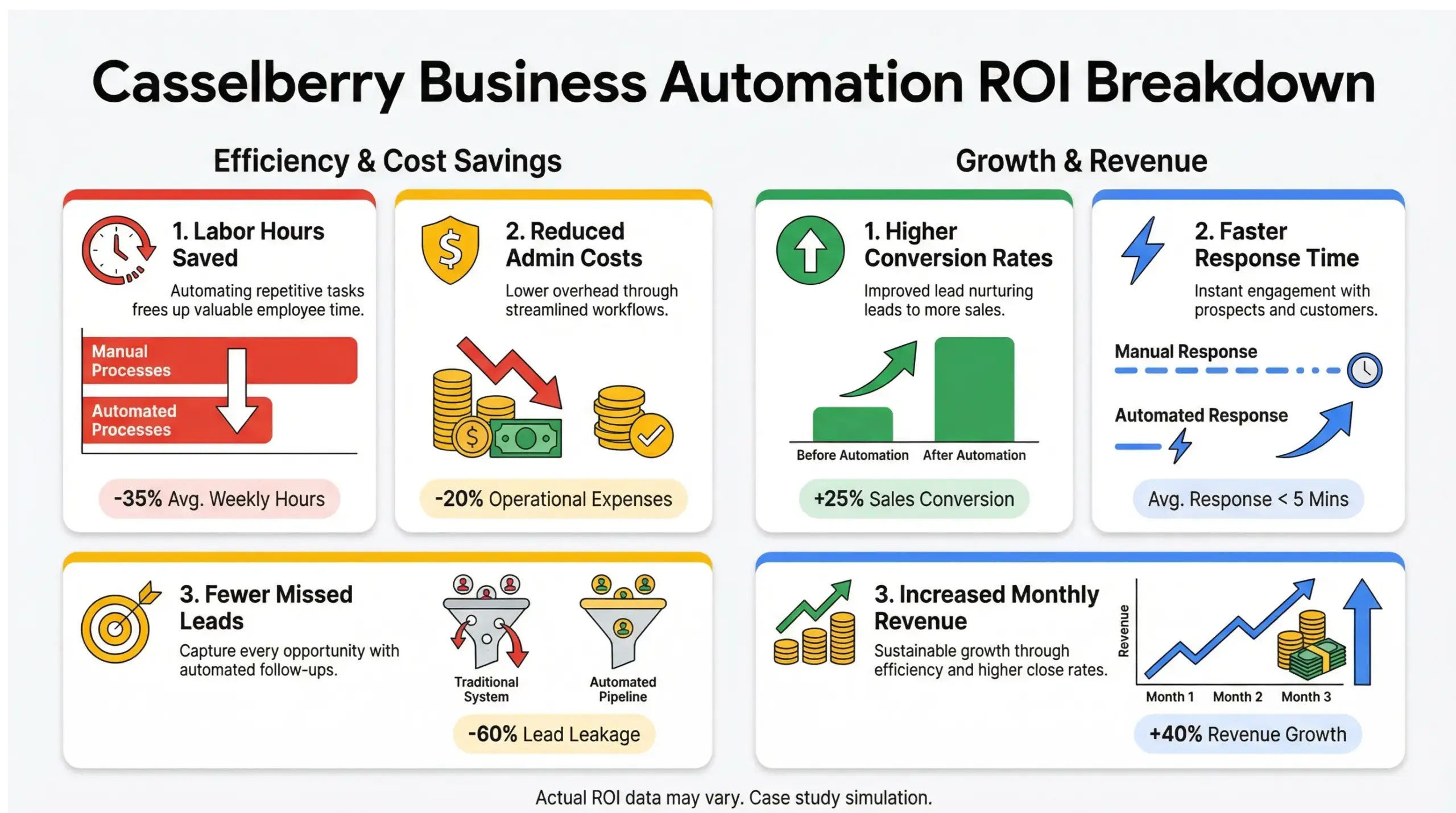
What Tools Are Used in Casselberry Business Automation?
Common tools include:
- CRM platforms (HubSpot, Go High Level, Salesforce)
- Zapier for integrations
- AI chatbots
- Automated scheduling tools
- Email marketing automation
- Payment gateway integrations
- QuickBooks integrations
The key is integration – not isolated tools.
Automation without integration creates digital clutter.
What Is the Average Cost of Business Automation in Casselberry?
Costs vary depending on system complexity.
| Business Size | Estimated Setup Cost | Monthly Investment |
|---|---|---|
| Small service business | $2,000-$6,000 | $200-$800 |
| Growing company | $6,000-$15,000 | $800-$2,500 |
| Advanced integration | $15,000+ | $2,000+ |
ROI typically offsets investment within 3-6 months when implemented strategically.
What Is the Real ROI Timeline for Automation?
Most Casselberry businesses see:
- Month 1-2: Setup and optimization
- Month 3: Efficiency improvements visible
- Month 4-6: Revenue growth measurable
- Month 6-12: Compounding performance gains
Automation builds momentum over time.
What Is the Difference Between Business Automation and System Integration?
Business automation focuses on automating tasks.
System integration connects tools so they work together.
Automation = actions.
Integration = communication between systems.
You need both for maximum ROI.
Can Automation Reduce Staffing Costs?
Automation does not necessarily eliminate jobs – it reallocates talent toward higher-value work.
Instead of hiring an additional admin, automation can support growth without increasing payroll.
Some businesses reduce 1-2 part-time roles after automation, saving $30,000-$60,000 annually.
Other companies redeploy team members into sales or customer success roles.
Both scenarios improve profit margins.
How Does CRM Automation Improve Lead Conversion Rates?
CRM automation improves conversion rates by ensuring no lead falls through the cracks.
Features include:
- Automated follow-ups
- Pipeline tracking
- Lead scoring
- Behavior triggers
- Task assignment
Businesses using structured CRM systems often report 15-30% higher close rates compared to spreadsheet-based systems.
Graduation drives profitability.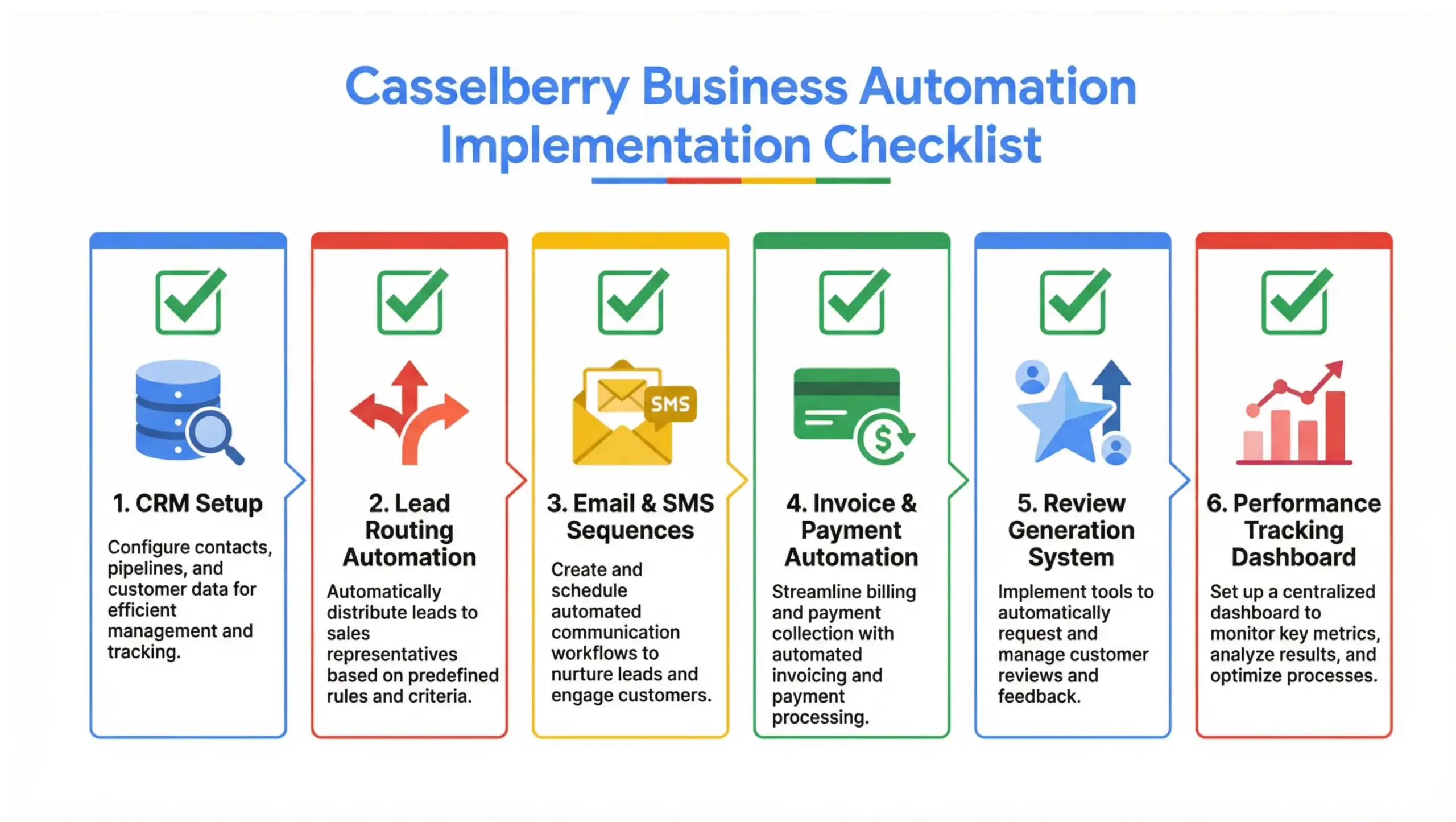
What Are the Risks of Not Automating?
Businesses that avoid automation face:
- Slower response times
- Lost leads
- Higher payroll expenses
- Increased human error
- Operational bottlenecks
- Lower scalability
In competitive markets like Central Florida, inefficiency becomes expensive quickly.
Case Scenario: Local Service Business ROI Example
A Casselberry HVAC company implemented:
- Automated lead capture
- SMS follow-ups
- Review request automation
- Invoice reminders
Before automation:
- 85 leads per month
- 30% close rate
- $450 average ticket
- Monthly revenue: ~$10,800
After automation:
- 85 leads
- 40% close rate
- $450 ticket
- Monthly revenue: ~$14,040
Revenue increase: $3,240/month
Annual impact: $38,880
That’s measurable ROI.
How Does Automation Improve Customer Experience?
Automation improves:
- Response speed
- Appointment confirmations
- Communication clarity
- Follow-up consistency
- Payment ease
Customers notice professionalism.
Professional systems build long-term trust.
10 Frequently Asked Questions About Casselberry Business Automation
1. What is Casselberry business automation?
Casselberry business automation refers to implementing automated digital systems that streamline operations, increase efficiency, and improve revenue for local companies.
2. Is business automation worth it for small local businesses?
Yes. Even small service businesses benefit significantly from automated lead follow-ups, scheduling, and billing workflows.
3. How long does automation take to implement?
Basic systems can be implemented in 30-60 days. Advanced integrations may take 60-120 days.
4. What is the typical ROI percentage?
Businesses commonly see 20%-50% ROI within the first year when automation directly impacts revenue generation.
5. Do I need technical knowledge?
No. With the right consultant partner, implementation is handled professionally.
6. Will automation replace my employees?
Automation supports employees by removing repetitive tasks and allowing focus on growth-oriented work.
7. What industries benefit most?
Service businesses, contractors, healthcare providers, and retail operations benefit heavily.
8. Can automation help generate more reviews?
Yes. Automated review requests significantly increase online reputation metrics.
9. What’s the biggest mistake businesses make?
Implementing tools without strategy or integration planning.
10. How do I know where to start?
Start with high-volume, repetitive, time-consuming tasks affecting revenue.
Final Thoughts: The Future of Business in Casselberry Is Automated
Casselberry business automation is not about replacing people – it’s about building smarter systems.
Businesses that implement automation strategically see:
- Higher conversion rates
- Lower overhead
- Better customer experiences
- Scalable growth
- Stronger profit margins
In 2026 and beyond, automation is the difference between working harder and working smarter.


